What is the primary function of the silk produced by *D. crocata*?
Answer
Lining retreats or creating egg sacs
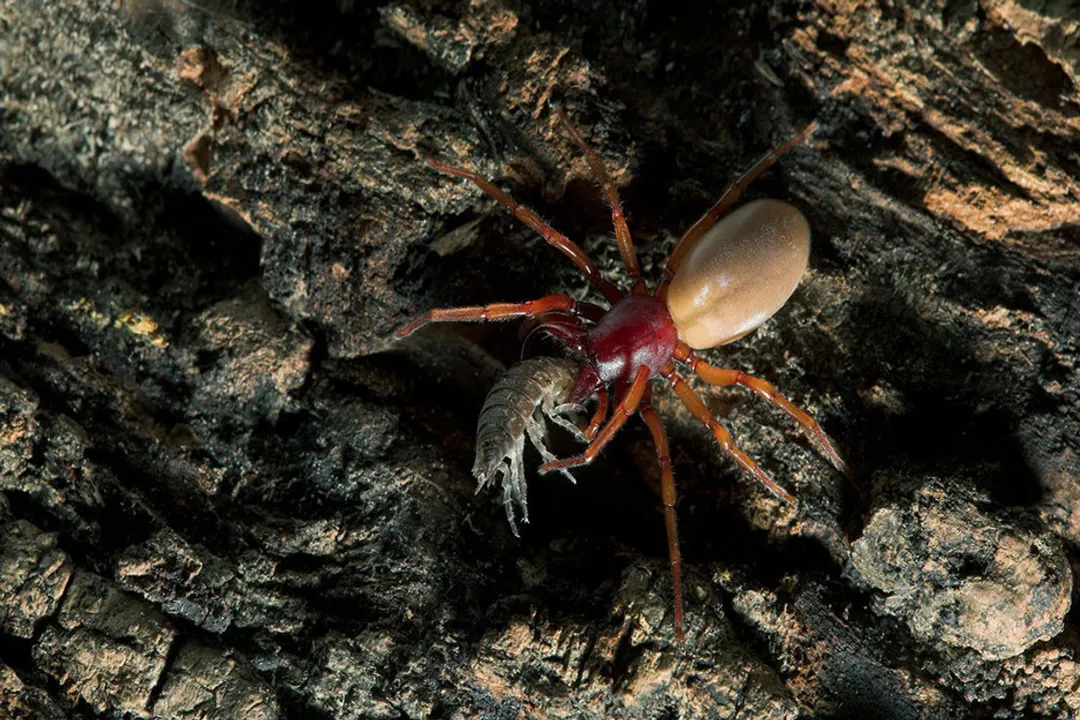
Unlike many familiar spider families that invest heavily in building complex, ephemeral aerial webs for capturing prey, the woodlouse spider utilizes its silk for structural purposes related to shelter and reproduction. Specifically, the silk is employed primarily for creating a protective tube-like retreat where the spider rests during daylight hours, or for constructing secure egg sacs. This difference highlights a major evolutionary trade-off: energy is conserved by avoiding the constant construction of feeding webs, instead prioritizing the maintenance of a permanent, defended home base located near high-moisture foraging grounds.
Related Questions
What is the defining feature of *Dysdera crocata*'s chelicerae orientation for consuming isopods?To which ancient lineage group does the Dysderidae family belong within the Araneomorphae suborder?What is the primary function of the silk produced by *D. crocata*?What are the primary prey items that drove the evolutionary specialization of the woodlouse spider?What factor strongly dictates the required microclimate where *D. crocata* populations thrive?How does the coloration of *D. crocata* relate to its nocturnal hunting and hiding strategy?Which sense is *not* considered the primary input for hunting by the woodlouse spider?How did *D. crocata* achieve its circumglobal distribution in temperate regions outside its native area?Why does the mature female *D. crocata* reaching up to 15 mm offer an advantage when confronting prey?What is the key evolutionary contrast between *D. crocata*'s feeding strategy and that of generalist spiders?