Yellow Sac Spider Evolution
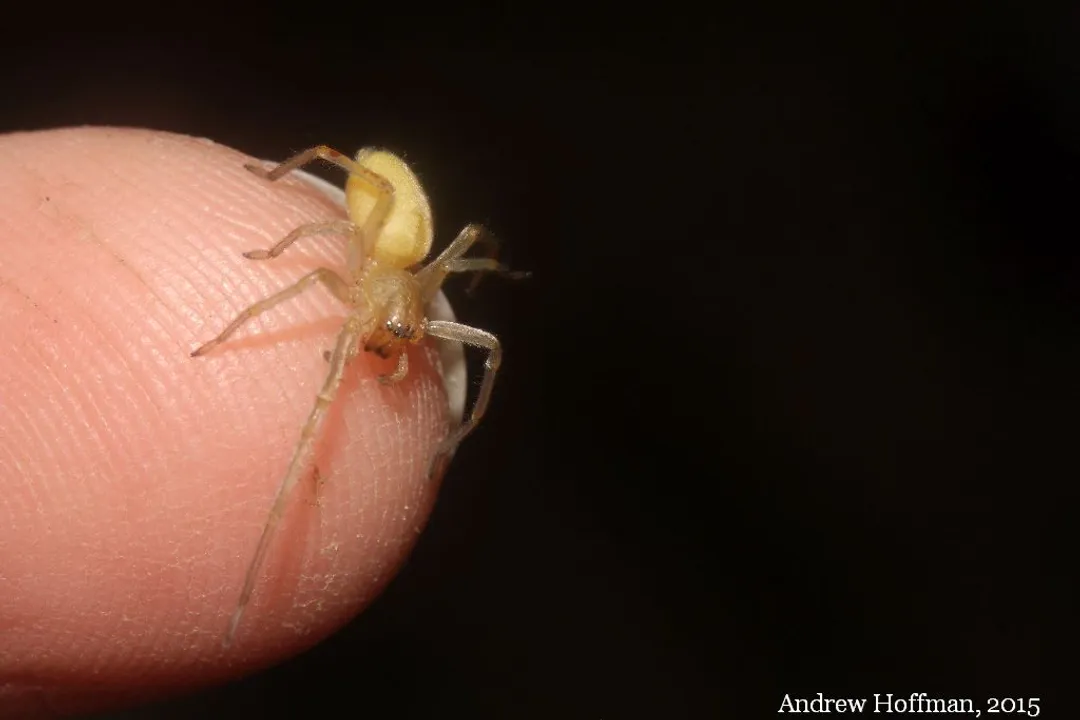
The common yellow sac spider, often simply seen scurrying across a ceiling or tucked into a corner, presents a far more intricate story of divergence and change than its unassuming appearance suggests. While many people may encounter this spider, perhaps noting its pale yellow or greenish coloration, or that of its close relatives, understanding its evolutionary history requires looking at the sophisticated molecular tools scientists now employ to trace its lineage. [2][7] The perceived simplicity of this group masks a complex past shaped by geographic isolation, adaptation to diverse habitats, and ongoing taxonomic debate. [1][8]
# Taxonomic Revisions
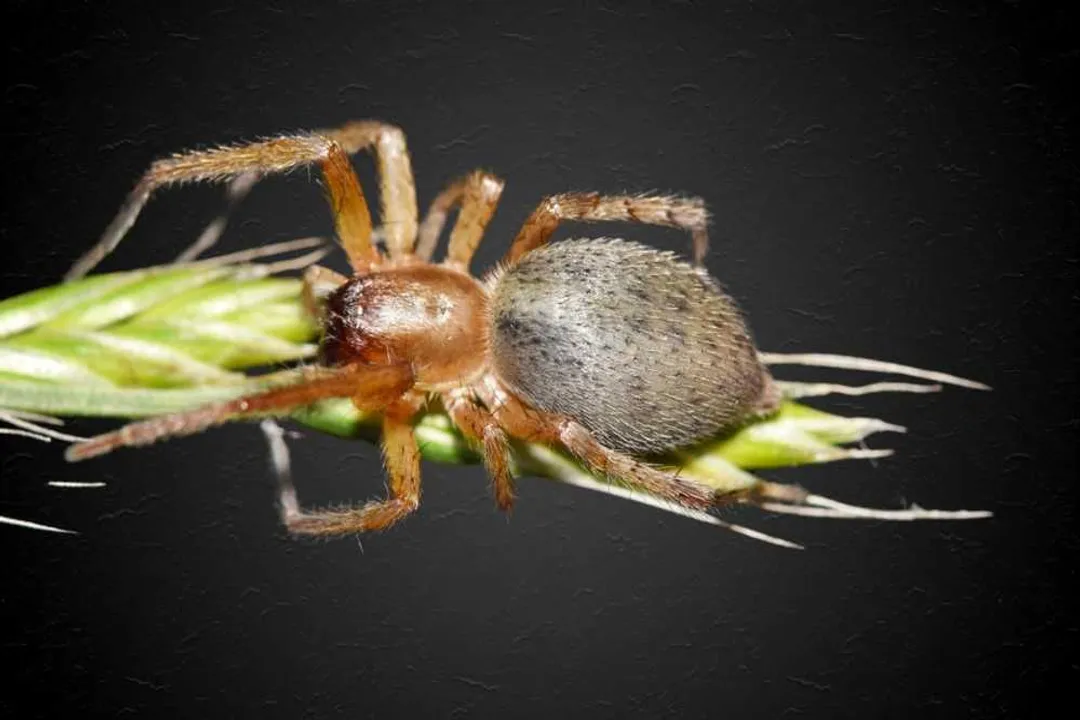
For much of its history, the yellow sac spider belonged to the family Clubionidae. However, modern molecular investigation has prompted significant realignments, showing that the evolutionary branching occurred earlier and more complexly than previously assumed based solely on external features. [4][8]
A key development in this understanding involves the reclassification of many species formerly placed in Cheiracanthium (the genus containing species like C. inclusum) into the new family Eutichuridae. [8] This shift isn't merely shuffling labels; it signifies that the genetic separation between these groups is substantial enough to warrant placement in a distinct family unit. [4] This process highlights a common theme in arachnology: what appears morphologically similar across wide geographic ranges can, upon genetic inspection, reveal ancient splits in the evolutionary timeline. [1] Cheiracanthium inclusum, for instance, remains a well-studied example within this complex group, often sharing its common name with other pale spiders that may not be its closest evolutionary cousins. [2][5]
# Genetic Mapping
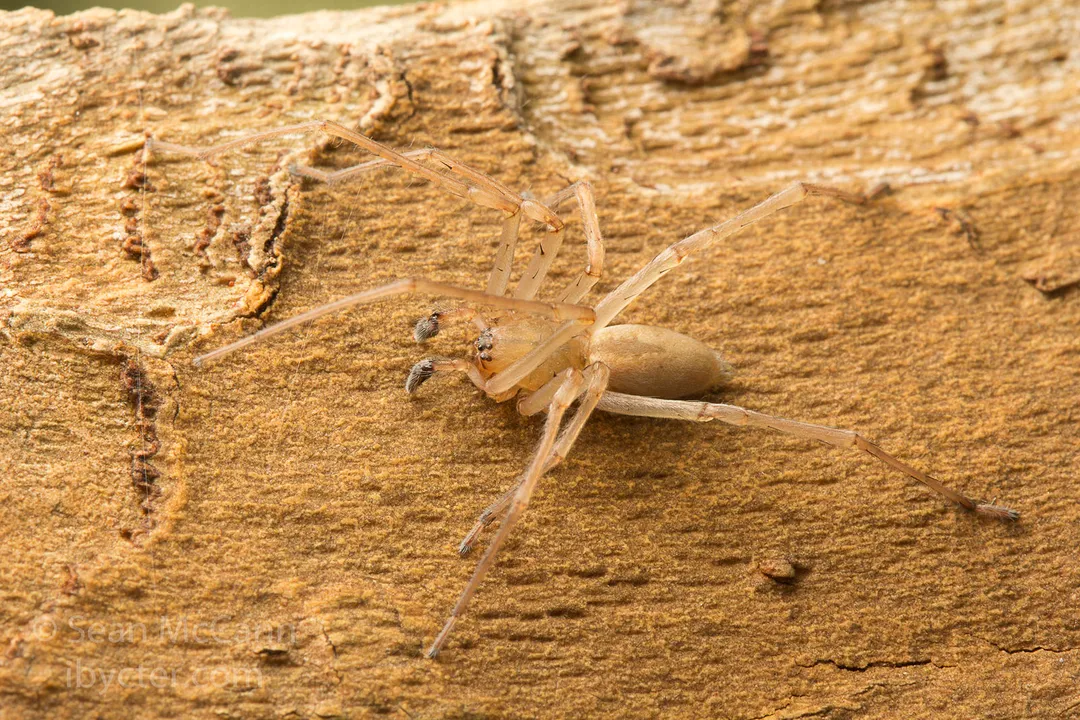
Tracing the evolutionary path of spiders like the yellow sac spider relies heavily on molecular phylogenetics, essentially using DNA sequences as a historical record. [1] Studies often focus on specific genetic markers, such as the mitochondrial Cytochrome Oxidase I (COI) gene, because it evolves relatively quickly, making it excellent for discerning relationships among closely related species and populations. [1][4]
Researchers examine populations across different geographic areas, from agricultural fields to urban environments, to see how interconnected they are. [5][10] If populations in one region are genetically distinct from those hundreds of miles away, it suggests reproductive isolation—a precursor to speciation—has occurred, driven by evolutionary divergence over time. [1] Analyzing these genetic markers allows scientists to construct phylogenetic trees, which are essentially branching diagrams illustrating the proposed common ancestry and the order in which different lineages split apart. [4] This methodology provides far greater resolution into evolutionary history than simple morphological comparisons alone. [4]
# Distinguishing Lineages
One of the practical outcomes of detailed genetic study is the ability to accurately define species boundaries, a task made difficult when physical differences between related spiders are slight or overlap. [4] The yellow sac spider group is a prime example where morphological similarity can obscure biological reality. What a field biologist might initially categorize as one widespread species based on size and color might actually represent several distinct, evolutionarily separate species that look remarkably alike. [4]
Consider the sheer difficulty for the general public in distinguishing between a Long-legged Sac Spider and an Agrarian Sac Spider, both of which are common. [5] While one might be Cheiracanthium inclusum and the other a closely related species, recognizing them without microscopic examination or DNA sequencing is nearly impossible. [2] This common tendency to lump morphologically similar spiders together in casual observation directly contrasts with the fine-grained genetic distinctions revealed by modern phylogenetic analysis. It means that what we perceive as a single, generalized "yellow sac spider" in a local park could, in fact, be composed of multiple, genetically isolated lineages that have evolved independently for significant periods. [1][4]
# Range Structure
The geographic spread of these spiders offers critical clues about their evolutionary dispersal patterns. [10] When scientists map the genetic variation across the known range of a species, they are effectively looking at the history of its movement and isolation. [1][10] For species present across large areas, like the widespread distribution sometimes seen in North America, population structure analysis helps determine if the spiders evolved in isolation within certain regions or if they have managed continuous, successful long-distance dispersal. [1]
For instance, analysis of genetic markers across various North American populations of yellow sac spiders has revealed distinct substructures, indicating that gene flow is not uniform across the entire continent. [1][10] A map illustrating the sampling locations for these genetic studies visually represents the very territories where evolution has been acting—either bringing populations into contact or pushing them apart over time. [9] If one were to overlay a map showing the known geographic distribution of, say, C. inclusum with a heatmap of genetic divergence measured by pairwise Fst values (a common metric in population genetics), one could begin to hypothesize the minimum number of ancient dispersal events or long-standing natural barriers—like major mountain ranges or large river systems—that have shaped their modern genetic landscape. [1][9] These barriers act as selective filters, allowing localized adaptation to proceed unchecked by gene flow from other areas.

# Adaptation Traits
Evolution is fundamentally about adaptation to environmental demands, and the traits possessed by yellow sac spiders reflect the pressures of their active, predatory lifestyle. [3] As these spiders are active hunters rather than web-builders for prey capture, their sensory capabilities and venom composition have evolved to facilitate effective pursuit and subdual of prey. [3]
Venom, in particular, is a potent product of evolutionary arms races. The specific biochemical makeup of yellow sac spider venom, which can cause localized pain and tissue damage in humans, is highly tailored to subdue the arthropod prey that forms their diet. [6] Differences in venom profiles between closely related but geographically separated species can signal ongoing, rapid local adaptation. [6] Furthermore, their tendency to spin small silken sacs for resting, molting, or housing eggs—a behavior contrasting with orb-weavers—suggests an evolutionary path favoring mobility and temporary retreat over permanent, large web structures. [7] The silk itself, its strength, and its chemical composition, are all subject to the selective pressures of their environment, influencing their ability to survive moults or protect their young. [7]
# Future Trajectories
The current understanding of yellow sac spider evolution shows a lineage that is dynamic, moving from broad historical classifications to precise molecular understanding. [4][8] The continuous refinement of the Eutichuridae family tree suggests that more taxonomic revisions are likely as more genetic data becomes available for the diverse species within this complex. [4] For the general observer, this means the spider they see today is not a static entity but a snapshot of an ongoing evolutionary process, shaped by the landscapes it has traversed and the prey it has hunted over millennia. [3][10]
Related Questions
#Citations
Rapid genetic and ecological differentiation during the northern ...
Cheiracanthium inclusum - Wikipedia
Cheiracanthium inclusum | INFORMATION - Animal Diversity Web
Structure of the yellow sac spider Cheiracanthium punctorium genes ...
Agrarian Sac Spider and Longlegged Sac Spider
Structure of the yellow sac spider Cheiracanthium punctorium genes ...
Yellow Sac Spider: Facts & Identification Guide
Yellow sac spiders (family Cheiracanthiidae) - spiderbytes
[PDF] Colorado Insect of Interest - Yellow-legged Sac Spiders
(A) Sampling map for the analyzed yellow sac spider populations,...