How did *D. crocata* achieve its circumglobal distribution in temperate regions outside its native area?
Answer
Introduction likely aided by human shipping or trade activities
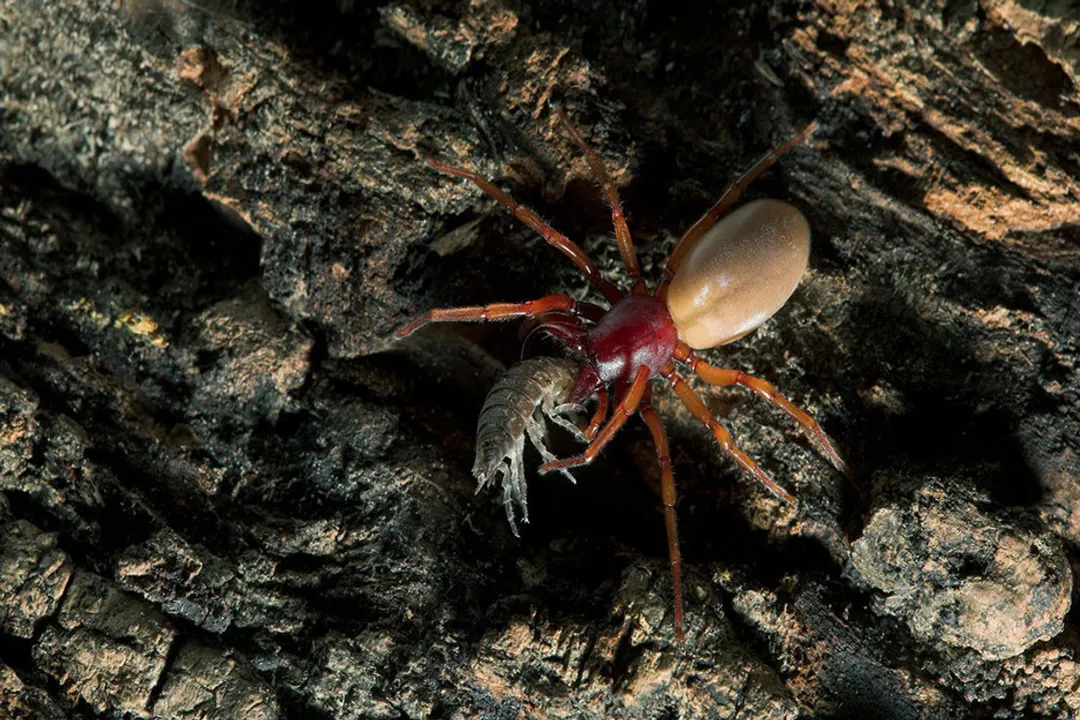
While the native range of *Dysdera crocata* is generally believed to be centered in Europe and the Mediterranean region, its presence across continents like North America, Australia, and New Zealand resulted from introduction. This global dispersal was most likely facilitated accidentally through human commerce, such as the transportation of cargo or soil via shipping activities. This established presence in non-native environments demonstrates an evolutionary hardiness, enabling survival during transport and subsequent establishment in new ecosystems, often without facing native competitors or specialized predators.
Related Questions
What is the defining feature of *Dysdera crocata*'s chelicerae orientation for consuming isopods?To which ancient lineage group does the Dysderidae family belong within the Araneomorphae suborder?What is the primary function of the silk produced by *D. crocata*?What are the primary prey items that drove the evolutionary specialization of the woodlouse spider?What factor strongly dictates the required microclimate where *D. crocata* populations thrive?How does the coloration of *D. crocata* relate to its nocturnal hunting and hiding strategy?Which sense is *not* considered the primary input for hunting by the woodlouse spider?How did *D. crocata* achieve its circumglobal distribution in temperate regions outside its native area?Why does the mature female *D. crocata* reaching up to 15 mm offer an advantage when confronting prey?What is the key evolutionary contrast between *D. crocata*'s feeding strategy and that of generalist spiders?