What distinct physical feature leads to alarm or misidentification in Dysdera crocata?
Answer
Large, forward-slanting chelicerae and fangs
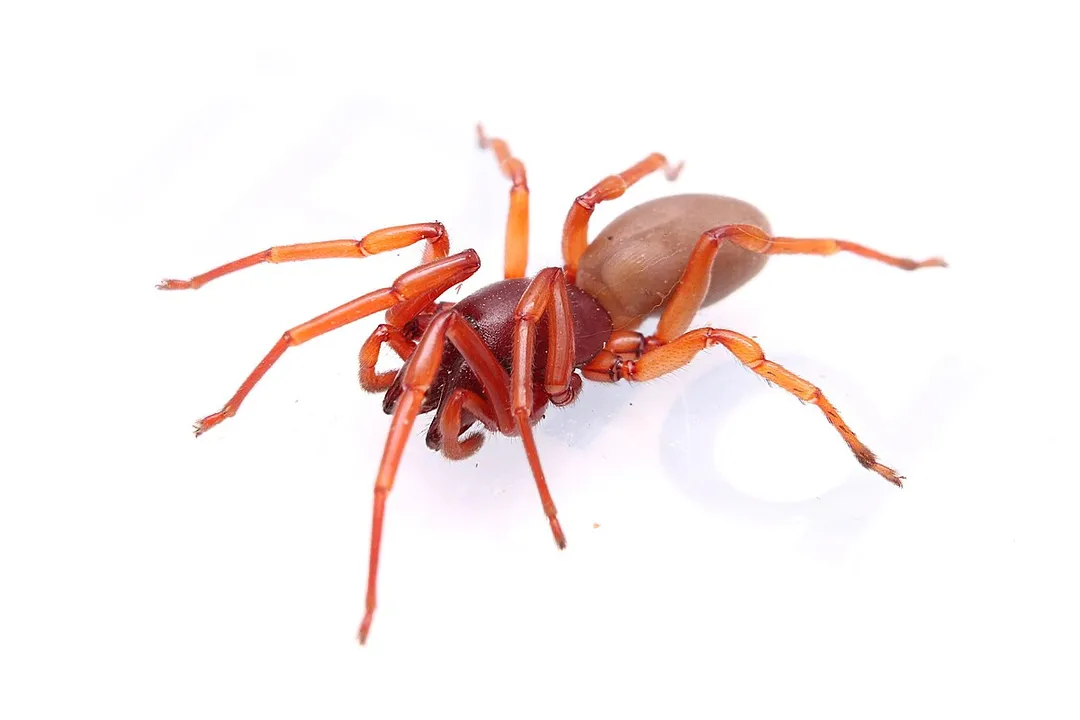
The appearance of the woodlouse spider often causes alarm due to its disproportionately large, forward-slanting chelicerae and fangs. These powerful jaws are a crucial adaptation developed specifically for its specialized hunting strategy, enabling it to effectively pierce the tough, external armor plating of its primary isopod prey, the woodlouse. While the spider also features a reddish-orange cephalothorax and legs contrasting with a pale abdomen, it is these intimidating jaws that are the most frequently noted distinguishing characteristic leading to misidentification or fear, especially when contrasted with spiders lacking such prominent mouthparts.
Related Questions
Where does the geographical origin of the woodlouse spider, Dysdera crocata, trace back to?What distinct physical feature leads to alarm or misidentification in Dysdera crocata?Which structural hideaway is cited as the most frequently cited location for D. crocata indoors?During which season is the woodlouse spider often cited as the most common time to encounter them?What material forms prime outdoor sanctuaries for D. crocata during the day?The presence of Dysdera crocata is almost entirely dictated by the location of which armored prey?How does the woodlouse spider hunt compared to orb-weavers or cobweb spiders?Besides common cracks and gaps, what documented means of entry has D. crocata used to enter dwellings?What is notable about the spiderlings after the female D. crocata deposits her eggs?In North America, the distribution of D. crocata stretches westward as far as which state?