Woodlouse Spider Facts
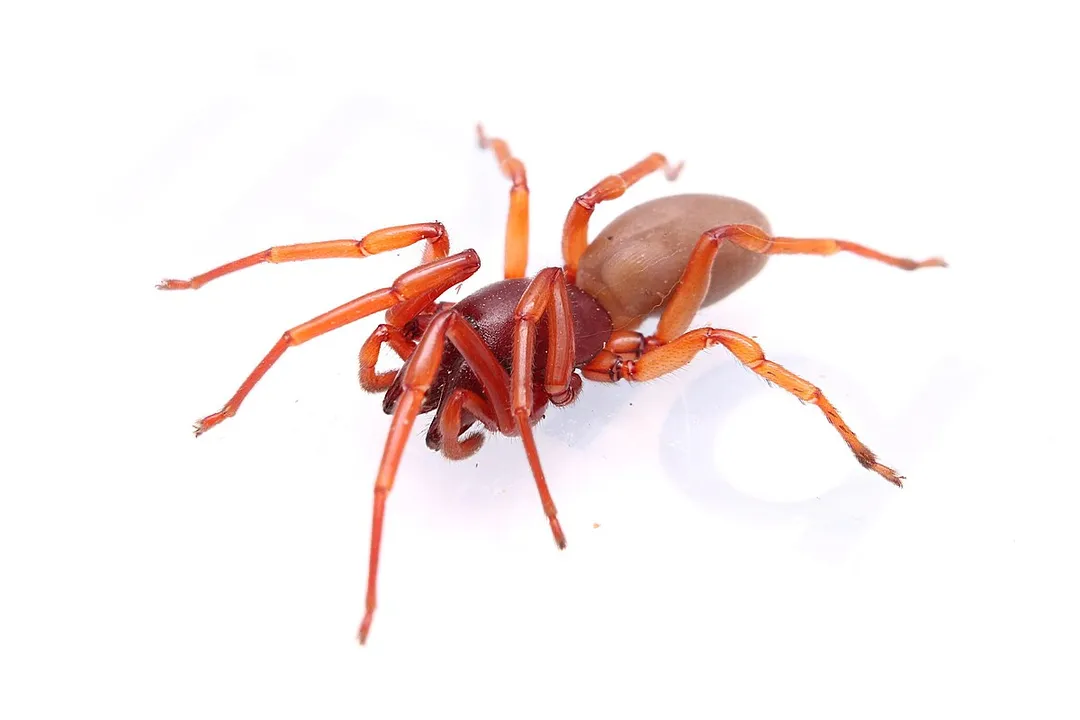
The woodlouse spider, scientifically recognized as Dysdera crocata, holds a peculiar place among the arachnids encountered in gardens and homes worldwide. [1][2] Unlike many spiders that spin intricate webs to ensnare flying insects, this creature is a ground-dwelling hunter with a specialized diet, lending it a rather fearsome reputation among those who discover one lurking indoors. [5][9] Its common name, the woodlouse hunter, directly hints at its primary prey—the terrestrial crustaceans often called pill bugs, roly-polies, or sowbugs. [3][8] While it shares the general eight-legged characteristics of spiders, its appearance and behavior set it apart, making identification a frequent concern for homeowners. [2][5]
# Hunter Identity
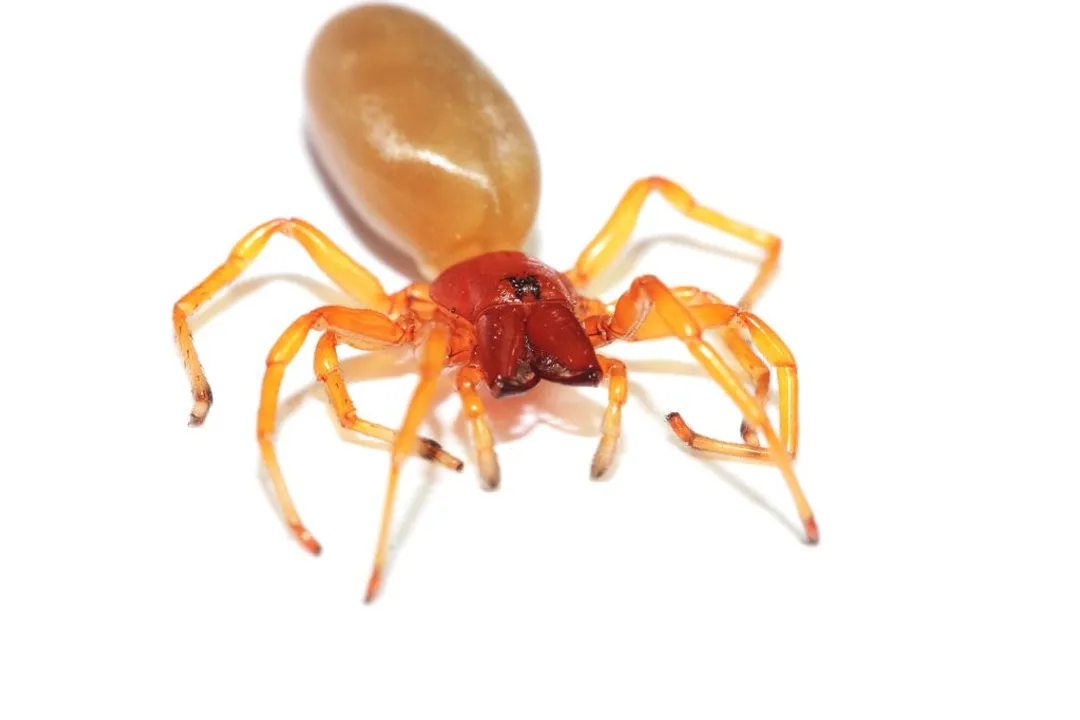
The woodlouse spider belongs to the family Dysderidae. [1] It is often referred to interchangeably as the woodlouse hunter spider, cementing its reputation as a specialist predator. [8][3] This species is known for its elongated chelicerae—the structures that hold the fangs—which are quite robust when compared to many other common spiders. [1][9] This significant adaptation is directly related to its specialized diet. While most spiders subdue prey with venom injected through relatively thin fangs, the woodlouse spider needs substantial strength to pierce the tough exoskeleton of its preferred meal, the woodlouse. [1][9] It is an important distinction: while it possesses venom, its physical structure is key to its hunting success against armored prey. [1]
# Appearance Traits
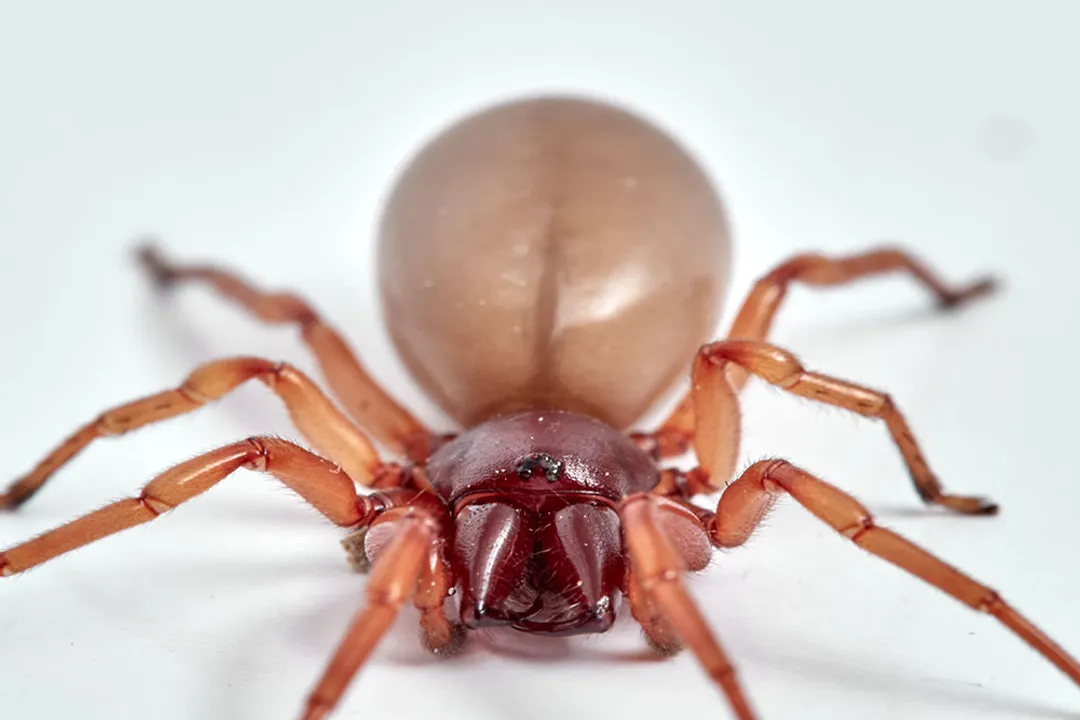
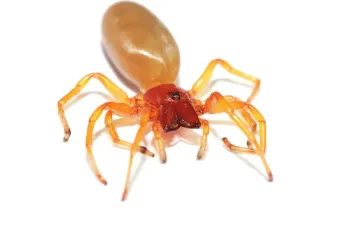
Identifying a woodlouse spider involves looking for a few distinct physical characteristics, though they can sometimes be confused with other nocturnal hunters. [2][5] Generally, the woodlouse spider has a somewhat glossy, reddish-brown to orange-brown cephalothorax (the front body segment) and legs. [1][2][6] The abdomen, on the other hand, is typically paler, often described as grayish, tan, or yellowish-brown, and it usually lacks significant markings or patterns. [1][2][6] The overall body texture appears smooth and somewhat shiny. [1]
Size variations exist, but adult females are generally larger than males. [1] Females can measure between 10 to 15 millimeters in body length, while males are slightly smaller, typically ranging from 6 to 10 millimeters. [1][2] When considering leg span, the female's total diameter can reach up to 25 millimeters or more, making it a noticeable find. [2] Another distinguishing feature, particularly noticeable in specimens seen up close, is the arrangement of the eyes. [1] They possess six eyes, which are often clustered in a compact group, a characteristic that helps differentiate them from spiders in the Tegenaria or Eratigena genera (common funnel weavers) that possess eight eyes. [1] A useful comparison point for identification is noting the smoothness and uniformity of their coloring compared to many other household spiders that exhibit banding or complex patterns. [2]
Here is a brief comparison table summarizing key identification features:
| Feature | Woodlouse Spider (Dysdera crocata) | Common House Spider (e.g., Tegenaria species) |
|---|---|---|
| Coloration | Uniform reddish-brown/orange cephalothorax; grayish/tan abdomen [1][6] | Often mottled brown/tan/gray with patterned abdomen [2] |
| Eye Count | Six eyes, clustered [1] | Eight eyes [1] |
| Chelicerae/Fangs | Large, elongated, robust [1][9] | Proportionally smaller relative to body size [9] |
| Primary Prey | Woodlice (Pill Bugs/Sowbugs) [3][8] | General insects caught in webs [5] |
# Venomous Bite
The subject of the woodlouse spider’s bite often raises alarm because of its distinctive appearance and powerful jaws. [4] It is important to state clearly that Dysdera crocata is indeed venomous, as nearly all spiders are. [1][9] However, the severity of the bite to humans is widely considered to be low. [4][5] The large chelicerae, necessary for piercing the hard shells of woodlice, can certainly deliver a painful bite if the spider feels threatened, especially if handled or trapped against the skin. [4][9]
When a bite occurs, the initial sensation is often described as sharp or stinging. [4] Systemic reactions, meaning symptoms affecting the entire body, are rare in humans. [4][5] Instead, effects are usually localized, involving pain, mild swelling, redness, and sometimes itching at the bite site. [5][6] The puncture wounds from the large fangs might be more noticeable than the venom's effect itself. [4] Unlike some medically significant spiders, the woodlouse spider is generally not considered a significant public health threat. [5] If someone suspects a bite, basic first aid, such as cleaning the area and applying a cold compress, is usually sufficient, though monitoring for signs of infection is always wise. [4] The venom is primarily adapted to subdue its chitinous, terrestrial invertebrate prey, not large mammals. [9]
# Habitat Niche
Woodlouse spiders are strongly associated with damp, dark environments where their primary food source thrives. [1][8] They are ground-dwelling spiders, meaning they spend the majority of their time on or very close to the soil surface. [5] Indoors, this translates to seeking out dark, undisturbed areas near ground level, such as basements, crawl spaces, or under furniture. [5][8] They are known to wander widely at night in search of prey. [1]
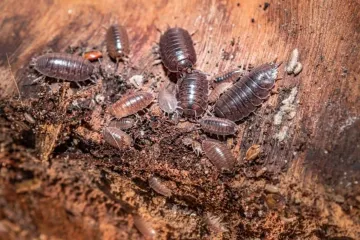
Outdoors, the preferred habitat is exactly where you would expect to find woodlice: under stones, logs, mulch, leaf litter, and boards. [1][5][7] They require moisture to thrive, as woodlice depend on high humidity. [3] When the weather becomes too dry or cold, they retreat further into these sheltered, moist retreats. [7]
A helpful observation for anyone looking to manage or simply observe these spiders without expecting them in their living room is to consider the humidity gradient of their dwelling. If a home has a very dry interior, perhaps due to effective climate control or living in an arid region, the woodlouse spider is less likely to establish a breeding population indoors, preferring to hunt near foundation cracks or patios where moisture persists. [8] Conversely, older homes with consistently damp basements, especially those with concrete floors or earthen crawlspaces that allow moisture exchange, present an ideal environment for them to sustain a population year-round. [5]
# Hunting Habits
The nocturnal nature of the woodlouse spider dictates its hunting strategy. [1] They do not build the classic orb webs seen in gardens; instead, they construct simple, silken retreats or small, sheet-like webs near the ground, often under objects where they wait for prey to pass by. [1][5] When hunting actively, they roam the area, relying on tactile sensation and vibration to locate woodlice. [9]
Once a woodlouse is detected, the spider attacks rapidly, often from the rear or side, aiming its powerful jaws to bite through the crustacean's protective shell. [1][9] The venom acts quickly to immobilize the prey. [9] After subduing the woodlouse, the spider often drags it back to its silken retreat to feed. [1] This preference for woodlice is so strong that they are rarely found preying heavily on other types of insects unless woodlice are scarce. [3][8] This specialization is key to understanding their ecological role; they act as a natural population control agent for these common decomposers. [8]
# Reproduction Cycle
Like many spiders, the woodlouse spider produces egg sacs, though theirs have a very specific appearance. [1] The female spider spins a silken egg sac that is characteristically small, spherical, and often white or grayish in color. [1][7] A significant detail is that these sacs are often covered with debris or fragments of leaf litter, which helps camouflage them within their dark, damp habitat. [1] This camouflaging behavior is an excellent example of adaptive strategy to protect vulnerable offspring from predation. [7]
The female usually guards the sac until the young spiders hatch. [1] Once hatched, the young spiders disperse, often seeking out their own dark, moist environments to begin their life cycle. [1] The maturation process—the time it takes from hatching to reaching reproductive adulthood—can vary, but like many spiders, they will molt several times as they grow. [7] Shedding the outer skin, or ecdysis, allows them to increase in size between these developmental stages. [7]
# Geographic Range
The woodlouse spider has a remarkably wide distribution across the globe. [1] It is native to Europe and has established populations in many other parts of the world, including North America, Australia, and various islands. [1][7] In North America, they are commonly found throughout the United States and southern Canada. [1][5]
Their success in colonizing diverse regions is partly due to their adaptability regarding climate, provided they can find the requisite moisture, and partly due to their close association with human habitation, which aids in accidental or deliberate transport across large distances. [1] For instance, in the United Kingdom, they are considered a common species, frequently found in gardens and within structures, particularly in areas where woodlice populations are healthy. [7] This global presence confirms they are not a localized oddity but a globally successful specialist predator. [1]
# Pest Management
Because woodlouse spiders are generally considered beneficial due to their dietary habits—eating pill bugs, which can sometimes damage garden plants or be a nuisance indoors—control measures are usually not necessary unless an infestation is severe or a resident has an extreme phobia. [5][8] If management is required, the approach should focus less on direct chemical eradication and more on habitat modification. [5]
Exclusion and sanitation are the first lines of defense against spiders in general. [6] This involves sealing cracks and crevices around the foundation, doors, and windows to prevent entry. [6] Outdoors, reducing clutter near the home's perimeter, such as stacking firewood away from the foundation, removing excessive leaf litter, and ensuring mulch beds are not piled high against the siding, will decrease the congregation of their primary food source, the woodlouse. [5][8] By making the immediate area less hospitable to pill bugs, the spider population will naturally decline or move elsewhere in search of food. If spiders are spotted indoors, a simple vacuum cleaner equipped with a hose attachment is an effective, non-chemical method for immediate removal. [6] Avoid broad-spectrum pesticide sprays inside, as these can harm beneficial insects and may not target these ground-dwelling spiders effectively unless specialized residual treatments are applied to known harborages. [5]
Related Questions
#Citations
Woodlouse spider - Wikipedia
What to Know About the Woodlouse Spider in Your House - Terminix
Woodlouse Spider Animal Facts - Dysdera crocata
The Woodlouse Spider - Holmes Lawn & Pest
Woodlouse Spider Pest Guide | Size, Bites, Threats, and Infestations
Woodlouse Spider Identification & Info | American Pest Management
[PDF] Woodlouse spiders - British Arachnological Society
Woodlouse Hunter Spider - Penn State Extension
The Woodlouse Spider Only Has 6 Eyes - Animals | HowStuffWorks