Woodlouse Spider Scientific Classification
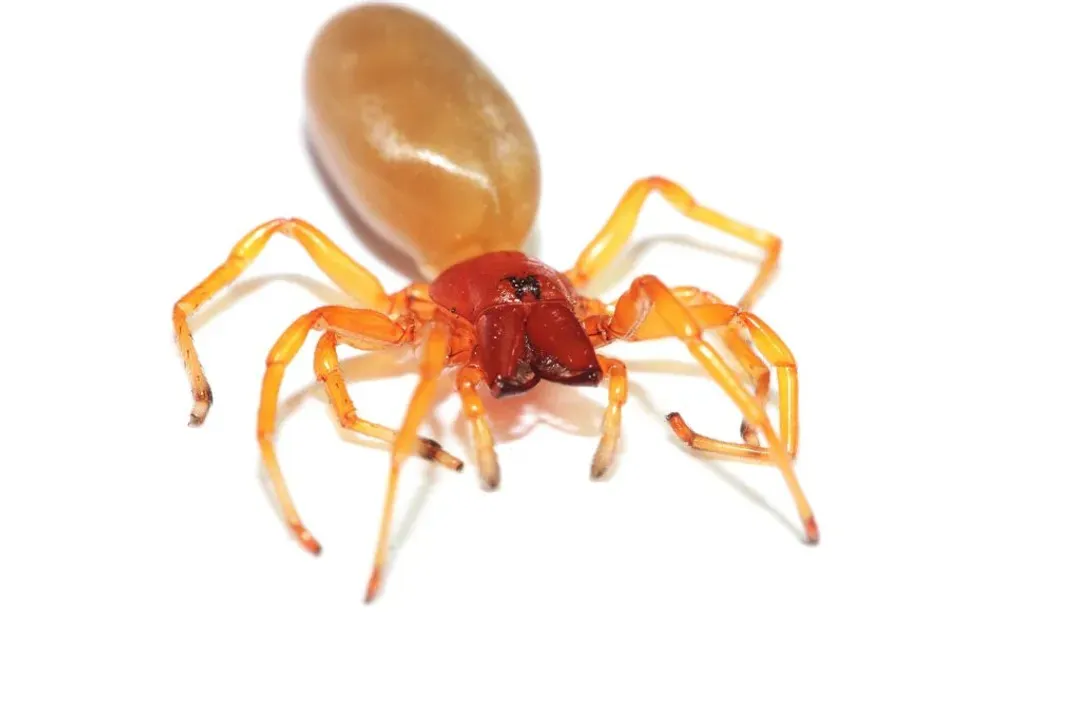
The simple recognition of a Dysdera spider scurrying from beneath a damp stone is often the end of the story for many casual observers, but for anyone interested in biology or entomology, that moment marks the beginning of a deep dive into its scientific placement. This creature, commonly known in various regions as the Woodlouse Spider or Woodlouse Hunter Spider, [6] is a fascinating example of how every living thing fits neatly into a hierarchical system designed to trace its evolutionary history and shared traits with other life forms. [1][4] Understanding this classification—the Linnaean ranks from Kingdom down to Species—is akin to reading an organism’s official biography, telling us precisely who its relatives are and what fundamental characteristics it shares with them. [7]
# Kingdom Animalia
The broadest category assigned to the Woodlouse Spider is the Kingdom Animalia. [1][4][7][8] This placement immediately establishes that the organism is multicellular, heterotrophic (meaning it consumes other organisms for energy rather than producing its own food like plants), and generally motile, at least during some phase of its life cycle. [1] Within this vast kingdom, it belongs to the vast assemblage of creatures we commonly recognize as animals, sharing this designation with everything from earthworms and fish to birds and mammals. [4] This initial sorting separates it entirely from the Plantae (plants), Fungi, and Protista kingdoms. [7]
# Phylum Arthropoda
Moving down one step, the spider is placed within the Phylum Arthropoda. [1][4][7][8] This is a critical grouping that signifies the presence of key anatomical features that have defined the success of this phylum across the globe. [8] Arthropods are characterized by a segmented body, a tough exoskeleton made of chitin, and jointed appendages—legs, antennae, and mouthparts that bend at the joints. [1] Any creature sharing this phylum must conform to this basic blueprint. Think of crabs, insects, and millipedes; they are all fundamentally organized around this arthropod body plan, making the Woodlouse Spider a distant cousin to a grasshopper or a shrimp, unified by their segmented, hard-cased structure. [4]
# Class Arachnida
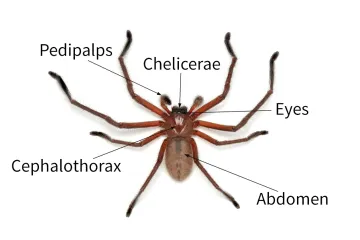
The next level refines this grouping significantly, placing the spider into the Class Arachnida. [1][4][7][8] This class immediately separates spiders from insects (which belong to the Class Insecta). [8] Arachnids are distinguished from insects by having two main body parts—the cephalothorax (fused head and thorax) and the abdomen—and, crucially, by possessing eight legs. [1][4] Insects, in contrast, have three body parts and six legs. [8] Furthermore, arachnids typically have chelicerae (fangs or specialized mouthparts) and pedipalps, rather than the antennae common to insects. [1] The Woodlouse Spider, exhibiting this distinct arachnid body layout, is thus grouped with scorpions, ticks, mites, and true spiders. [4][7]
# Order Araneae
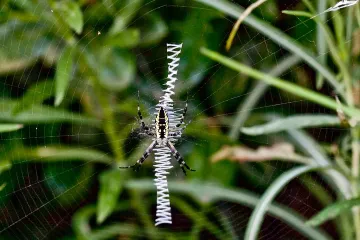
Within Arachnida, the Order Araneae is where the Woodlouse Spider truly begins to resemble what most people visualize when they hear the word "spider". [1][7] This order contains all true spiders. [4] What unites members of Araneae is the presence of spinnerets, specialized organs used to produce silk, and the fact that they are all predators, using venom delivered via their fangs to subdue prey. [1][9] While the appearance of a Dysdera—often noted for its uniform reddish-orange cephalothorax and slightly paler abdomen in the case of D. crocata [2]—might seem unusual compared to a web-building orb weaver, its fundamental predatory equipment and silk-spinning capability firmly place it here. [4][8] The very fact that it is capable of producing silk, even if it doesn't construct large, classic aerial webs, ties it directly to this order. [9]
It is worth noting that while all true spiders spin silk, how they use it varies dramatically across the Order Araneae. [1] Some, like the Woodlouse Spider, rely more on silk for lining retreats or wrapping prey rather than for aerial capture webs. [5] This reliance on ground-level hunting, which contrasts sharply with many well-known families, is a behavioral adaptation that is still rooted in the universal silk-producing capacity inherited from the Order Araneae. [9]
# Family Dysderidae
The scientific path narrows further into the Family Dysderidae. [1][4][7][9] This group is sometimes known as the woodlouse spiders or cell-building spiders. [9] Placing Dysdera here means it shares specific evolutionary traits and physical characteristics with other members of this family, which sets them apart from, say, the jumping spiders (Salticidae) or the wolf spiders (Lycosidae). [1]
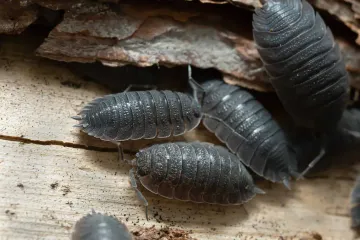
The family Dysderidae is generally characterized by spiders that tend to be nocturnal hunters and often prefer damp, dark environments, which aligns perfectly with the common habitat of the Dysdera crocata—under stones, logs, and leaf litter. [2][9] A defining trait of this family, and particularly noticeable in the genus Dysdera, relates to their specialized predatory habits: they possess powerful chelicerae (fangs) designed for piercing the tough outer cuticle of their preferred prey, the woodlouse or pill bug. [5][6] This specialized diet is so central to the identity of the common species that it has earned it the descriptive common name Woodlouse Hunter Spider. [6] Knowing that a spider belongs to Dysderidae alerts an observer to look for a ground-dwelling, often reddish, secretive predator whose survival strategy hinges on conquering armored prey. [2]
If we were to create a quick mental reference for the characteristics separating Dysderidae from the broader Order Araneae, we might compare the order to a vast library cataloging all 'Books' (Araneae), while the family is a specific shelf for 'Nocturnal Ground Hunters with Specialized Piercing Jaws' (Dysderidae). Their anatomy is adapted for this niche, often featuring robust legs for traversing uneven terrain rather than delicate legs optimized for web vibrations. [9]
# Genus Dysdera
The Genus designation, Dysdera, collects several closely related species that share a very recent common ancestor and exhibit a high degree of morphological similarity. [1] The genus Dysdera itself is quite widespread. [7] While many species exist under this genus name globally, the one most commonly encountered and whose classification is most frequently detailed is Dysdera crocata. [1][3] Members of the genus share the strong predatory adaptations mentioned at the family level, but the specific nuances of size, exact coloration patterns, and geographical distribution further distinguish the genus. [4]
The name Dysdera itself speaks to their general characteristics within the spider world. When observing species within this genus, one consistently finds robust builds, often with a glossy appearance, adapted for a ground-based, tactile existence rather than an aerial one. [2] Their taxonomy dictates that their reproductive strategies, venom composition (though generally medically insignificant to humans), and developmental stages will align very closely across different Dysdera species, far more so than with a spider from a different genus in the same family. [1][8]
# Species Dysdera crocata
The final and most specific level of classification is the Species, in this case, Dysdera crocata. [3][4][7][8] This binomial nomenclature—the two-part scientific name—is what separates this exact animal from every other living thing. [1] D. crocata has a global distribution, though it is considered introduced or non-native in certain areas, such as parts of North America, which influences its conservation status reporting, such as being listed by the IUCN. [7]
The specific epithet crocata refers to saffron or a deep orange-yellow color, which is highly characteristic of the spider’s carapace. [2] This species is widely recognized for its large, protruding chelicerae relative to its body size, a physical manifestation of its feeding specialization. [5] While the citation data confirms its established position across the major taxonomic ranks, the species level is what allows researchers to track localized populations, genetic variations, and specific ecological interactions, such as its success in environments outside its native range. [7]
| Taxonomic Rank | Classification Group | Defining Trait Relevance |
|---|---|---|
| Kingdom | Animalia | Multicellular, heterotrophic life [1] |
| Phylum | Arthropoda | Segmented body, jointed legs, exoskeleton [8] |
| Class | Arachnida | Eight legs, two body parts (cephalothorax/abdomen) [4] |
| Order | Araneae | True spiders, silk production via spinnerets [1][9] |
| Family | Dysderidae | Nocturnal, terrestrial hunters, specialized mouthparts [9] |
| Genus | Dysdera | Robust build, glossy appearance, ground-level orientation [2] |
| Species | D. crocata | Specific coloration, widespread but sometimes introduced status [2][7] |
The scientific designation Dysdera crocata acts as a universal identifier, overriding regional common names like "Woodlouse Hunter" or "Cranky Spider," which can vary regionally and sometimes cause confusion between different species that share similar diets or habits. [5][6] For instance, while many spiders might occasionally eat a woodlouse, the entire evolutionary trajectory of D. crocata, from its family placement to its specialized fangs, is tuned for this specific prey, a level of detail that only the species classification can fully capture. This precision is essential for global biological study, ensuring that data collected in Idaho, for example, regarding D. crocata, [3] is immediately comparable to records from Montana [9] or elsewhere. The scientific classification is, therefore, the foundation upon which all ecological and behavioral understanding of this intriguing arachnid is built.
Related Questions
#Citations
Dysdera - Wikipedia
Woodlouse Spider - Dysdera crocata - NatureSpot
Dysdera crocata (A Dysderid Spider) - Idaho Fish and Game
Dysdera crocata - NatureServe Explorer
Woodlouse Spider - Veseris
Woodlouse Hunter Spider Colorado TX - Falkin Pest Control
Dysdera crocata - GISD
Woodlouse Spider (Dysdera crocata) - iNaturalist
(Family) (Dysderidae) - Montana Field Guide - MT.gov