Woodlouse Spider Physical Characteristics
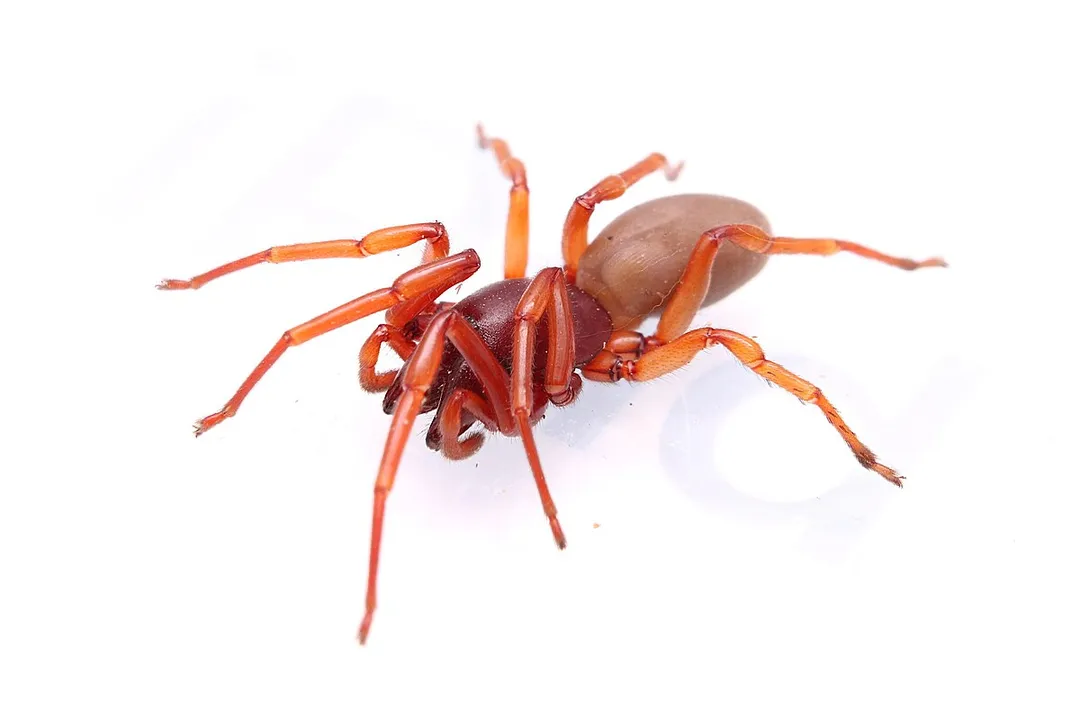
The woodlouse spider, scientifically known as Dysdera crocata, presents a set of physical characteristics that make it readily identifiable, though often imposing to the casual observer. It belongs to a group of spiders that are more frequently encountered indoors than many of their web-building cousins, partly because their hunting style brings them into contact with areas where woodlice thrive. [1][6] Understanding these physical traits is the first step in accurately identifying this particular arachnid, which sometimes gets an undeserved reputation due to its fang size, even though it is generally not aggressive toward humans. [3]
# Coloration Details
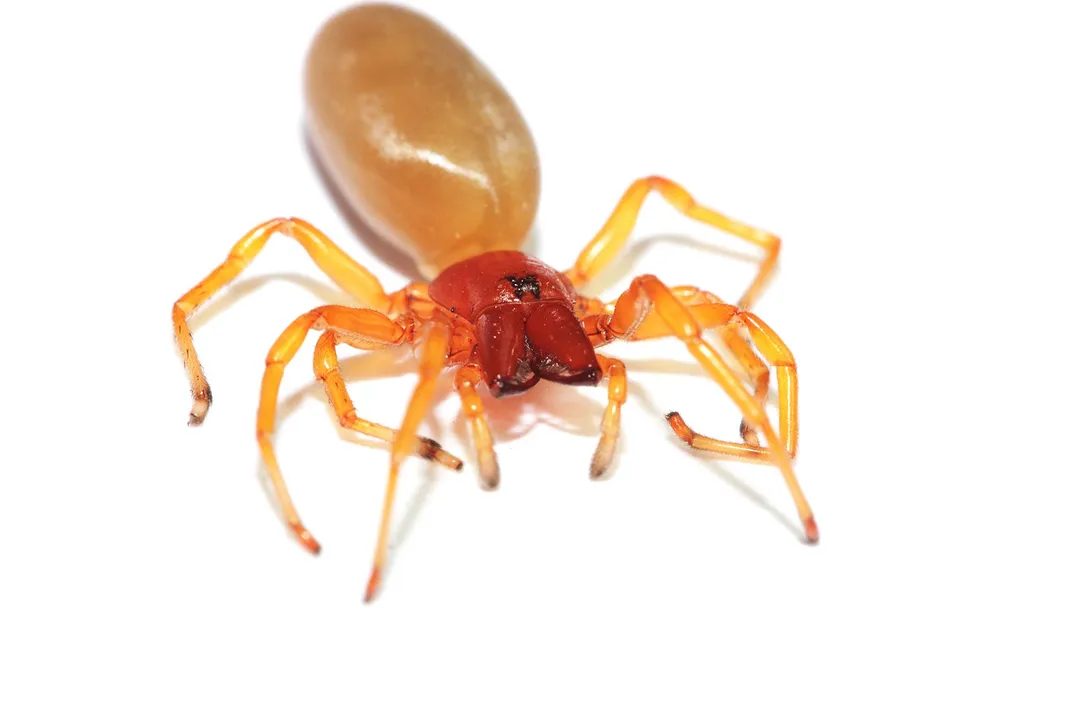
The coloration of the woodlouse spider is perhaps its most striking feature, especially the contrast between its cephalothorax and abdomen. [2] The cephalothorax—the fused head and thorax region—is typically described as a shiny, dark color. [2][7] This dark coloring is often a deep reddish-brown, sometimes appearing almost black. [2][7] This glossy appearance is a significant diagnostic feature that helps distinguish it from many other common household spiders. [2]
In contrast, the rest of the body exhibits lighter tones. The legs tend to be a lighter brown or brownish-yellow, [7] contrasting with the dark upper carapace. [2] The abdomen itself is usually paler than the cephalothorax, frequently appearing grayish, yellowish, or a lighter shade of brown. [2][5] This contrast between the very dark, almost lacquer-like front section and the lighter, often mottled or plain, rear section is a key visual cue when attempting identification. [2] Source material suggests that while the overall impression might be 'reddish-brown,' a closer look reveals this important tonal separation. [1][5]
# Size and Sex
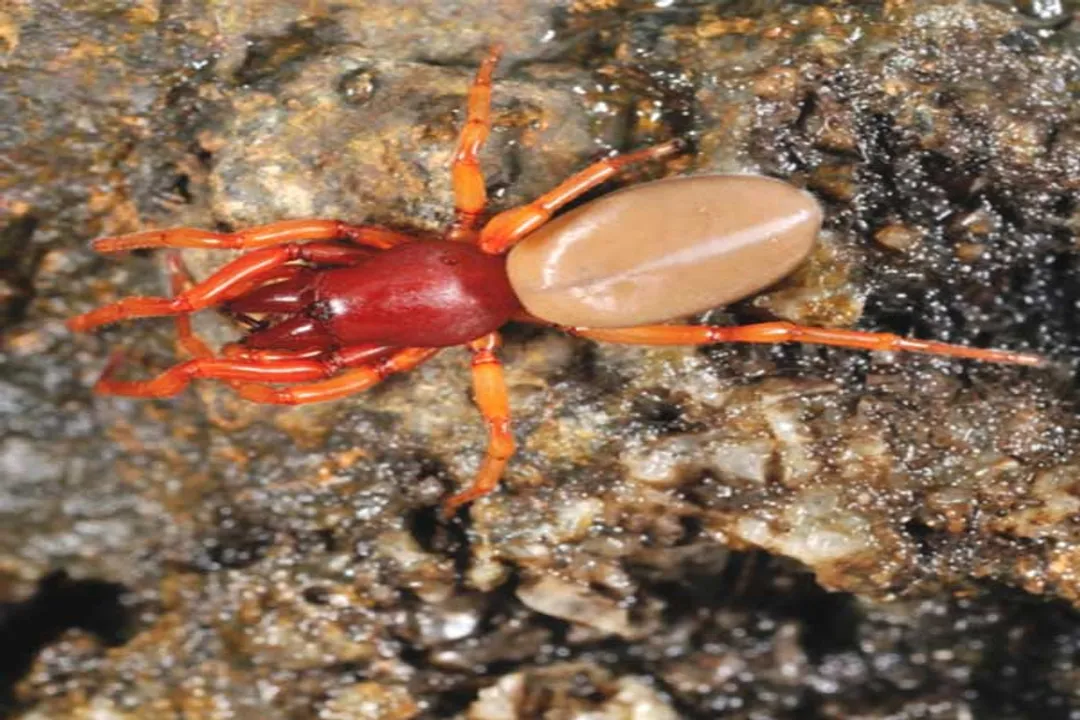
Woodlouse spiders are generally classified as small to medium-sized spiders. [1][7] However, there is a noticeable difference in size between the sexes, a common trait in the spider world, known as sexual dimorphism. [2]
The females are typically the larger individuals of the species. Mature females can have a body length measuring between 8 to 10 millimeters. [2] When considering the full span of the legs, the overall size can reach up to about 15 millimeters. [2] Males are considerably smaller, usually presenting with body lengths around 5 to 6 millimeters. [2]
To put these measurements into a practical context, a 10 mm body length is roughly the size of a standard US dime (excluding the rim), but without the legs spread out. [2] When looking at a spider where the legs are extended, the 15 mm total size might approach the width of a standard pencil eraser head, depending on the specific measurement criteria used. [2] This size difference is often noticeable in the field, with the female appearing substantially bulkier than the male. [2]
| Characteristic | Female Range (Body Length) | Male Range (Body Length) | Notes |
|---|---|---|---|
| Size Comparison | 8 to 10 mm [2] | 5 to 6 mm [2] | Females are visibly larger. [2] |
| Overall Span | Up to 15 mm (with legs) [2] | N/A |
It is an interesting observation that while their preferred prey—woodlice—are relatively sturdy, low-profile prey, the spider itself needs substantial chelicerae (jaws) to subdue them, which might contribute to the generally robust look of the female. [1][9]
# Eye Arrangement
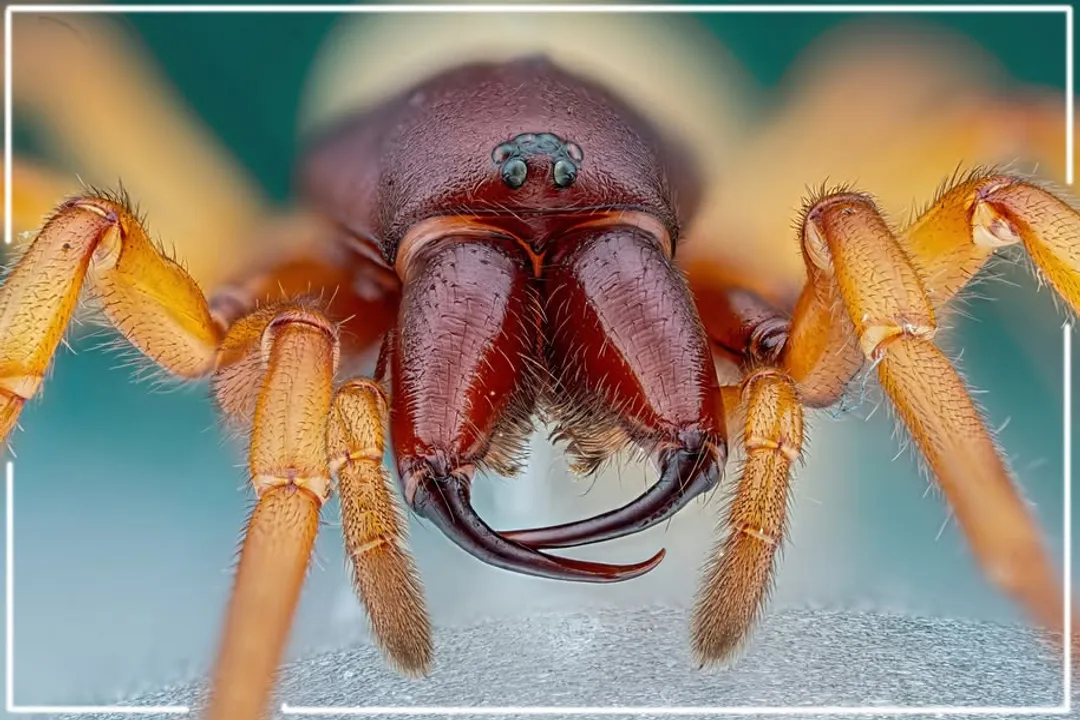
Like nearly all spiders, the woodlouse spider possesses eight eyes, but their specific arrangement offers another clue for identification. [2][5][7] The eyes are arranged in two distinct rows of four. [2][5][7]
The configuration of these eight eyes is not random; they are positioned to give the spider an advantage while hunting actively rather than waiting in a stationary web. [1] Specifically, the posterior median eyes—the pair located toward the rear center of the eye cluster—are notably widely spaced apart. [2] While this might seem like a minute detail, for an expert or a dedicated identifier, this specific spacing pattern, combined with the overall cephalothorax shine, separates Dysdera crocata from many other common ground-dwelling spiders. [2] The general setup suggests excellent vision for tracking prey, which aligns perfectly with their lifestyle of actively pursuing woodlice, crickets, and other small invertebrates. [1]
# Key Physical Identifiers
Summarizing the most reliable visual characteristics simplifies identification. If you encounter a spider indoors, look for this combination:
- Shiny Cephalothorax: It must possess that distinct, dark, glossy cap over the head and thorax region. [2][7]
- Color Contrast: The dark front section contrasting with the lighter, often grayish or yellowish abdomen. [2][5]
- Size: While variable, adult females will be noticeably larger than males. [2]
- Legs: They possess relatively long legs compared to some squat, robust spiders, which aids in their active hunting behavior. [7]
It is worth noting that while they possess prominent fangs necessary for piercing the tough exoskeleton of woodlice, the fangs themselves are often a pale or whitish color, which contrasts sharply with the dark cephalothorax they emerge from. [1][9] This pale fang coloration can sometimes be overlooked if the light isn't right, but it's another feature to watch for when confirming an ID.
# Practical Identification Check
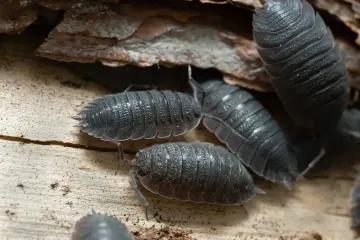
When you find one of these spiders, especially if it is lurking in a basement, garage, or under a damp log, take a moment to observe its posture and movement, as this adds context to the physical description. If the spider is observed moving quickly and deliberately, rather than hanging passively in a large, sticky orb web, this supports the woodlouse spider identification, as they are active hunters that construct simple, messy retreat webs, not elaborate capture webs. [1][7]
Here is a useful mental checklist for confirming an identification in the field, assuming you have a reasonable view of the specimen:
- Check the setting: Is it near damp areas, under debris, or indoors in a basement? This suggests the habitat where woodlice (their primary food) are found. [1][5]
- Observe the body shell: Is the front half very dark and shiny? If yes, proceed. If it's uniformly dull brown or grey, it's likely another species. [2][7]
- Estimate size: Is it smaller than a fingernail (including legs)? If it's a very large spider (e.g., over 20mm total span), it's probably not D. crocata. [2]
- Look for fangs (if visible): Are the chelicerae pale or whitish when contrasted against the dark carapace?. [1][9]
Thinking about the structure, the entire appearance is geared toward its specialized diet. The long legs allow for quick pursuit across uneven terrain like leaf litter or cluttered concrete floors, while the powerful, large chelicerae are essential for grappling and immobilizing prey protected by a hard shell. [1][9] This physical specialization for predation on crustaceans (woodlice) is a fantastic example of evolutionary adaptation in the often-overlooked world of common household arthropods.
# Visual Consistency Insight
One aspect worth noting when observing these spiders over time or across different geographical regions is the subtle variability in abdominal color. While the dark, glossy cephalothorax remains a constant—it is the species' signature—the abdomen's hue can shift based on age, recent meal, and environmental exposure. [2][5] A specimen living in a very dark, continuously damp environment might present a slightly duller sheen overall compared to one found briefly exposed to sunlight, though the fundamental color blocking persists. If you see a large, reddish-brown spider with a noticeably darker, almost black, highly reflective front section, you have almost certainly found Dysdera crocata, regardless of minor variations in the pale abdomen color. [2] This consistency in the carapace is what lends the spider its authority in identification among local fauna. [1][7]
Related Questions
#Citations
Woodlouse spider - Wikipedia
Woodlouse Spider - Veseris
The Woodlouse Spider - Holmes Lawn & Pest
Woodlouse Spider** This spider is easy to identify. It has a smooth ...
Woodlouse Hunter Spider - Penn State Extension
What to Know About the Woodlouse Spider in Your House - Terminix
Woodlouse Spiders | Good Natured - Hickory Knolls Discovery Center
Woodlouse Spider Identification & Info | American Pest Management
[PDF] Woodlouse spiders - British Arachnological Society