Writing Spider Evolution
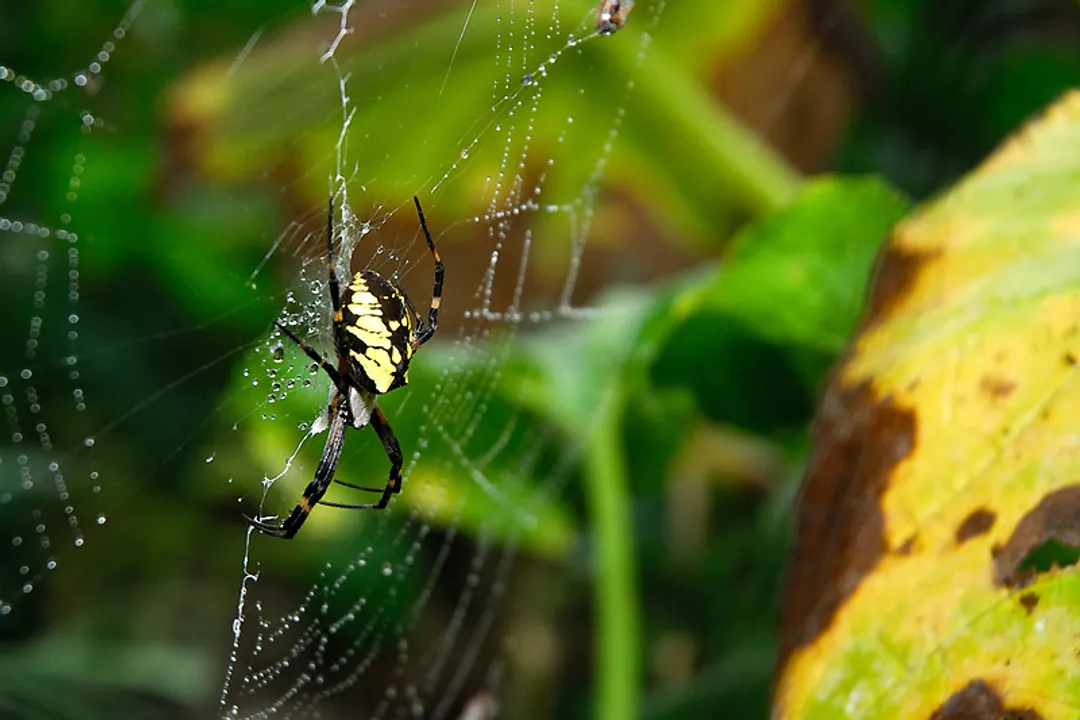
The sight of a large, strikingly patterned spider suspended in the center of an intricate spiral web, often marked by a dense, zig-zagging vertical line, captures the imagination. This particular species, frequently called the writing spider or the black and yellow garden spider, belongs to the genus Argiope, with Argiope aurantia being the most recognized example in North America. The name stems directly from this conspicuous silk decoration, known scientifically as the stabilimentum. To understand the "evolution" of the writing spider is to trace the successful establishment of the orb-weaving guild and then examine the remarkable, and still debated, refinement of this unique, energy-intensive silk structure.
# Orb Weaver Lineage
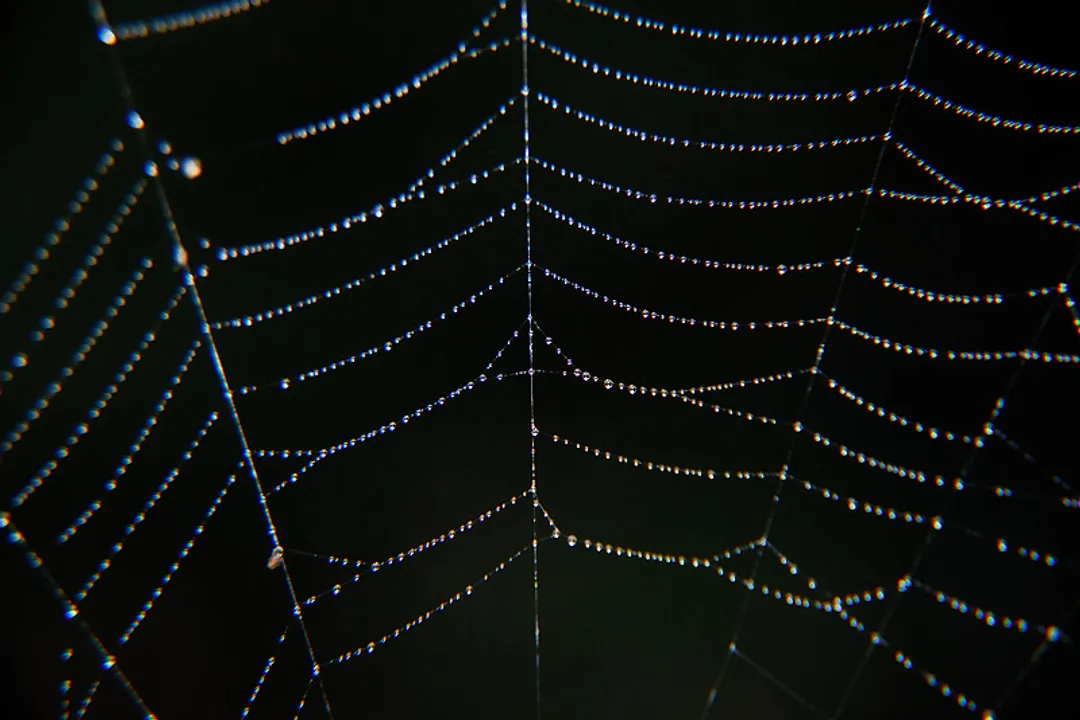
Spiders that construct the classic, flat, spiral-spoke wheel webs are known as orb-weavers. This style of trap represents a highly successful evolutionary achievement, appearing across numerous spider families. Being an orb-weaver puts the Argiope genus within an ancient and widely distributed group that mastered the architecture of airborne insect capture. The basic blueprint—a framework of non-sticky radial threads supporting a spiral of sticky silk—has proven exceptionally effective across diverse habitats.
The evolutionary success of the Argiope lineage hinges on this mastery of web mechanics, but their continued prominence is also tied to several striking physical traits. A key characteristic shared by members of this genus is pronounced sexual dimorphism. The female spiders are substantially larger than their male counterparts. This size disparity is common in many spider groups, often related to the demands of egg production and the need for a large enough frame to support the sizable prey required for a successful reproductive cycle. The male, in comparison, is often quite small relative to the female, sometimes appearing almost as a minor decoration on the periphery of her massive snare.
# Stabilimentum Function Debate
The most compelling aspect of the writing spider's existence, when discussing its unique evolutionary path, is the stabilimentum itself. This structure, which can look like a dense zigzag, an 'X', or a vertical line, is built into the hub of the web. While the basic orb web architecture is evolutionarily established, the stabilimentum represents a specialized adaptation whose precise purpose remains a subject of scientific discussion.
Several hypotheses attempt to explain the evolutionary pressures that favored the development and maintenance of this silk beacon:
- Predator Warning: One strong theory suggests the stabilimentum acts as a visible warning sign, particularly to birds, preventing them from flying through and destroying the fragile silk trap. If a bird hits the silk, the bright, dense structure makes the obstacle more apparent than a nearly invisible web alone.
- Prey Attraction: Counterintuitively, it might serve to attract prey. Some research suggests that the UV-reflective silk used in the stabilimentum mimics nectar guides found on flowers, drawing in small insects that mistake the structure for a food source.
- Camouflage or Shading: A third possibility is that the structure aids in hiding the spider or stabilizing the web in challenging light conditions. It might break up the spider's outline against a complex background or shade the center of the web, making it less visible to prey looking up against a bright sky.
- Web Stabilization: Although the name suggests it, the idea that it mechanically strengthens the web against wind is less favored today compared to the other hypotheses, although it remains a historical consideration.
An interesting observation tying function to habitat is the variation in structure based on the web's location. When Argiope webs are placed in shady areas, the stabilimentum often appears less dense or may even be absent, suggesting that in low-light conditions, the need to advertise presence or camouflage against glare is reduced. Conversely, webs spanning bright, sunny environments frequently display the most elaborate zigzags.
# Trait Cost Versus Benefit
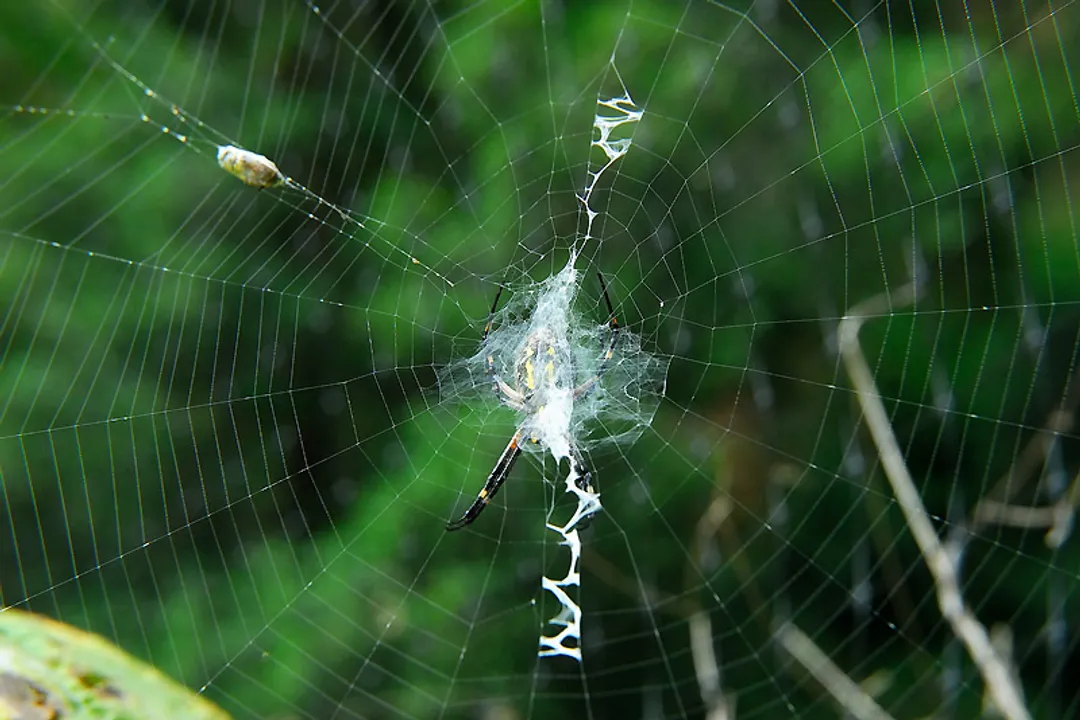
From an evolutionary perspective, any trait that requires significant resource allocation must provide a corresponding benefit to justify its persistence across generations. Building a stabilimentum demands a considerable investment of silk protein, an essential, costly building block for the spider. This energy expenditure is a critical factor when considering its evolution.
The developmental pattern offers clues regarding this cost-benefit trade-off. Spiderlings, the juvenile stage of the writing spider, frequently build webs that include a stabilimentum. However, as they mature, or if environmental resources become scarce, the structure may be reduced or eliminated entirely. This plasticity—the ability to modify trait expression based on immediate need—suggests that while the stabilimentum is a highly advantageous feature under optimal conditions (perhaps for maximizing prey capture or minimizing fatal collisions), it is also a luxury item in the spider's biological budget. A spider that starves because it spent too much silk on a stabilimentum in a lean period will not reproduce, selecting against overuse of the trait when resources are low.
This resource-dependent expression highlights a subtle evolutionary pressure: the trait doesn't just have to work; it has to work well enough to offset its cost in a variable environment. Considering the sheer size of the mature female Argiope aurantia, the volume of high-quality, sticky silk required for her main capture spiral is immense. To divert significant material away from that primary capture surface to build a secondary structure (the stabilimentum) implies a very high payoff from that secondary structure, likely in terms of safety or increased, reliable throughput of large prey.
# Evolutionary Trajectories
While the exact molecular pathway or fossil record detailing the step-by-step evolution of the stabilimentum is beyond the scope of general observation, we can infer patterns by looking at related species within the Argiope genus. The presence of the trait across many, though not all, Argiope species suggests it evolved relatively early in the genus's diversification and has been maintained due to strong selective pressures favoring its function, whatever that ultimate function may be. If the trait were only marginally useful, it would likely have been lost in descendant lines that specialized in different web architectures or habitats.
When comparing the Argiope stabilimentum to other types of webbing, such as the small, tight silk clusters sometimes seen in other orb-weavers that are thought to be purely for stabilization, the Argiope structure is exceptionally ornate and conspicuous. This level of elaboration points toward an evolutionary trajectory driven by behavioral or visual signaling rather than simple mechanical necessity. The visual signaling component, whether warning to a bird or attraction to an insect, requires the spider to possess an existing visual acuity or behavioral response in its prey or predators that it can exploit—an evolutionary co-development.
An interesting consideration for any spider trait is its interaction with its environment across different scales of time. In areas where birds are abundant but perhaps less attentive to ground-level threats (which might be the case for some fast-moving aerial predators), the cost of a destroyed web is very high, favoring the stabilimentum as a billboard of warning. However, in environments where insect prey is scarce, the drive to increase capture efficiency might override the danger avoidance, leading to a reduction in the silk signal. The long-term evolutionary stability of this structure suggests a finely tuned equilibrium has been struck between the risk of bird strikes and the benefit of improved prey attraction across the typical operational landscape of the species. It’s an investment strategy written in silk, balancing immediate needs against long-term risk management.
Related Questions
#Citations
The Writing Spider (Argiope aurantia) - Curbstone Valley Farm
Argiope (spider) - Wikipedia
The writing spider. — alBatt
Yellow Garden Spider, Writing Spider Argiope aurantia (Lucas ...
Writing Spider - Argiope aurantia - A-Z Animals
How do you think an arachnid species would "write?" - Reddit
Evolution of spiderwebs: from ground to air - Facebook
Argiope aurantia | INFORMATION - Animal Diversity Web
Spiderlings and the Mystery of Web Writing - Kimberly Moynahan
Why Do Zipper / Writing Spiders Make “Zippers? / Writings” in Their ...