What specific evolutionary advantage does the mild venom provide against favored prey?
Answer
It subdues amphibians, like toads, that possess potent skin toxins or resistance.
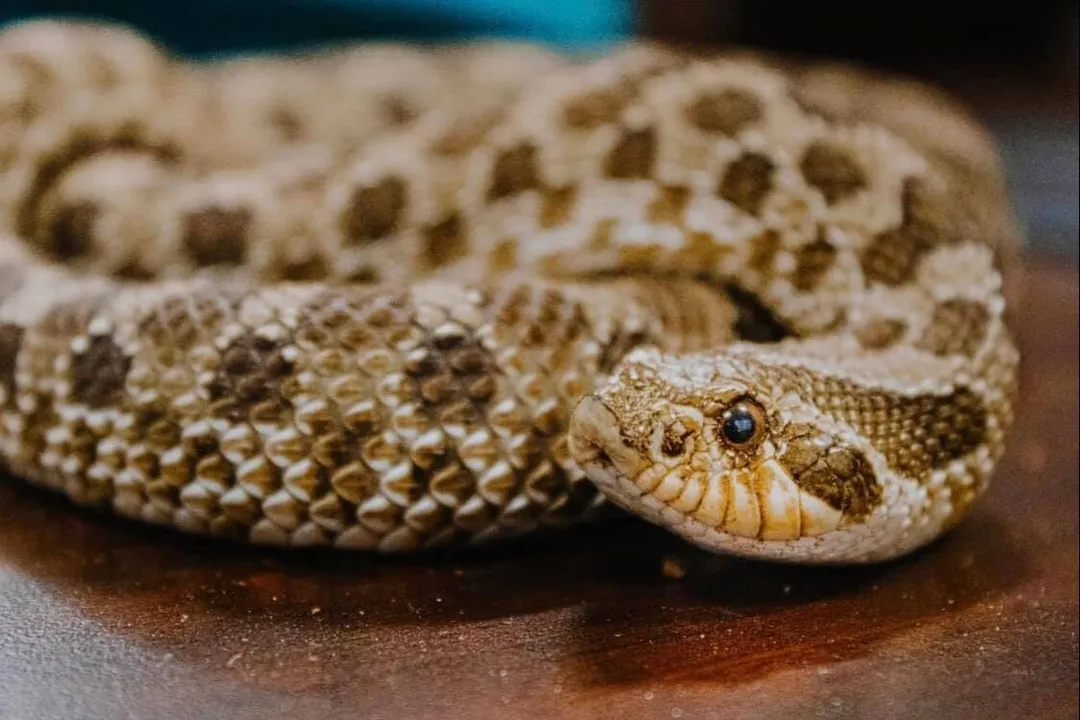
The mild venom possessed by *H. nasicus* is a highly specialized adaptation directly linked to its preference for eating toads. Toads often rely on potent skin toxins as a primary defense mechanism against numerous predators. The venom injected by the hognose functions precisely to overcome this specific defense, enabling the snake to safely subdue amphibians that might otherwise be chemically protected or physically difficult to manage due to their size or strength. This co-evolutionary relationship highlights how the predator has adapted to exploit the prey's established defensive strategy.
Related Questions
What are the three recognized species within the genus Heterodon?What is the primary function of the upturned rostral scale on *H. nasicus*?What is the final defensive act exhibited by the Western Hognose if bluffing fails?How do hognoses inject mild venom secretions into their preferred prey?What constitutes the overwhelming majority of the Western Hognose Snake's diet?How does the rostral scale structure of *H. nasicus* generally compare to *H. platirhinos*?To which major snake family does the Western Hognose Snake belong?What is the initial defensive display strategy employed by the Western Hognose when threatened?Which geographical description fits the distribution of *H. nasicus* across North America?What specific evolutionary advantage does the mild venom provide against favored prey?