What characteristic of Class Reptilia dictates that H. nasicus must bask in the sun to become active?
Answer
Being ectothermic
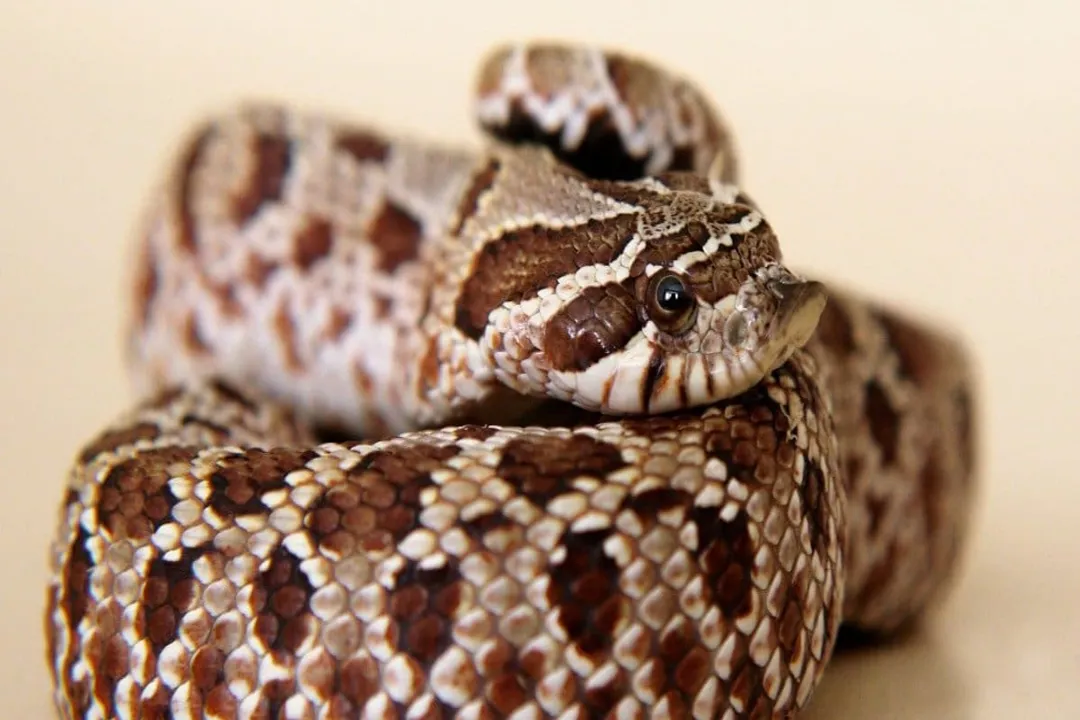
The placement within the Class Reptilia immediately identifies the Western Hognose Snake as being ectothermic. Ectothermy means that the organism cannot internally generate sufficient metabolic heat to maintain a stable, high body temperature necessary for peak activity. Consequently, *H. nasicus* must rely entirely on external environmental sources, such as basking in direct sunlight, to raise its internal temperature. This elevation in temperature is vital not only for achieving enough energy to actively hunt but also for fundamental physiological processes like efficient digestion of consumed prey items.
Related Questions
What specific dental structure defines Heterodon nasicus's placement in Family Colubridae?Which physical adaptation defines the Genus Heterodon for H. nasicus, aiding in its fossorial behavior?What characteristic of Class Reptilia dictates that H. nasicus must bask in the sun to become active?Which groups besides snakes are explicitly included in the diverse Order Squamata?What does the specific species designation nasicus signify regarding the morphology of Heterodon nasicus?What primary characteristic places H. nasicus in Kingdom Animalia instead of the Plant Kingdom?How does the Colubridae family placement affect the specialized captive diet requirements for H. nasicus?What ancestral feature confirms H. nasicus's developmental inclusion in Phylum Chordata?Besides the pointed snout, what visual trait helps confirm the H. nasicus species identification in the field?How does the Colubridae placement contrast H. nasicus with Vipers or Cobras regarding venom apparatus structure?