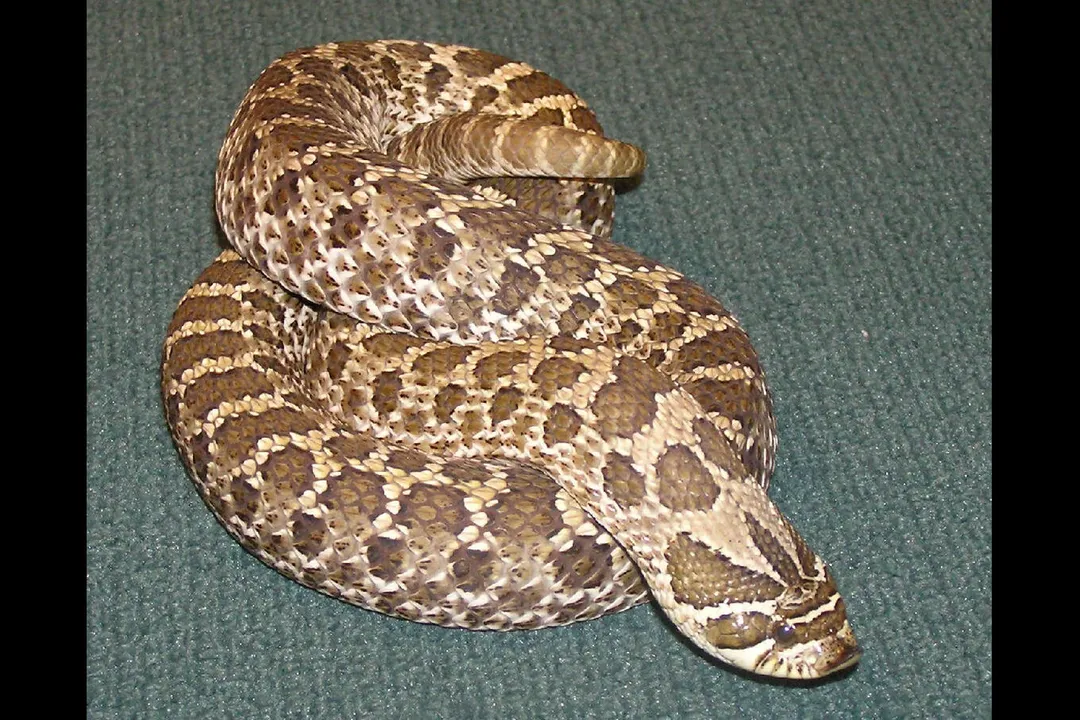
What specialized structure defines the Western Hognose Snake's snout, aiding in its fossorial habits?
Upturned rostral scale
The most crucial and visually distinct physical characteristic of the Western Hognose Snake is its snout, which is defined by a specialized structure called the upturned rostral scale. This scale is enlarged and curves upward at the very tip of the nose, acting functionally like a miniature shovel or plow. This morphology is a direct adaptation tied to the snake's fossorial habits, allowing it to efficiently move soil and dig into the substrate. This action is essential for the snake's hunting strategy, primarily to unearth its preferred prey, which consists mainly of toads and other amphibians that hide underground. Furthermore, this adaptation enables the snake to rapidly conceal itself when threatened by nosing its way beneath loose soil or leaf litter for escape.