Which physical adaptation defines the Genus Heterodon for H. nasicus, aiding in its fossorial behavior?
Answer
Upturned, pointed rostral scale
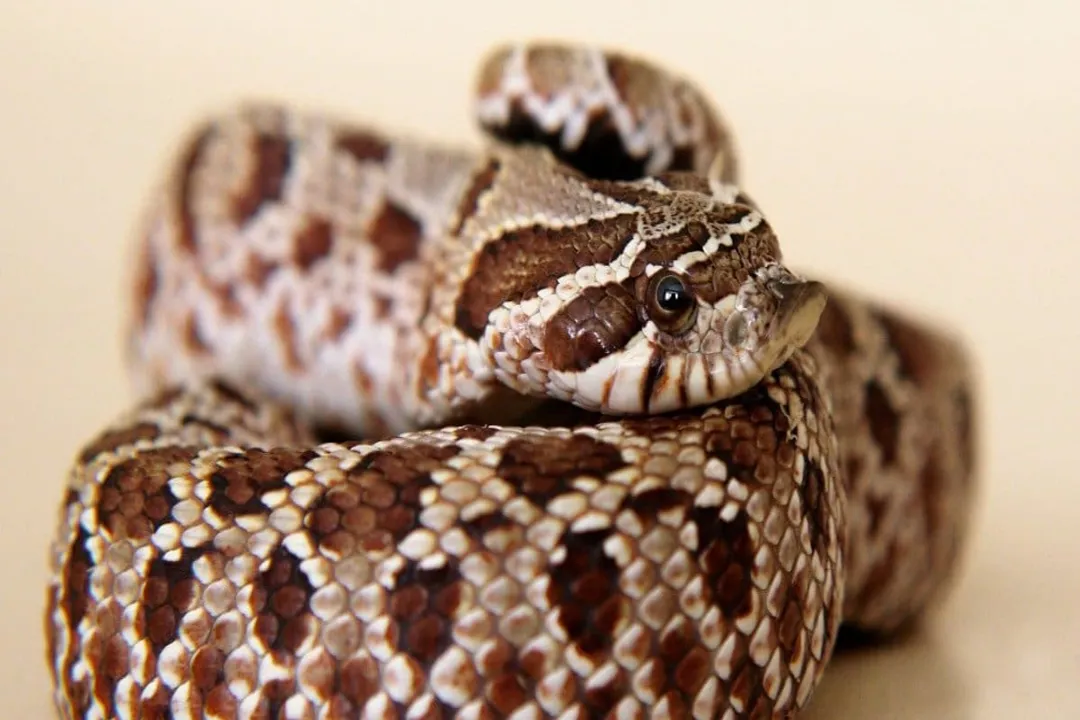
The defining characteristic that groups snakes into the Genus Heterodon, including *H. nasicus*, is the presence of a distinctly upturned and pointed rostral scale located on the snout. This specialized structure is a crucial morphological adaptation that directly supports their lifestyle, as it is used for digging and rooting through loose soil and leaf litter. This rooting behavior is directly linked to their preferred diet, which consists mainly of toads and other amphibians. Although the species name *nasicus* relates to the nose, the specific structure of the rostral scale serves the functional purpose of specialized digging behavior within the genus.
Related Questions
What specific dental structure defines Heterodon nasicus's placement in Family Colubridae?Which physical adaptation defines the Genus Heterodon for H. nasicus, aiding in its fossorial behavior?What characteristic of Class Reptilia dictates that H. nasicus must bask in the sun to become active?Which groups besides snakes are explicitly included in the diverse Order Squamata?What does the specific species designation nasicus signify regarding the morphology of Heterodon nasicus?What primary characteristic places H. nasicus in Kingdom Animalia instead of the Plant Kingdom?How does the Colubridae family placement affect the specialized captive diet requirements for H. nasicus?What ancestral feature confirms H. nasicus's developmental inclusion in Phylum Chordata?Besides the pointed snout, what visual trait helps confirm the H. nasicus species identification in the field?How does the Colubridae placement contrast H. nasicus with Vipers or Cobras regarding venom apparatus structure?