What is the initial defensive display strategy employed by the Western Hognose when threatened?
Answer
Flattening the neck and body to create a cobra-like hood, accompanied by hissing.
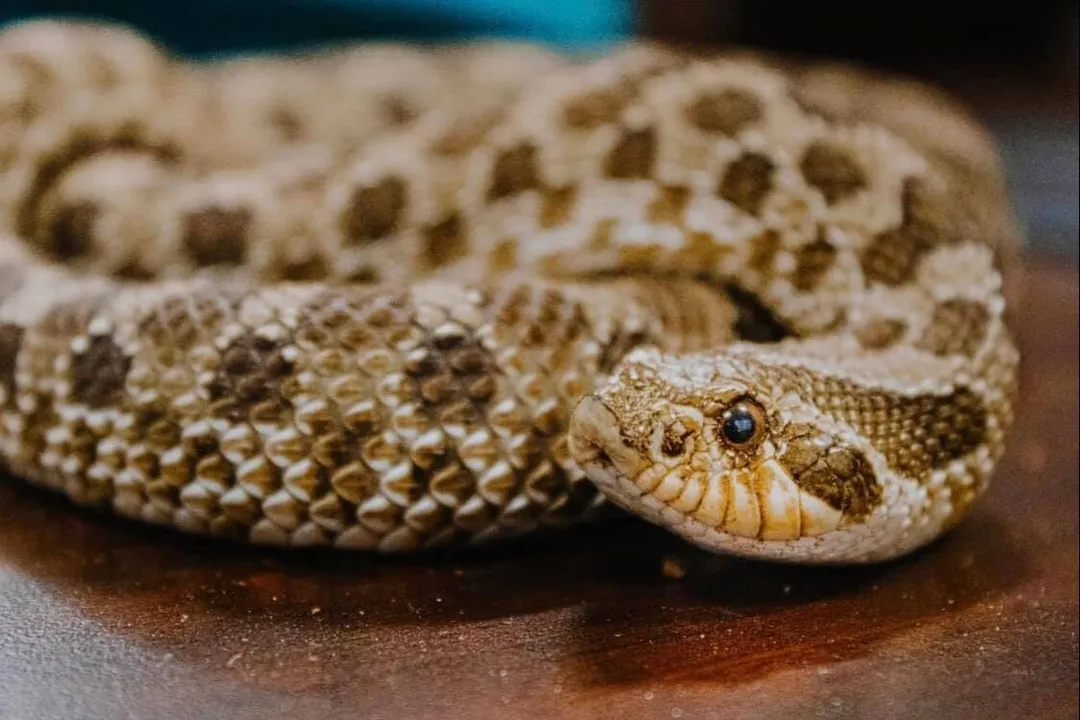
The defensive behavior sequence employed by the Western Hognose is a graded response, meaning it starts mildly and only escalates if the initial deterrent is unsuccessful. The very first stage of this display involves postural changes intended to maximize apparent size and intimidate a potential threat. This includes flattening the neck and the anterior part of the body to form a hood shape, reminiscent of a cobra display. This visual threat is typically reinforced by loud, forceful hissing sounds produced during exhalation.
Related Questions
What are the three recognized species within the genus Heterodon?What is the primary function of the upturned rostral scale on *H. nasicus*?What is the final defensive act exhibited by the Western Hognose if bluffing fails?How do hognoses inject mild venom secretions into their preferred prey?What constitutes the overwhelming majority of the Western Hognose Snake's diet?How does the rostral scale structure of *H. nasicus* generally compare to *H. platirhinos*?To which major snake family does the Western Hognose Snake belong?What is the initial defensive display strategy employed by the Western Hognose when threatened?Which geographical description fits the distribution of *H. nasicus* across North America?What specific evolutionary advantage does the mild venom provide against favored prey?