How does the skull of *Rena humilis* function mechanically to facilitate its subterranean existence?
Answer
The skull bones are more fused, acting as a powerful wedge to push through the earth
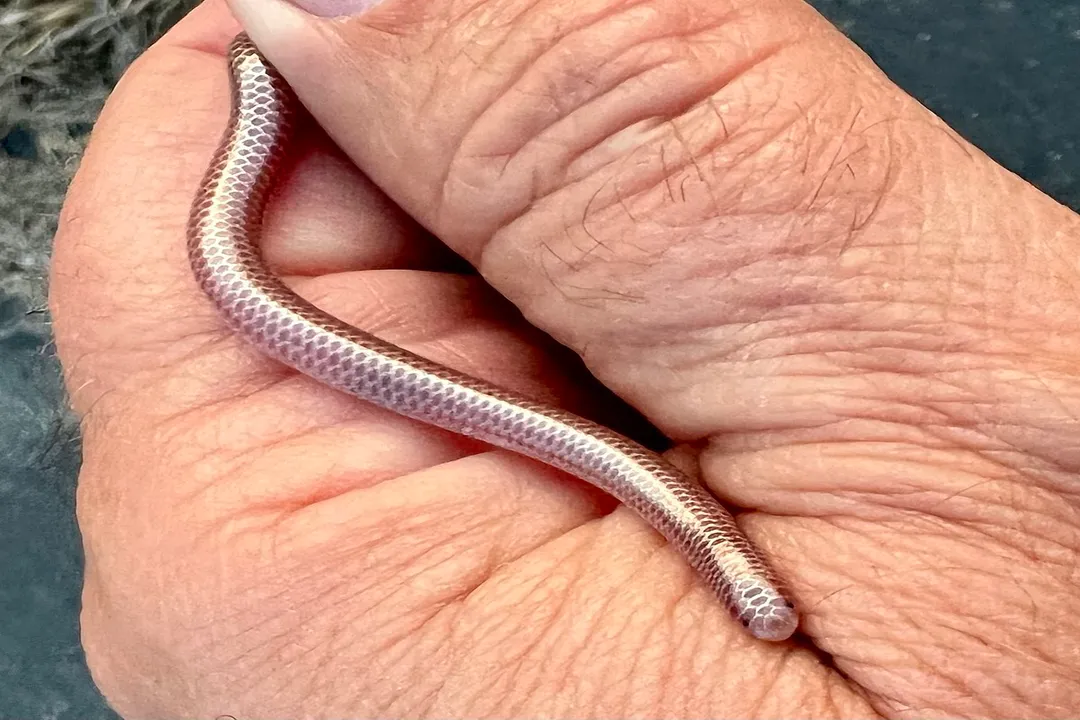
The lifestyle spent beneath the surface mandates specialized mechanical adaptations for movement through dense soil. Unlike many modern snakes that possess kinetic skulls optimized for swallowing prey larger than their heads, the Western Blind Snake has evolved a skull where the bones are significantly more fused. This rigidity transforms the head into a structurally robust wedge, enabling the snake to exert significant force and effectively push its way through compacted earth and tunnels, which is a critical adaptation for its fossorial life.
Related Questions
What mechanism facilitated the initial diversification of blindsnakes heavily influenced by the breakup of Indigascar?How does the skull of *Rena humilis* function mechanically to facilitate its subterranean existence?What geological time frame is suggested by molecular studies for the initial diversification of Scolecophidians?What specialized structure is located at the tail terminus of *R. humilis* to aid in forward propulsion within tunnels?Which description accurately characterizes the scales on the body of the Western Blind Snake?Within the Scolecophidia infraorder, which family specifically houses the genus *Rena*, containing *R. humilis*?What specific dietary relationship critically links the evolutionary success and persistence of *R. humilis*?What surprising mechanism is strongly supported by molecular phylogenies for the dispersal of some blindsnake clades across the Atlantic gap?What does the Latin meaning of *humilis* in the Western Blind Snake’s scientific name, *Rena humilis*, signify about its lifestyle?When did the major evolutionary radiation within the Typhlopidae family occur relative to the Cretaceous extinction event?