Western Hognose Snake Physical Characteristics
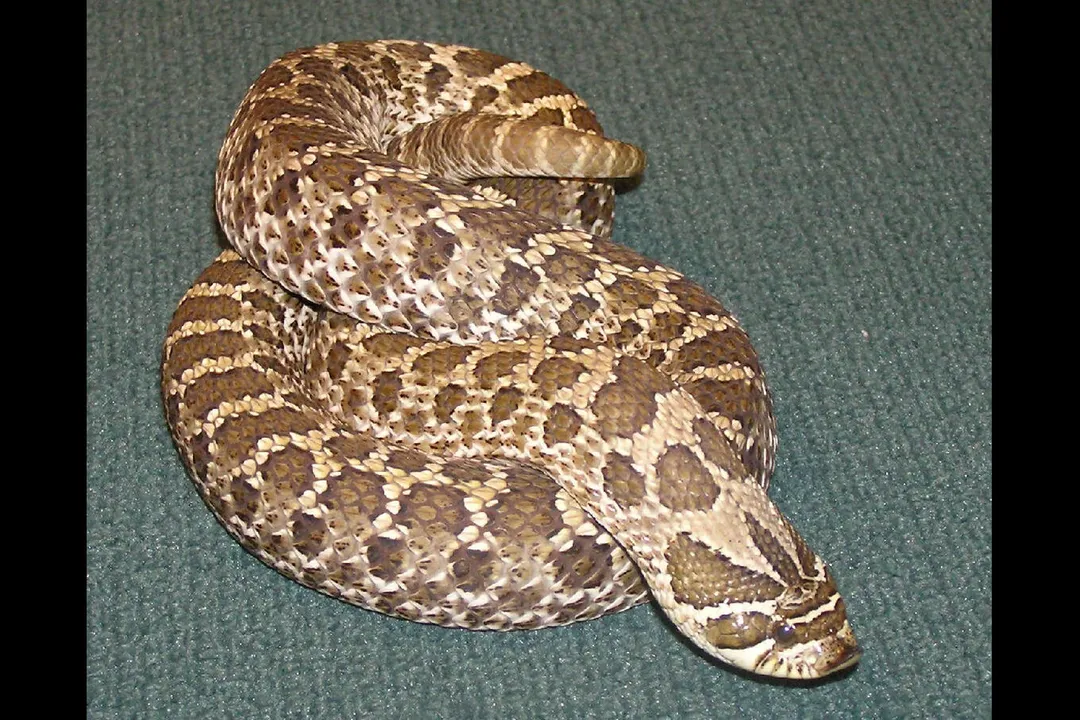
The Western Hognose Snake presents a study in remarkable physical variability, making a single description challenging. These snakes, belonging to the genus Heterodon, are perhaps best known for a single, unmistakable feature that dictates much of their behavior: a prominently upturned nose. [5] However, their overall appearance, from length to coloration, covers a broad spectrum across their range, leading to many encounters where an observer might not immediately recognize the species.
# Size Structure
Adult Western Hognose Snakes are generally considered to be of a moderate size within the North American snake population. Most sources indicate a typical adult length clustering around the two-foot mark, but there is notable potential for them to grow significantly larger or remain quite small. [4][2][3][9] Specific measurements vary slightly across different ecological observations. For instance, some reports suggest an average length hovering around 18 to 33 inches, [2][9] while others place the typical adult range between 1.5 to 3 feet. [3][8] The upper end of this spectrum is quite specific in some accounts, noting that they can reach about 3 feet, [1] or perhaps rarely exceeding that mark. [4] Another source places the adult range slightly tighter, between 40 and 90 centimeters, which translates to roughly 15.7 to 35.4 inches. [7] This range suggests that while the average snake you might observe is likely around 2 feet long, [4] an individual nearing three feet is certainly within the normal physical potential for the species.
When considering body mass, which is less frequently detailed than length, the general consensus suggests a stout body build. [5] While not as heavy-bodied as some other common snakes, their structure is deceptively muscular for their length, contributing to their capability for burrowing. [6] If one were to observe several adults side-by-side, they would notice differences in girth, but the defining characteristic remains the stoutness relative to the Heterodon genus, rather than overwhelming bulk. [5]
To better illustrate the range of reported lengths, we can consolidate the data points:
| Source Type | Typical Range (Inches) | Maximum Reported (Feet) |
|---|---|---|
| General Average | 18–33 [2][9] | ~3 [1][4] |
| Minimum End | ~15.7 [7] | - |
| Maximum End | ~35.4 [7] | - |
One interesting point derived from comparing these size metrics across geographic reports is that environmental pressures—perhaps prey availability or local climate—might significantly influence the expression of their maximum size potential. A snake in an area with abundant, easy-to-unearth prey might consistently trend toward the upper end of the 3-foot mark, whereas populations in drier, harsher environments might rarely surpass two feet. This inherent variability in size is merely a preamble to the striking diversity found in their external coloration.
# Signature Snout
The most crucial and visually distinct physical characteristic of the Western Hognose Snake is unquestionably its snout. [8] This feature is not merely a quirk of facial structure; it is an adaptation directly tied to their fossorial habits, even though they are not considered strictly subterranean snakes. [5] The key component is the upturned rostral scale located at the very tip of the nose. [4][5][8]
This specialized scale is enlarged and curves upward, effectively acting as a miniature shovel or plow. [5] The entire purpose of this structure is to assist the snake in moving soil and digging into the substrate, which is essential for hunting their preferred prey, primarily toads and amphibians, which they often unearth from their hiding spots. [5][8] An observer familiar with other common snakes might initially mistake this raised snout for an injury or a strange growth, but it is entirely normal and critical for the species' survival strategy. The efficacy of this tool means that the hognose can rapidly conceal itself when threatened, simply by nosing its way beneath loose soil or leaf litter, making its escape from predators. [8]
# Color Patternation
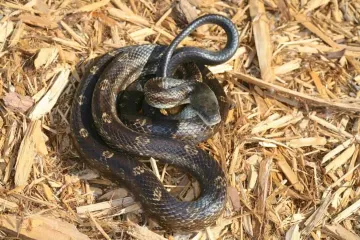
If the snout is the defining physical feature, then color and pattern variability is the most confusing one. The Western Hognose Snake exhibits one of the widest color variations among North American reptiles. [4][7] They can be found in an astonishing array of base colors, often making field identification tricky for the novice herpetologist. [2][4]
The background coloration can range from light to dark, encompassing shades such as yellow, pale tan, olive, gray, brown, reddish, or even solid black. [1][2][4][8][9] This means that a snake living in a sandy, arid environment might be light tan or yellow, offering excellent camouflage against the pale substrate, while a closely related population in a heavily forested or dark, loamy area might present as dark gray or black. [2][8]
Overlaying this variable background is the dorsal pattern. Almost universally, Western Hognoses possess a series of dark markings, or blotches, running down the length of their back. [1][2][7] A key detail that often links these otherwise disparate color morphs is that these dorsal blotches are frequently, though not always, outlined in dark color, often black or dark brown. [4][8][9] These blotches can be somewhat irregular or distinct, breaking up the snake’s outline effectively when seen against a mottled forest floor or patchy grassland. [4]
# Ventral Markings
The underside, or ventral surface, provides another critical, though sometimes less visible, set of physical characteristics. Unlike the back, which offers camouflage for blending in, the belly pattern often serves a dual purpose: defense displays and potential aposematism (warning coloration) when coupled with their dramatic bluffing behavior. [3] The belly is typically pale, described as white or yellow. [1]
Superimposed on this light background are dark markings that, depending on the individual and population, can appear as blotches or, most distinctively, a black and white checkered pattern. [3][7][8] In some individuals, these dark markings might merge or become less distinct, appearing merely as dark blotches rather than a clear checkerboard. [9] It is this strong black and white patterning on the underside that is often cited as a reliable feature when the dorsal color is so cryptic. [3]
# Head Scales Eyes
The structure of the head itself offers more consistent identifiers. The head is typically described as broad and distinct, being noticeably wider than the neck, a common feature in many snakes, though perhaps more pronounced in the Hognose. [2][8] This shape is part of the presentation they adopt during their famous defensive displays, which include flattening the head into a cobra-like hood shape. [4]
In addition to the prominent rostral scale discussed earlier, other facial markings can be present. Some sources specifically note the presence of a dark line running through the eye. [3][9] This stripe can help break up the snake's profile when viewed head-on, further aiding in camouflage when the snake is attempting to remain still.
The scales covering the body are another consistent feature. The Western Hognose Snake possesses keeled scales. [2][4][5][9] A keeled scale is one that has a ridge running down the center, giving the snake a somewhat rough or matte texture rather than a sleek, shiny appearance. While one source mentions that juveniles have keeled scales and adults may have smooth or keeled scales depending on the location, [4] the predominant description across the literature points toward the keeled nature being standard for the species. [2][5][8] The texture provided by these scales likely aids in gripping loose soil when the snake is actively using its specialized snout for burrowing.
# Visual Summary of Key Traits
To summarize the key physical characteristics that can help distinguish the Western Hognose Snake from other local species, one can focus on this checklist:
- Snout: Clearly upturned rostral scale.
- Scales: Keeled (rough texture).
- Body Shape: Stout, but relatively slender compared to some heavy-bodied snakes.
- Head: Broad, wider than the neck.
- Dorsal Pattern: Blotches, often dark-edged, on a highly variable background color (tan to black).
- Ventral Pattern: Pale with distinct black and white checkerboard or blotching.
- Eye: Often features a dark line passing through it.
Considering how the highly variable dorsal color scheme interacts with the distinct, fixed features like the snout and the ventral pattern offers a practical approach for identification in the field. If you encounter a snake with a dull, uniform gray back, you might immediately dismiss it as a different species, but checking the profile of the snout for that upturned scale is the non-negotiable step. Furthermore, observing the belly, even if only briefly, by turning the snake over (only if safe and necessary) or seeing it during a defensive display, can confirm the identity instantly if the characteristic black-and-white pattern is visible. [3] The combination of a specialized digging tool, variable camouflage, and a startling defensive underside provides a complete physical package suited to a life spent near and under the ground surface.
Related Questions
#Citations
Western Hognose Fact Sheet | racinezoo.org
Mexican Hog-nosed Snake (Heterodon kennerlyi)
Western Hognose Snake
Western hognose snake
Heterodon | INFORMATION
Western Hognose Snake Care Guide: Expert Tips & FAQs
Western Hognose Snake - Facts, Diet, Habitat & ... - Animalia
Western Hognose Snake
Plains Hog-nosed Snake - Montana Field Guide