Western Hognose Snake Evolution
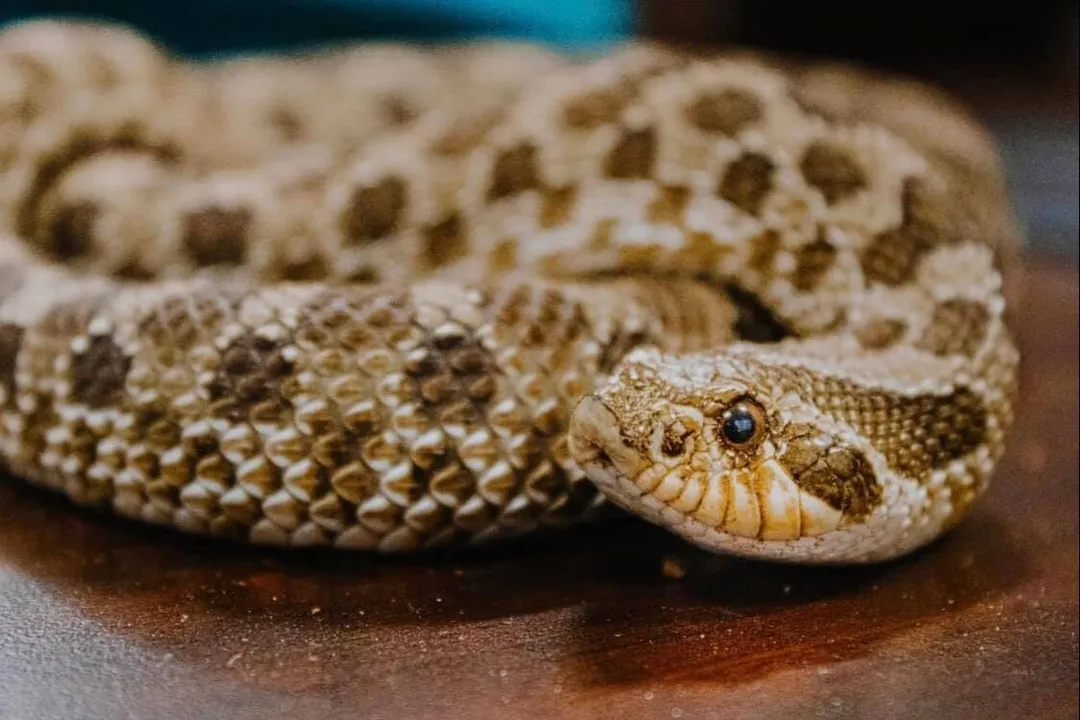
The Western Hognose Snake, Heterodon nasicus, presents a fascinating case study in evolutionary adaptation, showcasing how specialized morphology and behavior can arise in response to specific ecological niches across the North American continent. [1][2] This species, recognizable instantly by its upturned snout, belongs to the family Colubridae, the largest snake family worldwide, yet it holds a distinct place within its own genus, Heterodon. [2][5] Understanding its lineage involves tracing the development of its unique survival toolkit, from its digging apparatus to its dramatic, though largely harmless, threat displays. [4][8]
# Genus placement

The genus Heterodon encompasses three recognized species: the Western Hognose (H. nasicus), the Eastern Hognose (H. platirhinos), and the Southern Hognose (H. simus). [1][2] These snakes share characteristics, including the defining rostral scale on their nose, but their evolutionary paths have diverged based on habitat and prey availability. [1] H. nasicus is generally considered the most widespread of the three, inhabiting areas from southern Canada down through the central and western United States and into Mexico. [1][2] The evolutionary story of the Western Hognose is thus one of successful radiation across diverse, often arid or semi-arid, environments. [2]
The mild venom delivered by these snakes further highlights a unique evolutionary niche. Unlike many venomous snakes, hognoses possess small, rear-positioned fangs used to inject secretions from enlarged Duvernoy's glands. [8] While they are generally not medically significant to humans, this adaptation is highly effective against their preferred prey, primarily toads and frogs. [8][4] This system represents a specialized chemical defense mechanism evolved to subdue amphibians that might otherwise be toxic or difficult to manage. [8]
# Snout specialization
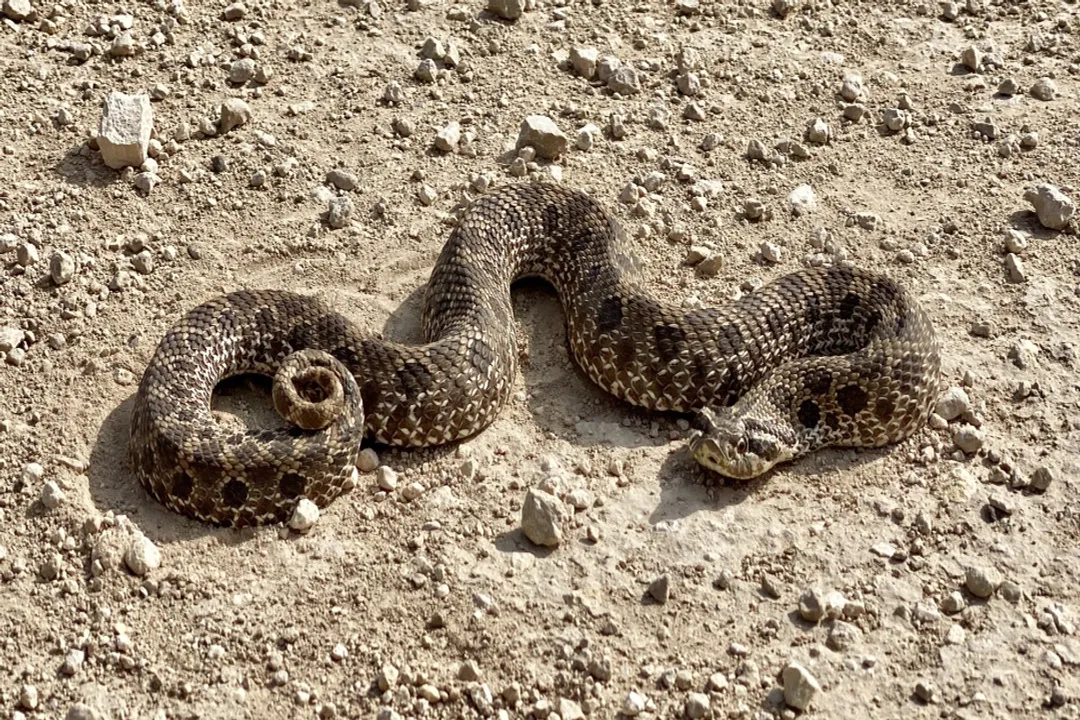
The most obvious evolutionary modification present in H. nasicus is the upturned rostral scale at the tip of its nose. [2][4] This structure is not merely decorative; it is a finely tuned instrument for terrestrial engineering. [4] In the context of evolution, this snout acts as a plow, enabling the snake to efficiently burrow into loose substrates like sand or loose soil. [2][4]
This adaptation is particularly pronounced in the Western Hognose compared to its Eastern counterpart, H. platirhinos, suggesting a strong selective pressure favoring subterranean activity in the environments H. nasicus typically occupies. [1] While H. platirhinos also burrows, the structure of the rostral scale appears more robust and pronounced in H. nasicus. [1] This difference likely reflects specialization based on substrate—H. nasicus often favoring the sandy prairies and semi-arid regions where this specialized digging power grants a distinct advantage in hunting fossorial prey or seeking thermal refuge. [1][4] It is interesting to consider that the structural rigidity of this scale itself must have evolved to withstand repeated abrasion against coarse soil particles over generations, a silent testament to mechanical evolutionary refinement. [4]
# Defensive strategies
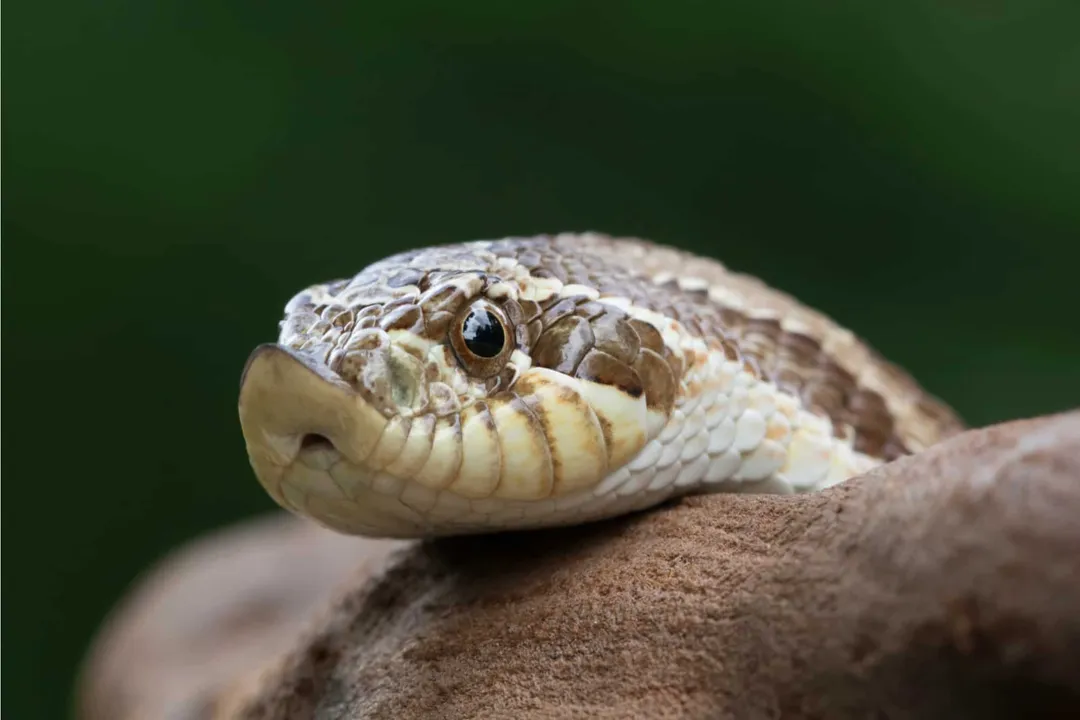
The behavioral repertoire of the Western Hognose is arguably as evolutionarily complex as its physical features, centered almost entirely around avoiding actual conflict. [8] When threatened, they engage in a graded series of defensive displays, starting with the mildest and escalating only if the threat persists. [8][6]
This escalation often begins with flattening the neck and body, creating a hood similar to a cobra, accompanied by loud hissing sounds. [6][4] If this bluff fails to deter the predator, the snake moves to the final act: thanatosis, or death feigning. [6] During this performance, the snake may flip onto its back, allowing its mouth to hang open and its tongue to loll out, sometimes even emitting a foul musk. [4][6] Predators, especially mammals, are often deterred by prey that appears diseased or already dead, thus providing a survival benefit to the best "actors". [6]
This complex, multi-stage defense suggests strong evolutionary pressure from visually oriented predators across its expansive range. [8] A simpler, purely aggressive defense might be metabolically costly or lead to injury; thus, a mechanism that relies on deception—a form of behavioral mimicry—has proven highly successful across the Heterodon genus. [6] The effectiveness of the thanatosis display varies regionally, a subtle evolutionary divergence likely tied to the local predator community's learning curves or susceptibility to such deceptions. [8]
# Range radiation

The distribution of H. nasicus spans a vast area, covering environments from dry scrublands and prairies to bottomlands and agricultural areas. [2][7] This wide geographic spread often correlates with the establishment of subspecies or clinal variation driven by localized environmental pressures. [7] For instance, populations in the drier western parts of their range may exhibit slightly different color patterns or behavioral tendencies than those in the central plains, adaptations that aid in camouflage or thermoregulation within their specific microclimates. [7][9]
The ability of the Western Hognose to persist across such varied landscapes points to a generalist approach to habitat selection combined with a specialist approach to diet. [4] They thrive where soils allow for easy burrowing and where their primary food sources—toads and frogs—are reliably present. [4][7] Examining historical fossil records, though sparse, would likely trace the genus's origin to regions where these amphibian specialists were abundant, with subsequent migrations outward leading to the diversification seen today. [2]
The parallel evolution observed within the Heterodon genus, where different species have adapted distinct snout shapes (H. nasicus for burrowing, H. simus for tunneling in sand substrates) while maintaining the core defensive strategy, provides a clear example of adaptive radiation from a common ancestor. [1] The specific morphology of the Western Hognose is clearly tuned to the loose soils and semi-arid conditions that characterize much of its central and western North American home. [2]
# Dietary selection
Evolutionary success in any predator hinges on consistent access to appropriate calories, and for the Western Hognose, this translates directly to an obsession with amphibians. [8] Their diet is overwhelmingly dominated by toads (Bufo species), though they will consume frogs and occasionally small rodents or lizards if necessary. [4][8] This narrow focus on toads, many of which carry potent skin toxins, is a key evolutionary adaptation. [4]
The mild venom discussed earlier is crucial here; it functions to subdue amphibians that might otherwise employ their own chemical defenses or simply be too large or strong for an unvenomated snake to manage safely. [8] Toads, having co-evolved toxic skin secretions as a defense against many predators, found themselves poorly equipped against a predator specialized to overcome that exact barrier. [8] This predator-prey arms race has cemented the hognose’s specialized feeding habit. [4]
It is worth noting that while H. nasicus is generally found further west and north, the Southern Hognose (H. simus) shows an even tighter evolutionary coupling with gophers and pocket mice in the sandy soils of the Southeast, suggesting that even within the same genus, the pressures of local prey availability have dictated subtle but significant differences in habitat preference and feeding strategy over evolutionary timescales. [1] The Western Hognose's preference for amphibians keeps it tethered to moist areas within its generally drier range, illustrating a tight evolutionary constraint placed by its specific trophic role. [7]
Related Questions
#Citations
Western hognose snake - Wikipedia
Heterodon | INFORMATION - Animal Diversity Web
Western Hognose Snake - Burpee Museum of Natural History
Hognose History: Cracking the Code of a Star Snake in West Texas
The Hognose Snake: A Prairie Survivor for Ten Million Years
Hognose snake - A-Z Animals
[PDF] plains hog-nosed snake - Natural Heritage - Illinois.gov
(PDF) Natural History of the Western Hog-nosed Snake (Heterodon ...
Western Hognose Snake - ReptiChip LLC
WESTERN HOGNOSE SNAKE - Hartman Reserve Nature Center