What evolutionary advantage does the small size of *I. pacificus* nymphs provide concerning Lyme disease transmission?
Answer
Their inconspicuousness aids the transmission cycle by allowing them to feed without being easily detected or removed.
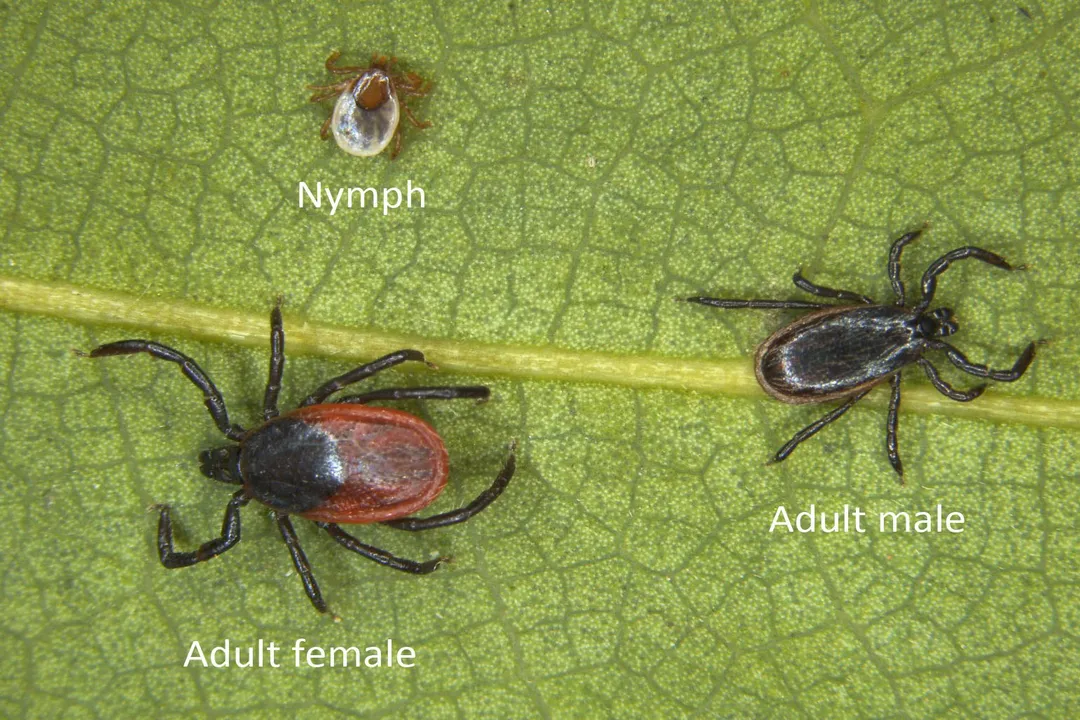
The feeding strategy of *Ixodes pacificus* is highly adaptable, but the physical characteristics of its immature stages play a crucial role in disease ecology. Nymphs are primarily responsible for transmitting Lyme disease to humans. Their small physical size confers an evolutionary advantage: inconspicuousness. Being small and difficult to spot allows nymphs to remain attached to a host, including humans, for the necessary duration required to successfully complete pathogen transmission without being easily detected, groomed off, or otherwise interrupted during the feeding process.
Related Questions
Which *Ixodes* species is *I. pacificus* molecularly suggested to share a closer evolutionary relationship with?How does the range stability of *I. pacificus* over the last half-century contrast with *I. scapularis*?What primary factor likely maintained widespread *I. pacificus* populations across the West over the last century?What genetic characteristic is noted for the isolated *I. pacificus* population found in Utah?What historical event do researchers propose might explain the fragmentation of the isolated Utah *I. pacificus* population?Which reptile is identified as an important host for immature *I. pacificus* stages specifically in California?What evolutionary advantage does the small size of *I. pacificus* nymphs provide concerning Lyme disease transmission?Under moderate to high emissions pathways (RCP 6.0 and 8.5), what is the general prediction for the climate niche of *I. pacificus* by 2050?Which environmental conditions are considered optimal for the survival of *I. pacificus* in its core areas?What historical pressure seemed less severe or was managed differently in the West compared to the Eastern US, affecting *I. pacificus* distribution?