What difference exists between the leg count of Ixodes pacificus nymphs and adults?
Answer
Nymphs have six legs, whereas adults have eight legs.
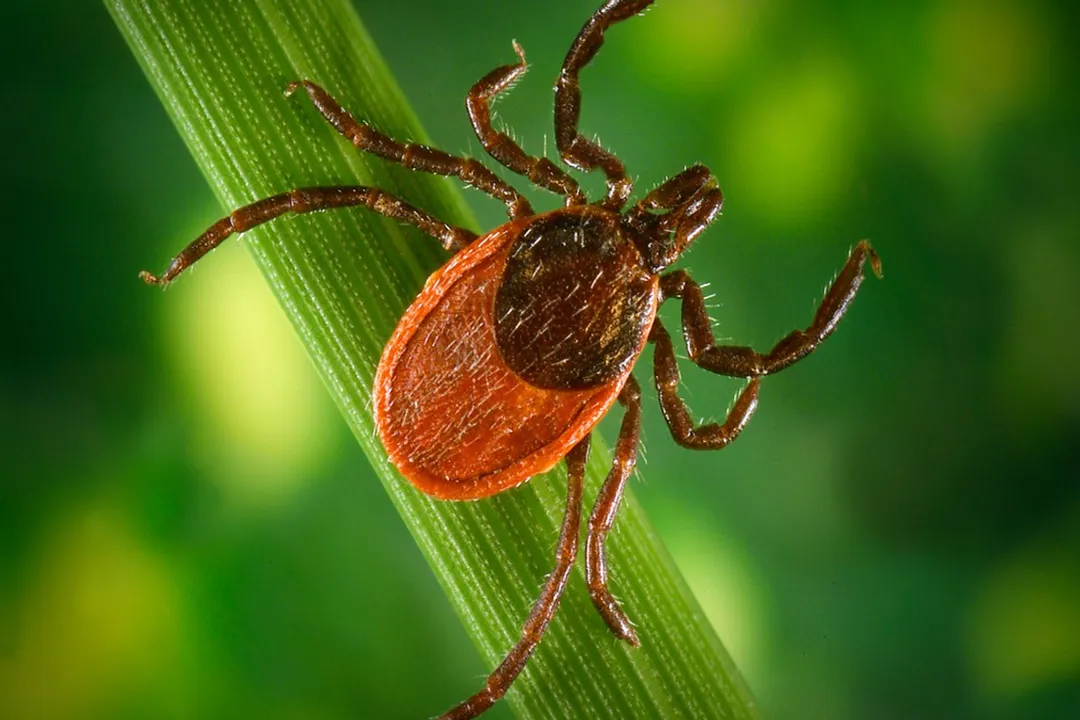
The structure of the legs changes significantly as the Western Blacklegged Tick develops through its life stages. Immature ticks, specifically the larvae and nymphs, are characterized by possessing six legs, which is typical for ticks in the early instars. However, upon molting into the adult stage, both sexes of the *Ixodes* genus ticks, including *I. pacificus*, develop eight legs. This difference in leg count is a fundamental characteristic used in identifying the developmental stage of a specimen, with the shift from six to eight legs marking the transition to maturity.
Related Questions
How is the adult female Western Blacklegged Tick, Ixodes pacificus, visually distinguished?Which pathogen transmitted by I. pacificus can lead to severe neurological disease like encephalitis or meningitis?What difference exists between the leg count of Ixodes pacificus nymphs and adults?What is the primary role of the Western Fence Lizard regarding Lyme disease bacteria carried by I. pacificus?Which landscape strategy is recommended over frequent mowing for I. pacificus control in coastal scrub habitats?What is the approximate duration of the life cycle for the Western Blacklegged Tick?What specific repellent is advised for treating clothing and gear before entering I. pacificus endemic areas?When are nymphs of Ixodes pacificus most commonly encountered by humans due to peak activity?What two primary pathogens, besides Lyme disease, are associated with the Western Blacklegged Tick?Where along the Pacific Coast is the geographic distribution of Ixodes pacificus concentrated?