What key leg count distinguishes the Class Arachnida of *I. pacificus* from insects?
Answer
Eight legs in their adult and nymphal stages
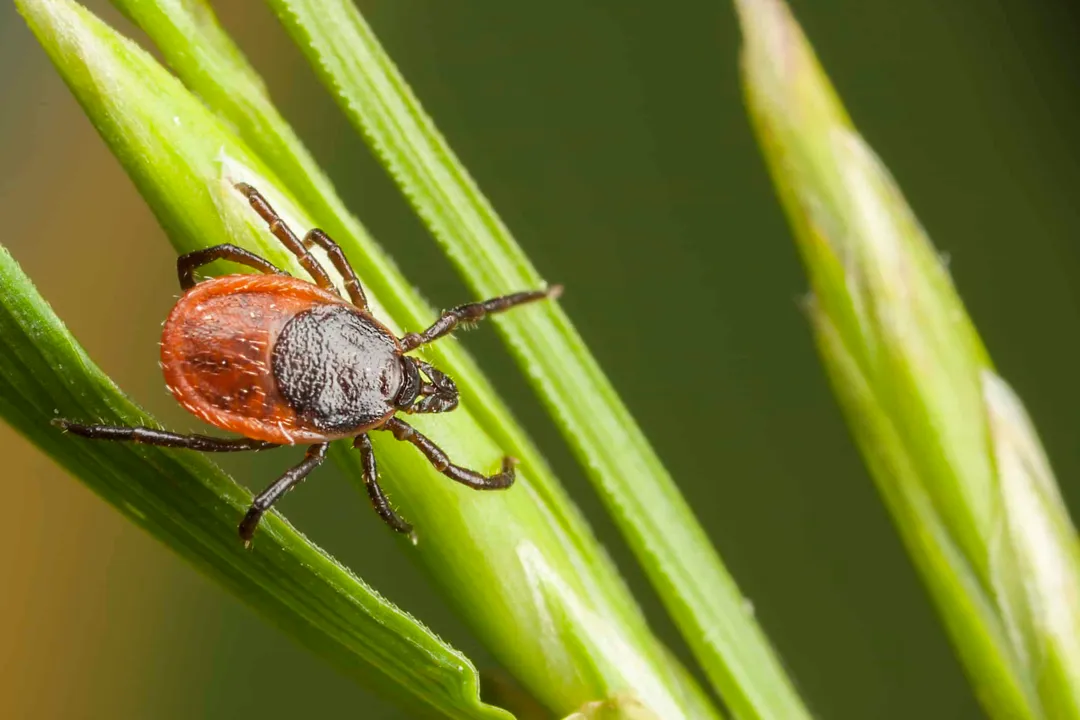
The designation into Class Arachnida is critical because it defines a major separation between ticks and insects based on appendage count. Arachnids, including spiders, scorpions, mites, and ticks like *I. pacificus*, possess eight legs when they reach maturity or the nymphal feeding stage. In contrast, insects are defined by having six legs. This structural difference is a fundamental characteristic used in taxonomy to differentiate these major arthropod groups, reflecting distinct evolutionary paths within the overall phylum.
Related Questions
Which Phylum classification groups *Ixodes pacificus* with insects and crustaceans?What key leg count distinguishes the Class Arachnida of *I. pacificus* from insects?What distinct morphological feature defines *I. pacificus* belonging to Family Ixodidae?What biological capability inherent to the *Ixodes* genus alerts professionals to potential neurotoxic effects?What specific epithet in *Ixodes pacificus* clearly indicates its primary geographical confinement?How long do *Ixodes* species, including *I. pacificus*, often require to progress from larva to adult stage?Which specific bacterium transmitted by *I. pacificus* is responsible for causing Lyme disease?What feature dictates that *I. pacificus* surveillance data must often be tracked separately from *I. scapularis* records?Which specific small mammal is identified as a critical reservoir host for Lyme disease bacteria in California for *I. pacificus*?What host type do the larval stages of *I. pacificus* commonly target for feeding during their development?What characteristic separates ticks in Order Ixodida from other mites in Subclass Acari?