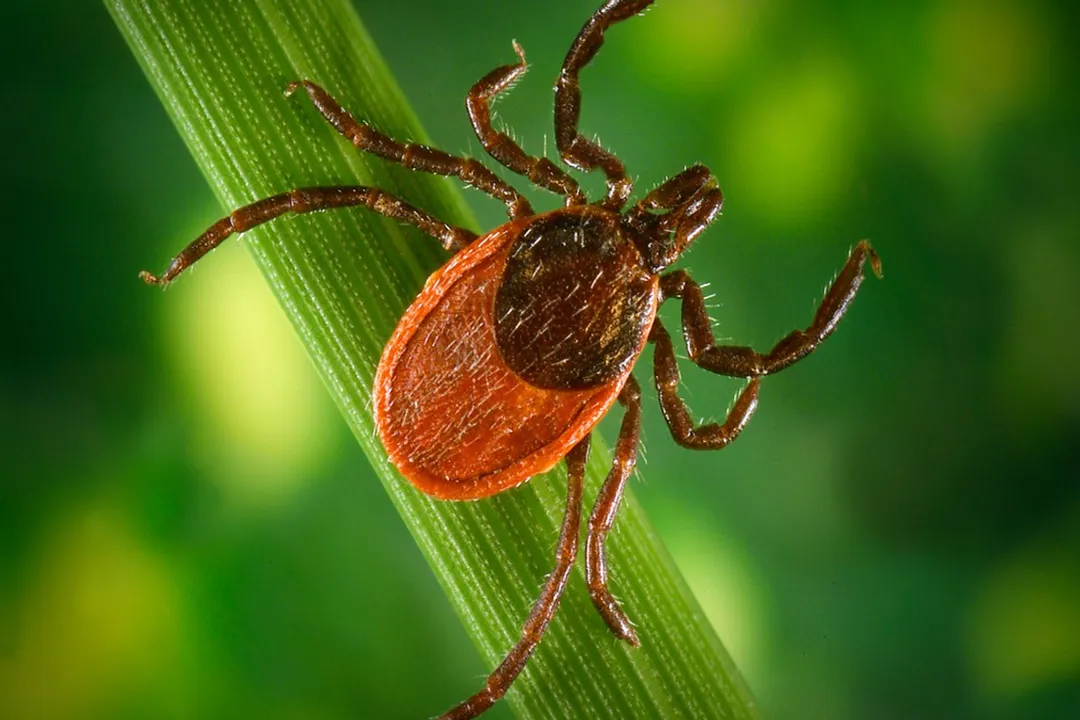
How is the adult female Western Blacklegged Tick, Ixodes pacificus, visually distinguished?
Answer
They exhibit a reddish-orange body contrasting with a black scutum and black legs.
The visual identification of the adult female Western Blacklegged Tick involves specific coloration patterns. The text specifies that adult females are recognizable by a distinct contrast: their body is reddish-orange, while their scutum, which is the upper shield-like plate, is black or dark brown. Furthermore, their legs are also black. This combination differentiates them from the adult males, which are generally darker overall, appearing almost entirely black, or from other tick species. Distinguishing features are crucial, especially when comparing them to the similarly named eastern counterpart.
Related Questions
How is the adult female Western Blacklegged Tick, Ixodes pacificus, visually distinguished?Which pathogen transmitted by I. pacificus can lead to severe neurological disease like encephalitis or meningitis?What difference exists between the leg count of Ixodes pacificus nymphs and adults?What is the primary role of the Western Fence Lizard regarding Lyme disease bacteria carried by I. pacificus?Which landscape strategy is recommended over frequent mowing for I. pacificus control in coastal scrub habitats?What is the approximate duration of the life cycle for the Western Blacklegged Tick?What specific repellent is advised for treating clothing and gear before entering I. pacificus endemic areas?When are nymphs of Ixodes pacificus most commonly encountered by humans due to peak activity?What two primary pathogens, besides Lyme disease, are associated with the Western Blacklegged Tick?Where along the Pacific Coast is the geographic distribution of Ixodes pacificus concentrated?