Western Blacklegged Tick Physical Characteristics
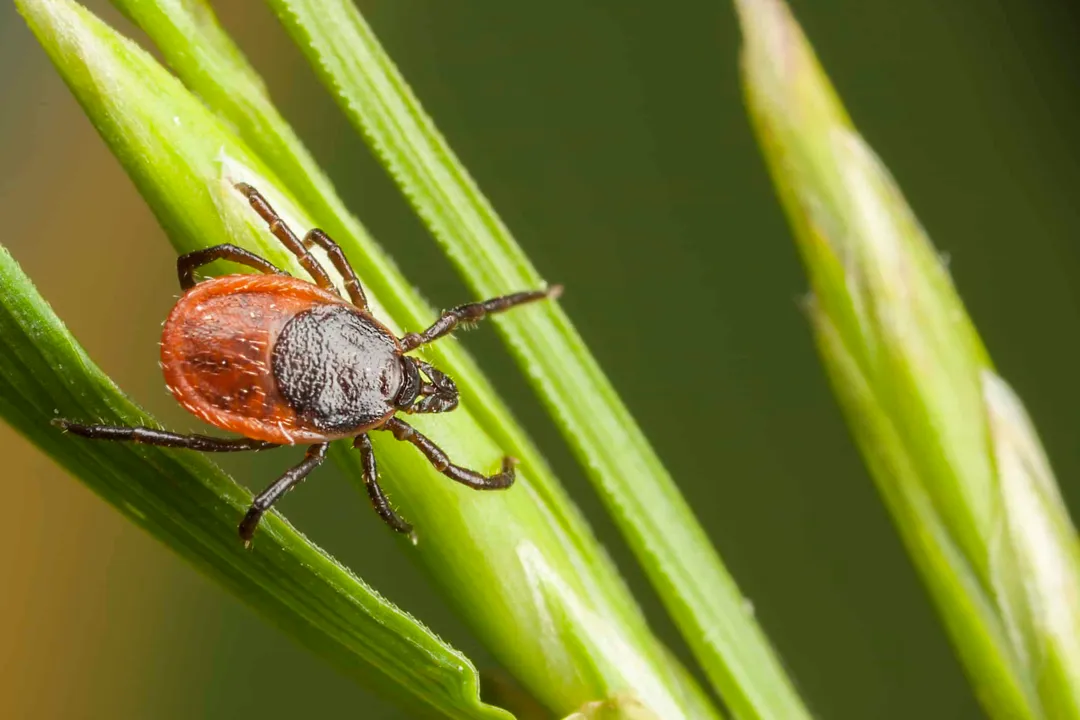
The Western Blacklegged Tick, scientifically designated as Ixodes pacificus, is one of the most significant arachnid pests along the Pacific Coast of North America. While they are often called deer ticks, just like their eastern counterpart, understanding their specific physical attributes is crucial for accurate identification and risk assessment. As a type of hard tick, it belongs to the family Ixodidae, meaning its back is protected by a tough, sclerotized shield.
# Defining Traits
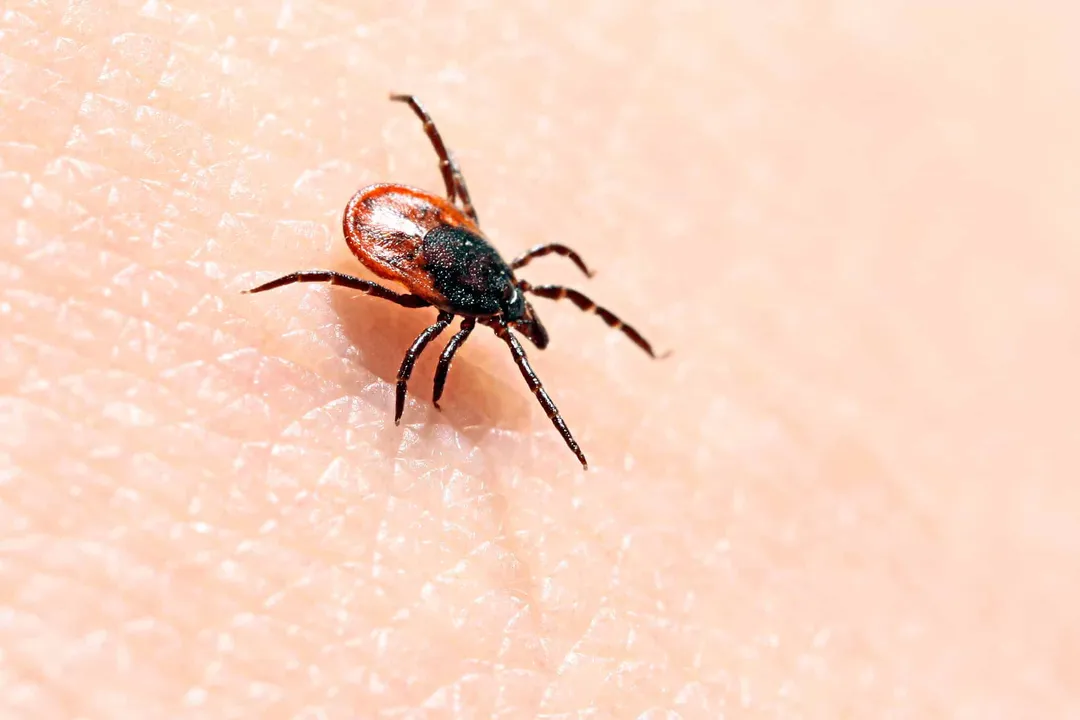
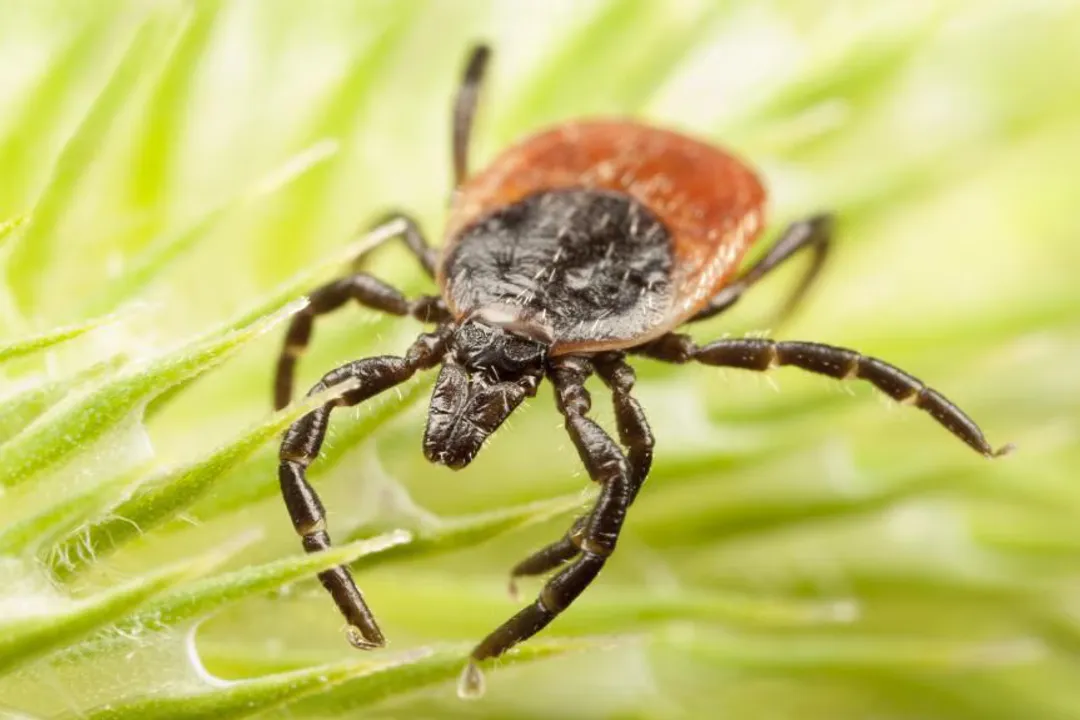
The tick gets its common name, "blacklegged," from a defining external feature: its legs are characteristically dark brown or black. This contrasts with some other tick species that possess brown legs. Furthermore, members of the Ixodes genus, including I. pacificus, can be identified by the absence of festoons—those small grooves or scalloping structures often found along the posterior margin of other tick species' bodies. Observing this absence, even under low magnification, helps confirm the identification as an Ixodes species.
# Life Stage Appearance
The physical profile of the Western Blacklegged Tick shifts dramatically across its four-stage life cycle: egg, larva, nymph, and adult. The entire cycle typically spans about three years.
# Larvae
The newly hatched larvae are the smallest stage and possess only six legs. They are described as tiny, often measuring less than 1 millimeter. At this initial stage, they are primarily questing in the leaf litter, waiting for a first host, which is frequently a small mammal, bird, or even a lizard.
# Nymphs
After feeding and molting, the tick develops into the nymph stage, acquiring its full complement of eight legs. Nymphs are minute, roughly the size of a poppy seed. Because of this diminutive size—less than 2 millimeters—nymphs are notorious for going unnoticed while feeding on a host. In the Pacific states, nymphal activity often peaks between April, May, and June.
# Adults
The eight-legged adult stage is where the most distinct sexual dimorphism in physical appearance becomes apparent. Adults are significantly larger than the immature stages, though they remain quite small compared to some other ticks.
# Sexual Dimorphism
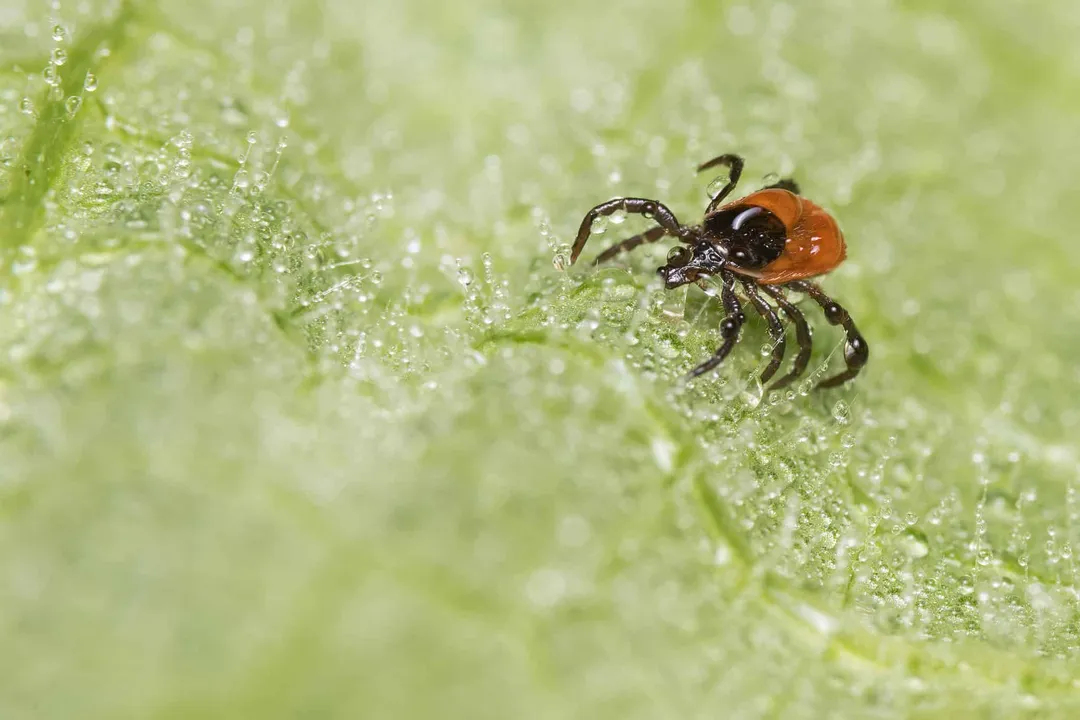
The differences in body structure and size between male and female adult I. pacificus are directly linked to their disparate feeding roles.
# The Male Tick
The adult male is generally the smaller of the two sexes, measuring around 2.54 mm or about 0.1 inches. Its physical limitation is rooted in its anatomy: the hard plate, or scutum, completely covers the entire dorsal side of the male. This total plating prevents the male from consuming large volumes of blood, meaning they do not become engorged or swell up after feeding. Their coloration is typically a uniform brownish-black.
# The Female Tick
In contrast, the unfed adult female is slightly larger, around 3.18 mm, or as small as 0.13 inches. Her scutum covers only the anterior part of her back, directly behind the head, allowing the abdomen to expand considerably during feeding. This expansion is dramatic; an unfed female may start at around 3 mm but can engorge to 9.5 mm or longer, sometimes reaching up to 3/8 of an inch.
When unfed, the adult female exhibits a specific color pattern: a brown-black scutum contrasted by a pronounced orange abdomen. As she takes a blood meal, her overall coloration changes, often appearing tan or gray when fully engorged.
| Feature | Larva | Nymph | Adult Male | Adult Female (Unfed) | Adult Female (Engorged) |
|---|---|---|---|---|---|
| Legs | 6 | 8 | 8 | 8 | 8 |
| Approx. Size | < 1 mm | < 2 mm | ~2.54 mm | ~3.18 mm | Up to 9.5 mm |
| Scutum Coverage | Partial (unspecified) | Partial (unspecified) | Complete | Anterior only | Anterior only |
| Defining Color | Tiny/Dark | Tiny/Dark | Brownish-black | Brown-black scutum, orange abdomen | Gray or light tan |
# Western Versus Eastern Appearance
Because the Western Blacklegged Tick (I. pacificus) is closely related to the Eastern Blacklegged Tick (I. scapularis), telling them apart based on morphology alone, without microscopy, can be challenging. Location is often the first and best indicator—I. pacificus is the primary vector on the West Coast. However, when specimens are found near the Rocky Mountains or eastward, a close look at coloration might help resolve identity, assuming the tick did not travel. The Eastern counterpart’s adult female is generally described as brown to reddish-orange overall, whereas the Western female has that characteristic, more distinct orange abdomen adjacent to her darker scutum. Furthermore, I. scapularis nymphs are often associated with small rodents like mice, while I. pacificus nymphs frequently feed on lizards, which influences pathogen rates, though this is a biological distinction rather than a purely physical one.
One insightful observation stems from comparing the feeding mechanics to the physical structure. Since the male I. pacificus is entirely covered by its hard scutum, it cannot expand its body to take a significant blood meal. This structural limitation dictates that the male must seek multiple, very small feedings over time, or perhaps rely on brief feeding opportunities, while the female's partially plated body allows for massive engorgement—a nearly seven-fold increase in size—to acquire the necessary resources for egg production. If you are examining a tick that appears unusually large and globular, you are almost certainly looking at a female that has recently fed.
For general identification in the field, especially when wearing outdoor gear, a practical tip is to always opt for light-colored clothing when venturing into known tick habitats. Since the adult Western Blacklegged Tick is predominantly dark brown or black, the high contrast provided by light fabrics—khakis, light gray, or white—makes the questing or crawling tick much easier to spot before it finds a favorable spot to attach to skin or hair. This visual aid is significantly more effective than trying to locate a dark speck against dark green or brown foliage or clothing.
The mouthparts themselves also offer a clue for those looking closely at an attached specimen. I. pacificus possesses relatively long mouthparts compared to the basis capitulum, a feature common to the Ixodes genus and visible upon careful inspection. These parts are used to puncture the skin and secrete saliva, which numbs the area, allowing the tick to remain attached unnoticed for several days while it slowly consumes blood. Understanding these physical traits, from leg count to scutum coverage, is the first line of defense against encountering the health risks this small parasite carries.
Related Questions
#Citations
Western-Blacklegged Tick - The University of Rhode Island
Western Blacklegged Tick - Clark Pest Control
Ixodes pacificus - Wikipedia
Tick Photo Gallery | Washington State Department of Health
Western Blacklegged Tick - Ixodes pacificus - A-Z Animals
Blacklegged Tick or Deer Tick - Cooperative Extension: Tick Lab
Ixodes scapularis and Ixodes pacificus
Western Black-Legged Tick: Everything You Need To Know - PetMD