Western Kingbird Evolution
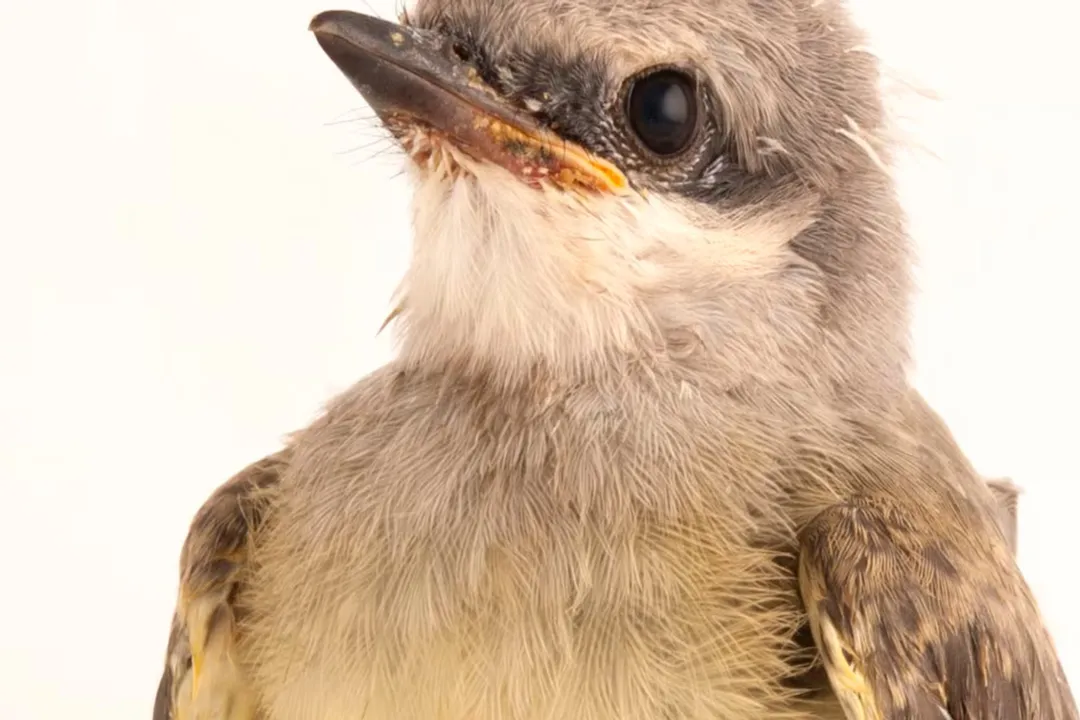
The Tyrannus verticalis, or Western Kingbird, belongs to the large and diverse family of tyrant flycatchers, Tyrannidae, within the order Passeriformes. While the specific deep evolutionary history concerning divergence dates remains complex without direct access to specialized phylogenetic studies, understanding its placement among its closest relatives—the Eastern, Cassin's, Couch's, and Tropical Kingbirds—offers significant insight into evolutionary pressures shaping this group. These birds share a common ancestry within the Tyrannus genus, yet have diverged sufficiently to maintain distinct distributions, habitat preferences, and, in some cases, exhibit subtle yet crucial plumage differences.
# Flycatcher Lineage
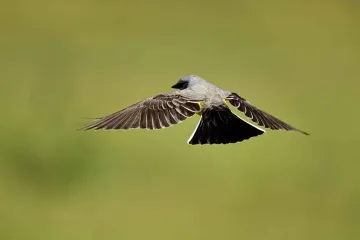
As a member of the tyrant flycatchers, the Western Kingbird is fundamentally shaped by a lineage specialized in aerial insectivory. This specialization manifests in their foraging strategy: waiting on an open perch and launching into flight to capture prey, often returning to the same vantage point. Their physical structure reflects this, featuring relatively small, black bills suited for snatching insects like bees, robber flies, grasshoppers, and beetles mid-air. While primarily insectivorous, the inclusion of fruits and seeds from plants like sumac and poison ivy in the diet, particularly during migration or winter, suggests an evolved dietary flexibility that aids survival outside peak insect seasons. Furthermore, their physical description—ashy gray head, gray breast, and bright yellow belly—is characteristic, though the closely related yellow-bellied species can lead to confusion. A key distinguishing feature, the black, square-tipped tail with white edges, is a stable trait within this species' specific evolutionary path.
# Taxonomic Neighbors
The Tyrannus genus contains several species that share a geographic overlap, known as sympatry, particularly in North America, which necessitates evolutionary mechanisms to avoid competitive exclusion or hybridization. The Western Kingbird is geographically sympatric with Cassin's Kingbird, Eastern Kingbird, Couch's Kingbird, and the Scissor-tailed Flycatcher, yet they segregate based on habitat preferences, suggesting an ecological barrier reinforces reproductive separation.
The historical confusion in nomenclature highlights the close evolutionary ties. The Western Kingbird was once widely known as the "Arkansas Kingbird". Interestingly, the name "Western Kingbird" was occasionally applied to the Tropical Kingbird (T. melancholicus) in the past. This past naming overlap suggests that morphological differences between the Western and Tropical/Couch's kingbirds were less clear to early observers, or that ranges were structured differently before modern settlement. For instance, Cassin's Kingbird is distinguished by an overall darker chest and upperparts, with a contrasting white chin, differentiating it from the Western Kingbird's more uniform gray chest. Couch's and Tropical Kingbirds possess heavier bills and olive-yellow chests, along with dark brown, notched tails. These subtle but consistent differences across species likely stem from evolutionary divergence in response to localized selection pressures or ancient geographic isolation followed by secondary contact.
This pattern of closely related, visually similar species occupying slightly different niches or ranges is a classic signature of recent speciation events, perhaps driven by adaptation to different levels of aridity or vegetation structure across the continent’s western and eastern halves. If we consider the clear geographical delineation between T. verticalis (West) and T. tyrannus (East), it implies that the environmental gradient across the Great Plains or the Rocky Mountains acted as a significant selective force, leading to distinct adaptive trajectories in morphology, behavior, or migration timing. The persistence of these distinct forms despite current range overlap suggests that pre-existing, pre-mating isolating mechanisms—be they behavioral or ecological—are firmly established.
# Range History
The current distribution of the Western Kingbird vividly illustrates how historical environmental factors, and more recently, human modification of landscapes, have shaped its ecological niche and, consequently, its evolutionary success within its range. During the early 1900s, the species' range in Texas was largely restricted to the western parts of the state. Its expansion eastward across Texas, and into the prairies of the Dakotas, is directly tied to European settlement practices—namely, the clearing of woodlands and the erection of human-made structures like utility poles and fences. Before this anthropogenic change, the species’ range was arguably restricted by a lack of suitable tall perches in otherwise appropriate open country. This historical dependency on specific perch availability suggests that the evolutionary pressure to utilize elevated, open-air hunting posts was strong enough to constrain dispersal until an artificial substitute became widely available.
The species now winters in Central America and southern Mexico, migrating in flocks, a pattern that reveals a long-established migratory adaptation to track seasonal insect availability. The species is considered a neotropical migrant. The fact that Western Kingbirds began spending winters regularly in Florida beginning around 1915, while typically only appearing as vagrants in spring on the East Coast, demonstrates a relatively rapid, observable behavioral shift in response to new wintering opportunities, even if the underlying evolutionary capacity for such a shift has existed for longer.
# Behavioral Traits
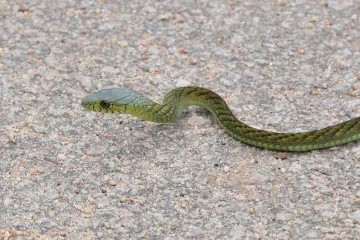
The "kingbird" moniker is earned through an intensely territorial and aggressive disposition, a behavioral suite that appears to be a core, evolved component of the species' survival strategy. Both sexes vigorously defend breeding territories, even shrinking the defended area drastically during incubation to focus solely on the immediate nest vicinity. Their willingness to attack much larger birds, such as hawks, Red-tailed Hawks, and American Kestrels, using bill-snapping and flashing their normally concealed crimson crown feathers, underscores the high fitness value placed on nest protection. This aggression likely evolved as a necessary defense against nest predators, which account for a significant portion of nest losses, including snakes, owls, and ravens.
Monogamy is the established mating system, with both parents contributing to nest building and chick feeding. However, the female exclusively handles incubation, which lasts between 12 to 19 days, while both parents share the duty of raising the altricial chicks. This division of labor—female incubation, biparental provisioning—is a common reproductive evolution strategy among many birds, balancing the energetic demands of brooding with the need for constant food delivery to developing young.
# Habitat Plasticity
The Western Kingbird’s ability to thrive in grasslands, desert scrub, pastures, and highly urbanized areas speaks to a notable degree of behavioral and habitat plasticity, a trait that has permitted its recent range expansion. While they prefer open country with scattered trees or shrubs, they readily substitute man-made structures—utility poles, wires, buildings—for natural perches and nesting sites.
It is fascinating to observe how this behavioral flexibility interacts with the species' geographic boundaries. In Texas, the Pineywoods region appears to act as an eastern barrier to further nesting expansion. This suggests that while the birds are adaptable to using human structures, the fundamental habitat structure required for successful foraging and predator detection—open areas with suitable perches—is still bound by broader ecological limitations, potentially related to humidity, forest density, or competitive interactions with eastern congeners like the Eastern Kingbird in those wetter environments. The contrast between the successful, human-assisted eastward expansion into drier agricultural regions and the halt at the wetter Pineywoods provides a real-time look at evolutionary constraints in action. Where historical evolution favored adaptation to the arid western landscape, contemporary plasticity is allowing them to exploit newly created similar habitats, but an absolute shift in ecological requirement (i.e., moving into closed-canopy forest) appears to remain evolutionarily prohibitive based on current boundaries. This resilience has resulted in stable or increasing populations across much of its range, despite facing potential threats like pesticide exposure near cultivated lands.
Related Questions
#Citations
Western Kingbird Life History - All About Birds
Tyrannus verticalis (western kingbird) - Animal Diversity Web
WESTERN KINGBIRD | The Texas Breeding Bird Atlas
Western Kingbird | National Geographic
Western Kingbird - Facts, Diet, Habitat & Pictures on Animalia.bio
Tyrannus verticalis - Western Kingbird - Utah Field Guides