Western Tanager Evolution
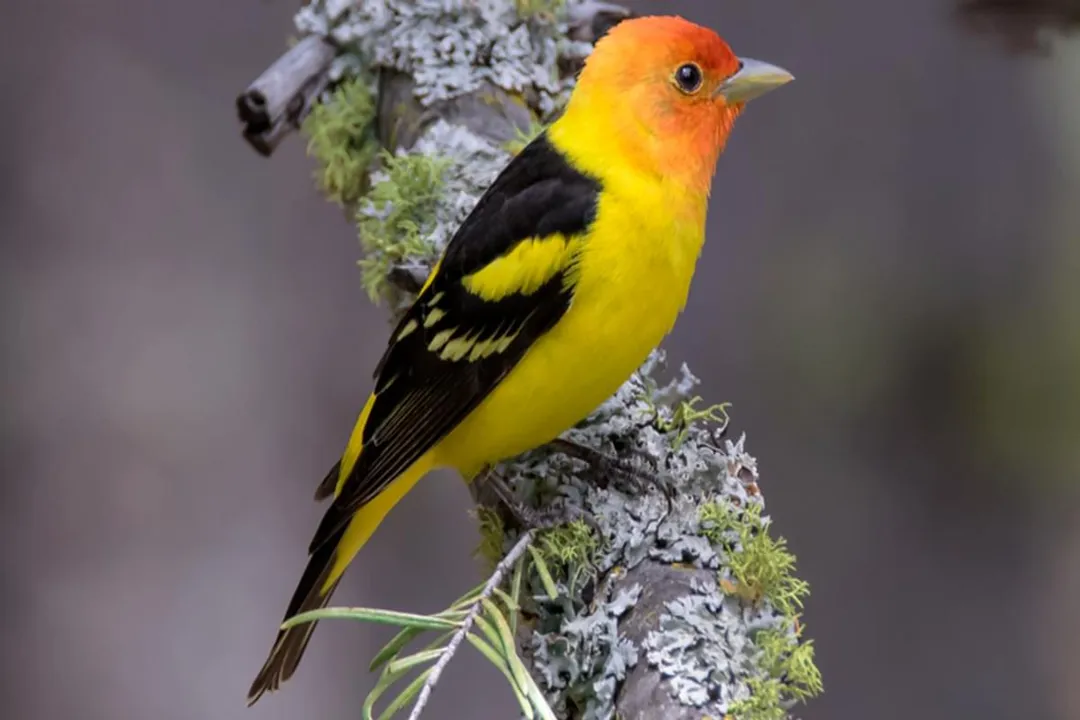
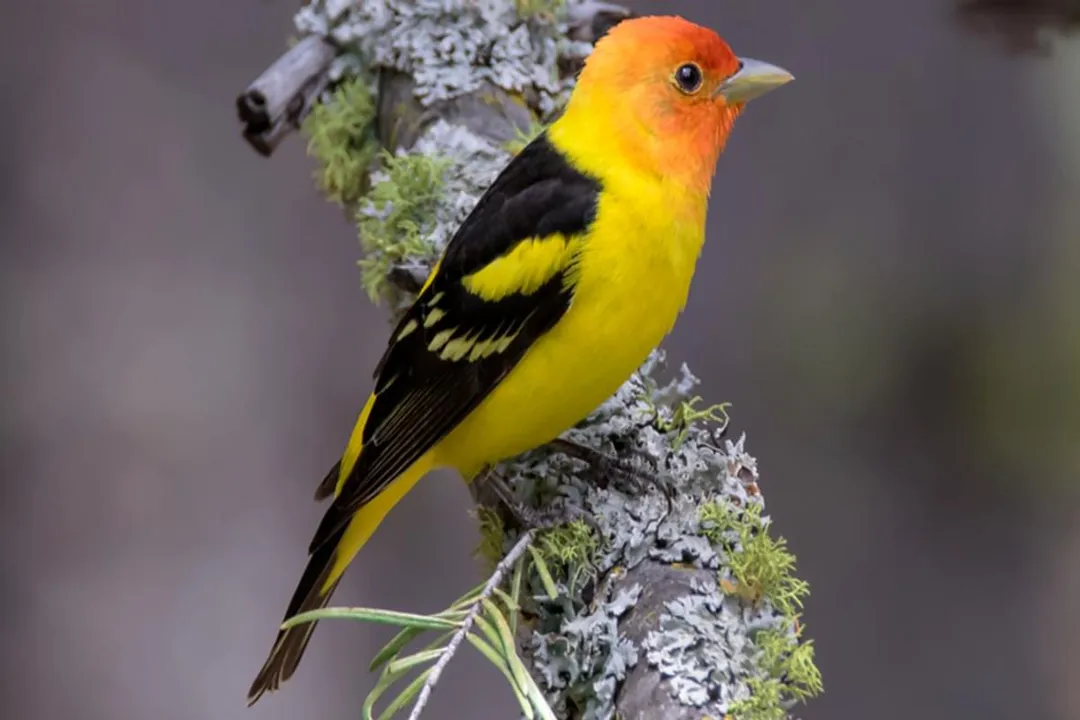
The bright flash of a male Western Tanager against the dark backdrop of a coniferous forest is a seasonal spectacle across western North America, yet the story of how this bird came to be is rooted more in classification shifts than in deep geologic time revealed by the fossil record. [1][2] Scientifically designated as Piranga ludoviciana, this species has a classification history that perfectly illustrates how ornithology itself evolves. [2][6] For a long time, based purely on visual similarities—bright colors, general shape, and feeding style—it was lumped with the true tanagers found throughout Central and South America, members of the family Thraupidae. [2]
# Family Misplacement
The most significant evolutionary context we can draw from current data is that the Western Tanager is not a "true" tanager in the strict sense of modern genetics. [2] DNA evidence has decisively moved the genus Piranga out of the Neotropical tanager family and placed it squarely within the family Cardinalidae. [2] This places the Western Tanager not with its colorful South American namesakes, but alongside familiar North American relatives like the Northern Cardinal (Cardinalis cardinalis), the Summer Tanager (Piranga rubra), and the Scarlet Tanager (Piranga olivacea). [2] This reclassification reflects a profound discovery: the evolutionary paths of these visually similar, colorful, fruit- and insect-eating birds diverged long ago, with the Piranga group evolving its specialized North American migratory niche separate from the bulk of the South American tanagers. [2]
Insight: The very name "Western Tanager" serves as a historical marker—a testament to a time when taxonomy relied heavily on external morphology. Its placement in Cardinalidae underscores a modern, molecular understanding, showing that shared ecological roles (like preferring fruit and insects) can evolve independently in different lineages, a concept known as convergent evolution, even if the sources do not explicitly label it as such for this group. [2]
# Genus Relatives
The evolutionary narrative continues by examining its closest living relatives within the Piranga genus. [2][6] The Western Tanager shares its genus with the Scarlet Tanager, the Summer Tanager, and the Hepatic Tanager (Piranga hepatica). [2] While all share the genus designation, their distributions and ecological adaptations reveal nuances in their recent evolutionary separation. [2] The Scarlet and Summer Tanagers are primarily eastern migrants, breeding east of the Rocky Mountains, whereas the Western Tanager owns the western forests. [2]
For example, the male Scarlet Tanager exhibits a dramatic sexual dimorphism, turning brilliant scarlet with jet-black wings during breeding season, a visual display arguably even more striking than the male Western Tanager’s bright yellow body and red head. [2][8] The Hepatic Tanager, conversely, is largely non-migratory, tending to stay year-round in the southwestern United States and Mexico. [2] This difference in migratory commitment suggests that the evolutionary pressures leading to the strong migratory drive in P. ludoviciana were not shared equally across the entire Piranga group; the ancestors of the Western Tanager specialized in exploiting North American summer resources before retreating south for the winter. [2]
# Geographic Specialization
The current breeding range of the Western Tanager strongly suggests an adaptation to the diverse coniferous and mixed forests of western mountains, spanning from Southern British Columbia through the Rocky Mountains and the Sierra Nevada. [2][7][10] This pattern hints at an evolutionary history tied specifically to the diverse, high-elevation habitats that fringe the Pacific coast and the interior West. [5] The species is known to breed in pine-fir forests, often at high elevations, seeking out areas rich in insects during the nesting season. [1][7]
When winter approaches, the selective pressures shift dramatically. The entire species population undertakes a significant migration, moving south into Mexico and sometimes as far as Central America. [2] This long-distance movement is an evolutionary commitment to escaping harsh northern winters while capitalizing on summer insect abundance unavailable further south. [2][6] The uniformity of the species' distribution—it is generally absent as a consistent breeder east of the continental divide—reinforces the idea that specific geological or climatic barriers (perhaps the Great Plains or the eastern extent of major mountain systems) helped solidify this distinct western lineage within the broader Piranga evolution. [2][5]
Insight: Considering the stark difference between the breeding and wintering ranges, one can infer that the evolution of strong migratory connectivity—the ability to navigate thousands of miles between specific breeding and non-breeding grounds—is a key adaptation for this species. This reliance on two geographically distant, specialized ecosystems (high-elevation western summer habitat and lower-elevation Mexican winter habitat) means that any threat impacting either end of the migratory corridor could have a disproportionately severe impact on the overall population stability, a vulnerability not shared by the resident Hepatic Tanager. [1][2]
# Visual Signals
The striking sexual dimorphism observed in the Western Tanager is a direct outcome of sexual selection pressures acting over evolutionary time. [2][8] The male, particularly in fresh spring plumage, displays an unmistakable combination of a brilliant yellow body, a fiery red head, and black wings marked with two prominent white wing bars. [8][9] In contrast, the female is much drabber, generally yellowish-green, often lacking the male’s distinct red coloration. [2][8]
This intense difference suggests that the male's vibrant colors evolved as a signal to potential mates, demonstrating fitness and genetic quality—a classic evolutionary driver in many bird species. [2] The precise shade and intensity of the red on the head might even play a role in mate choice, with brighter males potentially securing better territories or mates, though the exact details of this signaling system require deeper behavioral study. [8] The female's camouflage, on the other hand, is an evolutionary adaptation prioritizing nest safety, reducing her conspicuousness to predators while incubating eggs or brooding young. [1][8]
# Plumage Development
Understanding when this coloration develops is key to understanding its role in the bird’s life cycle and evolution. [1] Western Tanagers are born looking much like the females; the drab, olive-green juvenile plumage provides initial protection. [1] The distinct, bright adult male plumage only appears after the first prebasic molt, which occurs after the first breeding season. [1] This means that first-year males, sometimes called "immature" males, often resemble females or show an intermediate, less-vibrant mix of yellow and black, potentially delaying their entry into the full competitive breeding pool until they are fully capable of signaling high fitness. [1] This delayed sexual maturity, expressed through delayed plumage acquisition, is another recognized evolutionary strategy to balance survival risk against reproductive opportunity. [2]
The combination of a clear taxonomic shift, a specific geographical specialization, and intense sexual signaling provides a rich, though perhaps less fossil-intensive, view of the Western Tanager's evolutionary trajectory within the New World songbirds. [2]
Related Questions
#Citations
Western Tanager Life History - All About Birds
Western tanager - Wikipedia
WESTERN TANAGER | The Texas Breeding Bird Atlas
[PDF] Life history account for Western Tanager
Get to Know the Western Tanager (Piranga ludoviciana)
Piranga ludoviciana (western tanager) - Animal Diversity Web
Western Tanager | Audubon Field Guide
WESTERN TANAGER - Birds of Nebraska – Online
Western Tanager - Wild About Utah