Western Gorilla Evolution
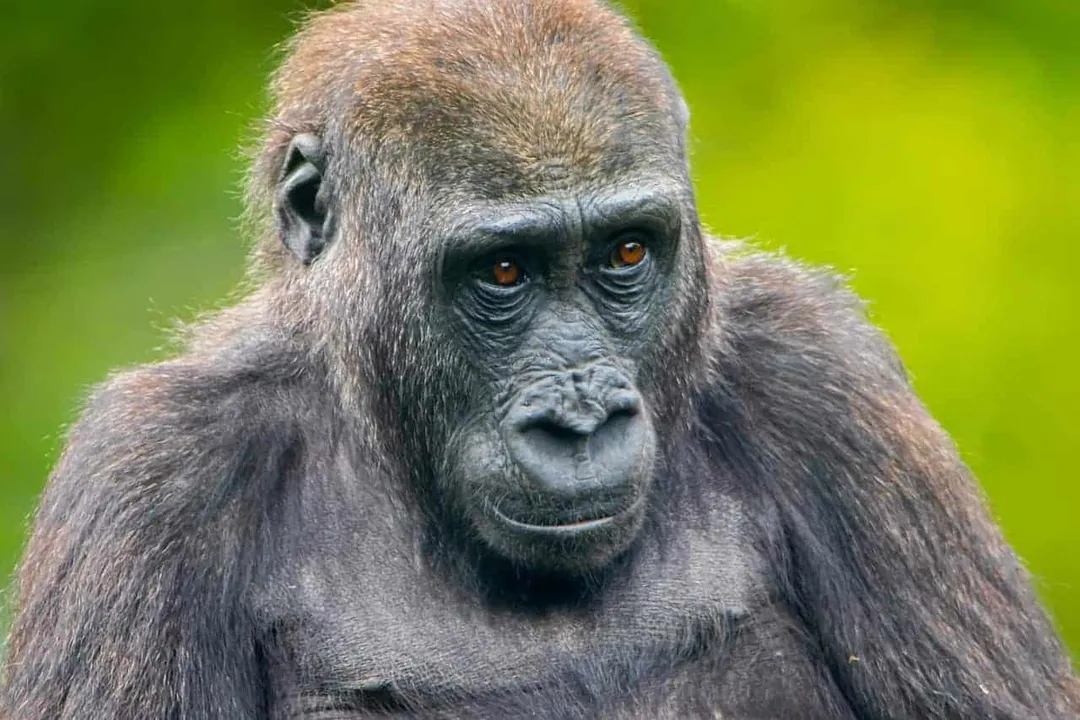
The evolutionary path of the Western Gorilla (Gorilla gorilla) is a fascinating record etched in DNA, revealing deep divergence times and recent, climate-driven fragmentation. Separating from the lineage that led to humans roughly 8 to 10 million years ago, the gorilla lineage itself later split into the Eastern and Western groups. [1][2] This initial great separation laid the groundwork for the distinct evolutionary trajectories of the modern gorilla species we recognize today.
# Ancestral Split
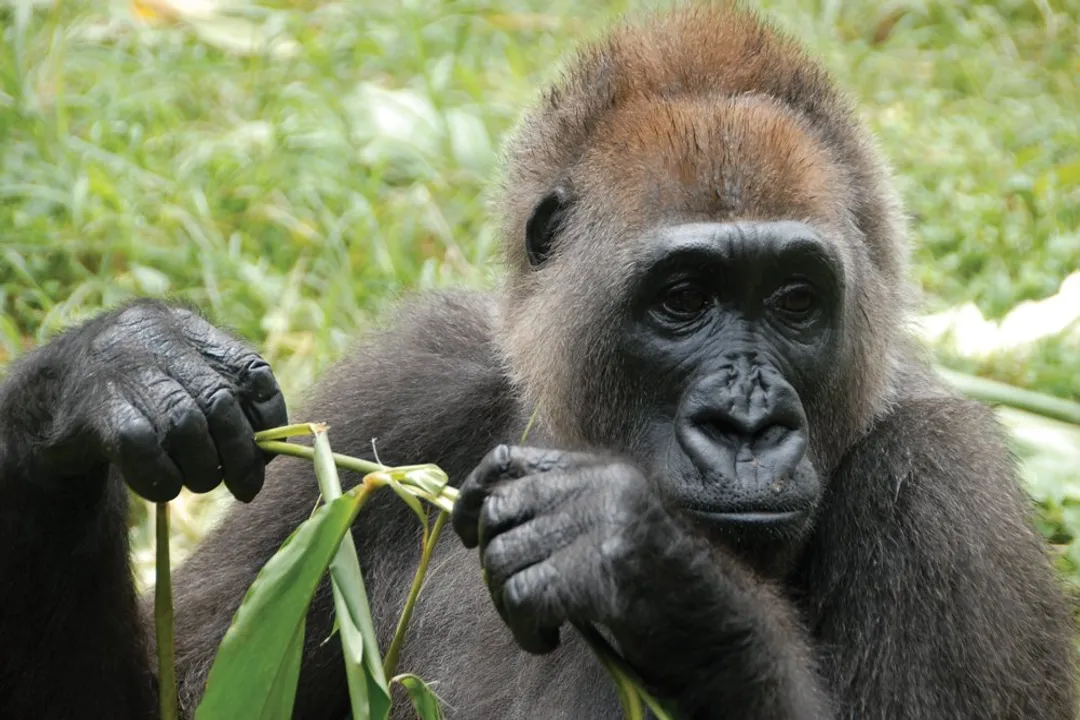
Genetic analysis provides the clearest window into these ancient separations. The evolutionary tree shows that the ancestors of gorillas diverged from the lineage leading to chimpanzees and humans first, followed by a split between the ancestors of Eastern and Western gorillas much later. [2] Specifically, the split between the ancestors of the Eastern gorillas (Gorilla beringei) and the Western gorillas (Gorilla gorilla) is estimated to have occurred approximately 1.7 to 2 million years ago. [1][2] This places the divergence of the two major gorilla groups significantly after the human-chimpanzee split. [2]
The analysis of whole-genome data suggests that the divergence process was complex, not a single clean break. Instead, there was evidence of ancient admixture—a period where the diverging Eastern and Western populations interbred before finally separating completely. [1] This suggests that while there was a primary division, gene flow persisted for a period, complicating the clean narrative of two distinct groups moving apart instantly. [1] Understanding these deep splits is fundamental, as it sets the baseline for all subsequent evolution within the Western group itself.
# Western Division
The Western Gorilla species, Gorilla gorilla, currently comprises two recognized subspecies: the widespread Western Lowland Gorilla (G. g. gorilla) and the critically endangered Cross River Gorilla (G. b. diehli). [3] The evolutionary story of these two groups involves more recent geographic isolation driven by environmental shifts. [2]
Genetic studies focusing on the separation within the Western group have placed the divergence time between the ancestors of the Cross River Gorillas and the ancestors of the Western Lowland Gorillas at roughly 20,000 to 50,000 years ago. [2] This is a relatively recent event in evolutionary terms, tying closely to climatic fluctuations during the Pleistocene. [2] The two groups are geographically separated by the Cross River system and associated terrain, which acted as a barrier to dispersal and gene flow. [2]
The genetic differentiation observed between these two subspecies is striking when considering the relatively short time elapsed since their separation. The Cross River population, confined to a much smaller area, likely experienced severe population bottlenecks, which can rapidly fix unique genetic traits, even those that might be detrimental in a larger, more diverse population. [2] When we observe the evolutionary distance between the Cross River Gorilla and its Lowland cousin, separated by only a few hundred kilometers, it offers a contemporary, high-resolution case study on how geographic barriers translate directly into distinct evolutionary trajectories over thousands of years. [2] This rapid divergence, occurring long after the split from Eastern gorillas, highlights the powerful, localized effect of habitat fragmentation on primate evolution.
# Environmental Influence
Climate change, particularly cycles of glaciation and associated shifts in forest cover, is identified as a major sculptor of gorilla evolutionary history. [5][6][7] During periods when the climate became drier, forests contracted, leading to increased fragmentation of gorilla populations into isolated pockets. [5][7] These periods of isolation—sometimes called population bottlenecks—reduce the effective size of breeding groups. [7]
The study of the Western gorilla genome has illuminated these past demographic crashes. [1] Researchers found evidence suggesting a significant reduction in effective population size occurred before the divergence of the Western and Eastern lineages, as well as more recent bottlenecks associated with the separation of the Western Lowland and Cross River subspecies. [1][7] For the Western Lowland Gorillas specifically, analyses point to demographic shifts linked to climate fluctuations over the past hundreds of thousands of years. [5] The shifting landscape essentially created temporary "islands" of suitable habitat, forcing populations apart and limiting the mixing of genes. [6][5] When the climate eventually warmed and forests re-expanded, some groups were able to reconnect, perhaps leading to the ancient admixture events seen in the genetic record, while others remained separated, eventually forming distinct subspecies. [1]
The pressures imposed by these changing environments did more than just separate populations; they likely acted as selective agents favoring certain traits suited to the prevailing conditions, contributing to the genetic makeup of the modern subspecies. [7]
# Social Structure
While the genetic evidence maps the physical separation, insights into social evolution help round out the picture of how these primates adapted. Gorilla societies are structured around dominant silverback males who lead small family groups. [4] These social systems, characterized by multi-male or single-male groups, show variation across the species, which can also be influenced by ecological factors. [4]
For instance, the degree of overlap in group structures and the flexibility in forming coalitions may reflect the varying environmental stability or resource density faced by different populations. [4] The existence of complex gorilla societies, including varying group sizes and male dominance hierarchies, provides a comparative backdrop against which we can view the roots of human social evolution. [4] The evolutionary pressures that shaped the dispersal patterns, mating systems, and group dynamics in gorillas offer clues to the selective forces acting on our own primate ancestors millions of years ago. Understanding the stability and adaptability of the gorilla's social unit in the face of environmental stress is therefore part of understanding the broader context of great ape evolution.
# Conservation Implications
The evolutionary history documented through genomics has direct, practical consequences for modern conservation efforts. Because the genetic distance between the Western Lowland Gorilla and the Cross River Gorilla is tied to ancient barriers and more recent fragmentation, it underscores that these are not merely regional variants but genetically distinct evolutionary units. [2]
This distinct genetic architecture means that the loss of one subspecies represents a much greater loss to overall gorilla biodiversity than simply losing a fraction of a larger population. The Cross River Gorilla, in particular, represents a unique evolutionary branch that has been surviving in a fragmented landscape for millennia. [2] Any conservation strategy must recognize this deep genetic separation. It implies that interbreeding between the two subspecies, even if geographically possible, might not be genetically beneficial, and critically, that the remaining population of G. b. diehli carries irreplaceable variation accumulated since their isolation. [2] If we consider the genetic diversity lost during the historical bottlenecks—those periods where population sizes were drastically reduced—it highlights that the genetic health of these surviving, isolated groups today is likely lower than their ancestral populations enjoyed. Protecting the remaining habitat heterogeneity that historically separated and then occasionally connected these groups is essential to maintaining the genetic health and adaptive potential of Gorilla gorilla as a whole. [5]
Related Questions
#Citations
New insights into the evolutionary history of gorillas
Complex Evolutionary History of Gorillas: Insights from Genomic Data
Western gorilla - Wikipedia
Complex gorilla societies shed light on roots of human social evolution
A Little Gorilla in Us All | Science | AAAS
Climate change and evolution of Cross River gorillas
Insights into hominid evolution from the gorilla genome sequence
Gorilla evolution shaped by climate change, humans - CBS News