How is the female Western Tanager generally described in terms of coloration when contrasted with the male's vibrant display?
Answer
She is much drabber, generally yellowish-green, often lacking distinct red coloration
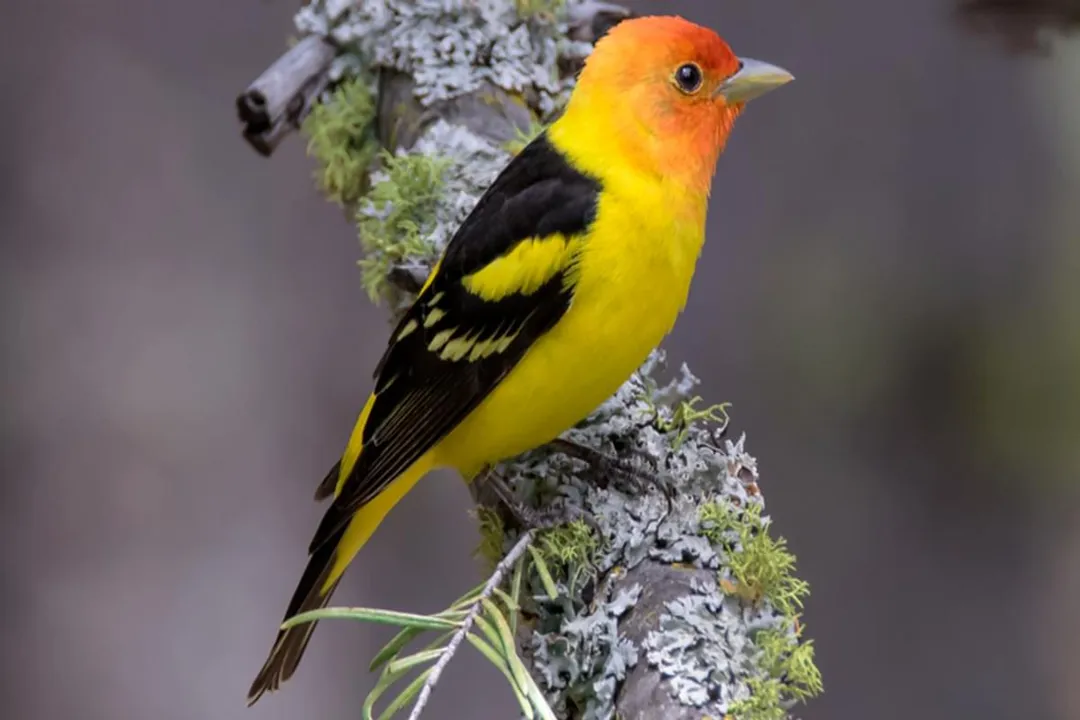
The difference in appearance between the sexes is a clear example of sexual dimorphism driven by selection pressures. The male displays vibrant colors (yellow, red, black) to attract mates and signal fitness. In sharp contrast, the female is described as much drabber, possessing a coloration that is generally yellowish-green. This subdued appearance is an evolutionary adaptation focused on survival, specifically prioritizing camouflage around the nest. By being less conspicuous, the female significantly reduces the risk of predation while she is incubating eggs or brooding young hatchlings, a necessity not shared by the more conspicuous male.
Related Questions
To which family does DNA evidence definitively place the genus Piranga, including the Western Tanager?Which relative species within the Piranga genus is noted for being largely non-migratory, remaining in the southwestern US and Mexico year-round?What specific combination describes the male Western Tanager's striking fresh spring plumage?What geological feature or environmental boundary reinforces the Western Tanager's distinct western lineage, as it is generally absent as a consistent breeder east of this demarcation?After which developmental event does the Western Tanager acquire its distinct, bright adult male plumage?What were the primary morphological and behavioral characteristics used historically to group the Western Tanager with South American true tanagers?How is the female Western Tanager generally described in terms of coloration when contrasted with the male's vibrant display?To which lower-elevation regions does the entire population of Western Tanagers migrate to escape harsh northern winters?What primary evolutionary function is served by the female Western Tanager's less conspicuous, drab camouflage coloration?What specific type of forest habitat, often found at high elevations, does the Western Tanager utilize for breeding across the western mountains?