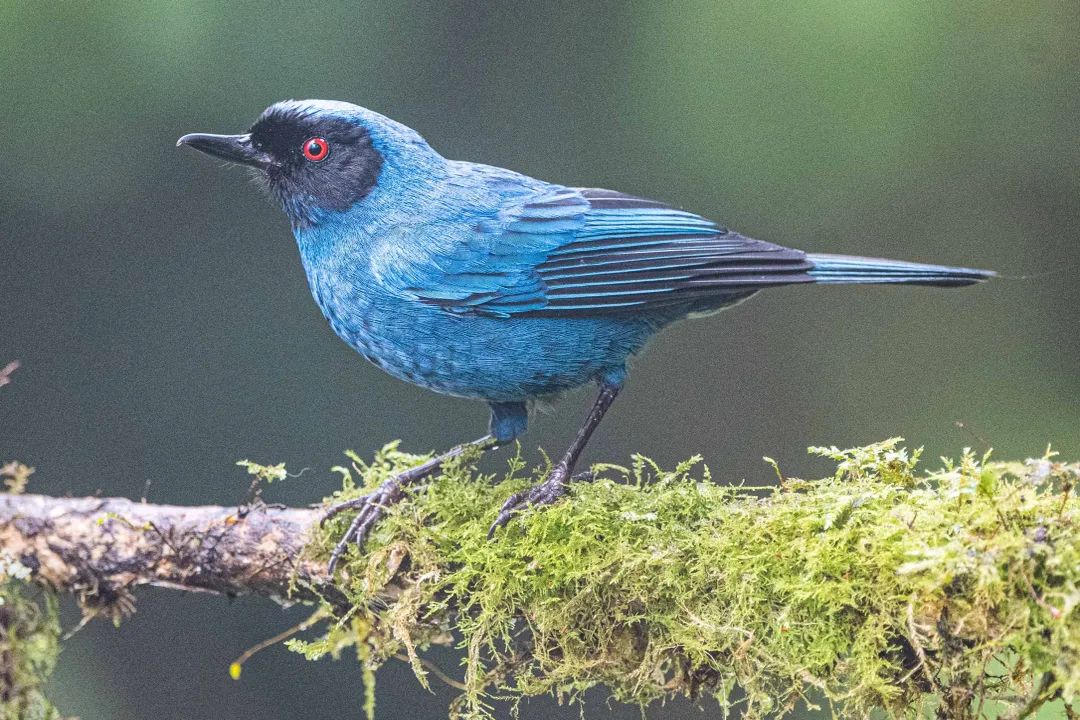
How does the plumage of the Black-and-Yellow Tanager exhibit sexual dimorphism?
Males show deep black contrasting sharply with brilliant yellow, while females are duller, often olive-yellow or yellowish-greenish.
Sexual dimorphism in the Black-and-Yellow Tanager is characterized by significant differences in coloration between the sexes. The males exhibit a highly conspicuous pattern, defined by the sharp juxtaposition of deep black areas against areas of brilliant, vibrant yellow. In contrast, the females possess much duller coloration; their plumage tends toward shades described as olive-yellow or yellowish-greenish where the males display pure black and the intense yellow. This pronounced visual difference between the sexes strongly suggests that intense sexual selection pressures are at play. These pressures typically favor males displaying brighter plumage, which serves critical functions in attracting mates during courtship rituals and in defending established territories against rivals. The evolution of these distinct visual signals is therefore driven by reproductive success in the species.