What kind of forest structure do Western Tanagers favor during their summer breeding months in western mountains?
Answer
Open, somewhat drier coniferous or mixed-wood forests
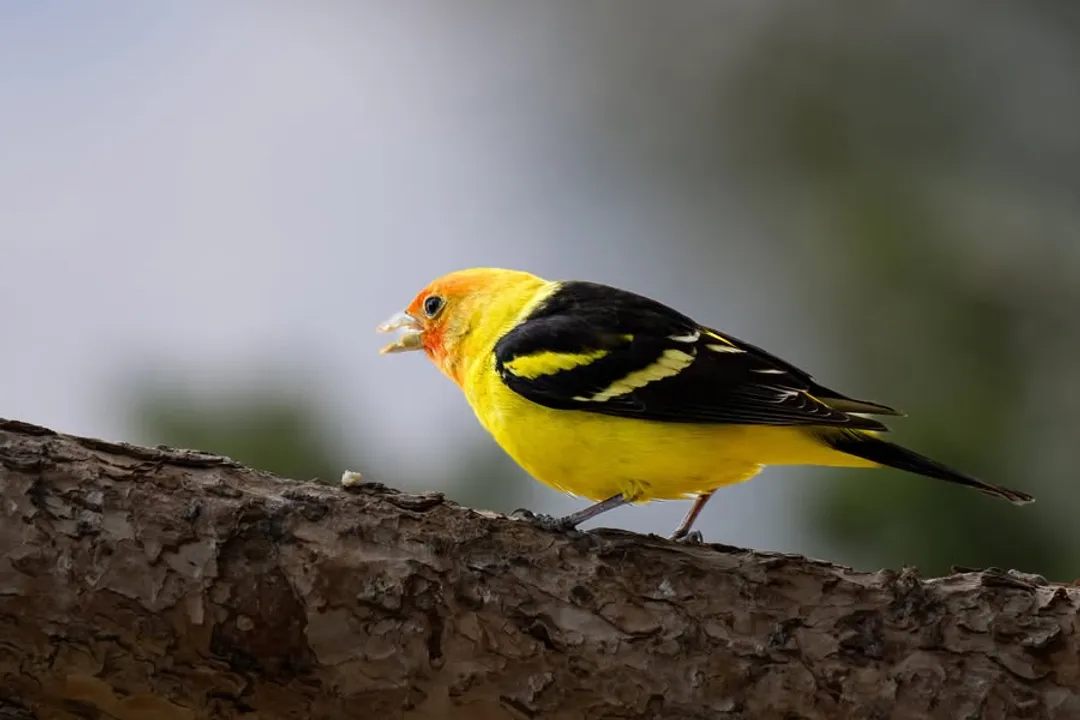
The preferred habitat for breeding Western Tanagers is characterized by openness, which facilitates movement and foraging, often near damp areas or streams, though they are not restricted solely to evergreen stands. They select forests that allow light penetration, meaning they avoid the deepest parts of the woods. Associates in this habitat commonly include various species of pines, firs, and aspens. In the Pacific Northwest specifically, they favor mid-elevation coniferous forests, emphasizing the balance between elevation, moisture proximity, and canopy structure rather than sheer density.
Related Questions
Where do the wintering grounds of the Western Tanager ultimately stretch to in Central America?What kind of forest structure do Western Tanagers favor during their summer breeding months in western mountains?How does the appearance of the male Western Tanager change when moving from breeding season to wintering far south?What dietary focus drives the high-canopy insect hunting characteristic of the summer Western Tanager?Which habitat trait replaces the cool mountain slopes for the Western Tanager in its warmer, lower-elevation tropical wintering grounds?Why can the autumn appearance of the Western Tanager in states like Arizona or Texas be somewhat unpredictable for birders?What are common tree associates frequently found in the summer coniferous habitat of the Western Tanager?What distinct vocalization should birders listen for when seeking the peak summer Western Tanager high in mature coniferous stands?Around what time does the spring arrival of the Western Tanager back to its northern breeding grounds typically commence?What transitional habitats do Western Tanagers frequently utilize during their northbound movement through the US mountains?