Western Tanager Scientific Classification
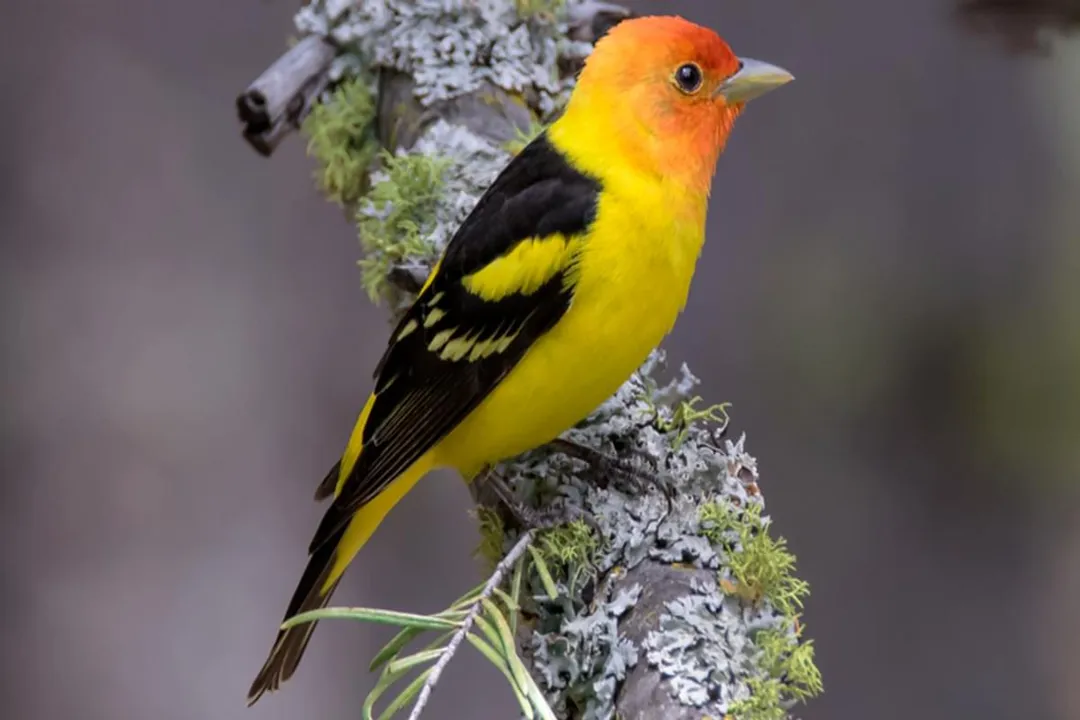
The scientific classification of any species is a way of understanding its evolutionary relationships, organizing the vast diversity of life into a manageable structure that reflects shared ancestry. For the vibrant Western Tanager, whose appearance shifts dramatically between the sexes and seasons, placing it correctly within this structure requires tracing its lineage from the broadest categories down to its unique species designation, Piranga ludoviciana. This naming convention, established by Linnaeus, serves as the universal key to recognizing this bird across continents and scientific literature.
# Binomial Identity
The specific name given to this species is Piranga ludoviciana. The first part, Piranga, denotes the genus, a grouping of closely related species that share significant characteristics. The second part, ludoviciana, is the specific epithet, distinguishing it from other members of the Piranga genus. For instance, while the Scarlet Tanager (Piranga olivacea) shares the same genus, the specific epithet ludoviciana points specifically to the Western Tanager, highlighting traits that set it apart, such as the male's bright yellow body and black back during breeding season. Understanding this binomial allows ornithologists to immediately place the bird within a context of similar American tanagers.
# High Ranks
Beginning at the broadest level, the Western Tanager belongs to the Kingdom Animalia, signifying it is a multicellular, heterotrophic organism. Moving down, it is placed in the Phylum Chordata, a grouping characterized by having, at some point in their development, a notochord, a dorsal hollow nerve cord, pharyngeal slits, and a post-anal tail. Within this phylum, the Class Aves contains all birds, defined by feathers, toothless beaked jaws, the laying of hard-shelled eggs, a high metabolic rate, and a four-chambered heart.
The next level down is the Order, where the Western Tanager is classified as Passeriformes. This is the largest order of birds, often called the perching birds or songbirds. Birds in this order are characterized by unique foot structures—three toes pointing forward and one backward—which allows them to grip branches securely, even while sleeping. This anatomical feature is fundamental to their ecological niche, enabling them to thrive in forested and scrub habitats across their range.
# The Cardinal Family
The classification places Piranga ludoviciana firmly within the Family Cardinalidae. This family is significant because it groups together the colorful, seed- and insect-eating birds commonly known as cardinals, buntings, and grosbeaks, alongside the tanagers. Historically, North American tanagers were sometimes placed in the Tanager family (Thraupidae), but modern molecular evidence has reclassified them into the New World family Cardinalidae, aligning them more closely with cardinals and grosbeaks than with the true tanagers found in Central and South America. For someone tracking birds in Wyoming, for example, recognizing that the Western Tanager shares a recent common ancestor with the Northern Cardinal is a key piece of taxonomic information, even if their visual appearances are quite different during parts of the year.
When observing plumage, this family connection can sometimes be subtle. While a male Summer Tanager (Piranga rubra) is solid red, the male Western Tanager flashes brilliant yellow, black, and red (on the head), yet both belong here due to shared skeletal structures and genetic markers. This reclassification underscores how scientific study continually refines our understanding of relationships that might not be obvious based on superficial appearance alone.
# Genus Placement
The genus Piranga groups together several species of colorful, medium-sized songbirds native to the Americas. This genus includes the Western Tanager, the Scarlet Tanager, and the Summer Tanager, among others. Birds within the Piranga genus often exhibit pronounced sexual dimorphism, where males are much brighter than females, especially during the breeding season.
The sheer range variation of the Western Tanager adds a layer of complexity to observing its classification in action. While its breeding grounds are largely in western North America—from southern Canada down through the Rocky Mountains—it winters in Mexico and Central America. A birder tracking a small flock migrating through Utah might notice the striking yellow and black of the males, a visual hallmark that confirms their placement in Piranga, while the females are a duller olive-green, resembling some Empidonax flycatchers or western vireos at first glance. This difference in appearance across sexes within the same genus requires observers to know the diagnostic markings for each sex and age class to correctly assign the ludoviciana species identifier.
To appreciate the close relationship within the genus, consider the transition of the male Western Tanager's appearance. Its bright plumage serves a critical purpose in sexual selection, a behavior common to many brightly colored members of Cardinalidae. If you are familiar with the brilliant red of the Northern Cardinal (Cardinalis cardinalis), another member of the family, you can analogize the evolutionary pressure that has resulted in the Western Tanager developing its equally conspicuous, though differently colored, breeding attire.
# Analyzing Taxonomic Distance
It is interesting to compare where the Western Tanager sits relative to a completely different bird, like a sparrow. Both the Western Tanager and a typical sparrow, such as a Song Sparrow (Melospiza melodia), are in the Order Passeriformes. This means they are both "perching birds" and share the specialized foot structure suitable for gripping twigs. However, the sparrow belongs to the family Passerellidae (New World Sparrows), not Cardinalidae. This places their last common ancestor further back in evolutionary time, before the split that defined the lineages leading to cardinals and tanagers versus sparrows.
When thinking about the required field identification skills, realizing the taxonomic relationship provides an edge. Because the Western Tanager is a Piranga species in Cardinalidae, one should expect similar bill structure—relatively stout for cracking seeds—compared to the slimmer, more pointed bills of true migratory tanagers found further south in the Thraupidae family, even though their common names are similar. A useful field observation, which helps confirm the classification based on diet and bill structure, is to watch how they forage; they often hover briefly to pick insects off foliage, a feeding style common to their Cardinalidae relatives, rather than exclusively gleaning seeds from the ground like many true sparrows.
# Observational Confirmation
For those interested in confirming the scientific placement through field observation, paying close attention to the juvenile plumage is a practical exercise in understanding species variation within a genus. While adult males are unmistakable during the breeding season, the females and first-year birds are less distinctive. For a beginner, accurately identifying a female Western Tanager requires careful differentiation from other olive-colored warblers or vireos that share its summer range. The key distinguishing feature, which links back to its Cardinalidae classification, is often found in the wing bars—a set of two distinct yellow or yellowish-white bars contrasting against the darker wings, a feature consistent even in the drabber plumage states. Noting these wing markings across multiple individuals in a mixed flock provides practical, on-the-ground evidence supporting its classification under Piranga ludoviciana, as these markings are characteristic features the species retains across its life stages, unlike some other passerines where juvenile patterns are drastically different and unrelated to adult field marks.
# Classification Summary Table
To summarize the accepted hierarchy for the Western Tanager based on current scientific consensus, the following structure is used:
| Taxonomic Rank | Classification | Key Characteristic Implied |
|---|---|---|
| Kingdom | Animalia | Multicellular, heterotrophic life |
| Phylum | Chordata | Presence of a notochord (at some stage) |
| Class | Aves | Presence of feathers and wings |
| Order | Passeriformes | Specialized foot structure for perching |
| Family | Cardinalidae | Related to cardinals and grosbeaks |
| Genus | Piranga | Group of New World, often brightly colored tanagers |
| Species | P. ludoviciana | The specific Western Tanager form |
This arrangement is not static; it is a scientific tool constantly refined by new genetic data. For example, future molecular studies might reveal that the Piranga genus is even more closely allied with a specific group of buntings than previously thought, potentially leading to a revision of the family or subfamily structure. However, for now, its placement within Cardinalidae as Piranga ludoviciana represents the most authoritative understanding of its evolutionary history. The consistent identification across state-level resources, such as those in Wyoming or Utah, attests to the authority of this established classification scheme for field guides and conservation efforts alike.
Related Questions
#Citations
Western tanager - Wikipedia
Piranga ludoviciana (western tanager) - Animal Diversity Web
Western Tanager Status - New York Natural Heritage Program
Western Tanager Overview, All About Birds, Cornell Lab of Ornithology
WESTERN TANAGER | The Texas Breeding Bird Atlas
Western Tanager - Piranga ludoviciana - New Hampshire PBS
Western Tanager | Wyoming Game & Fish Department
Western Tanager (Piranga ludoviciana) - iNaturalist
Piranga ludoviciana - Western Tanager - Utah Field Guides