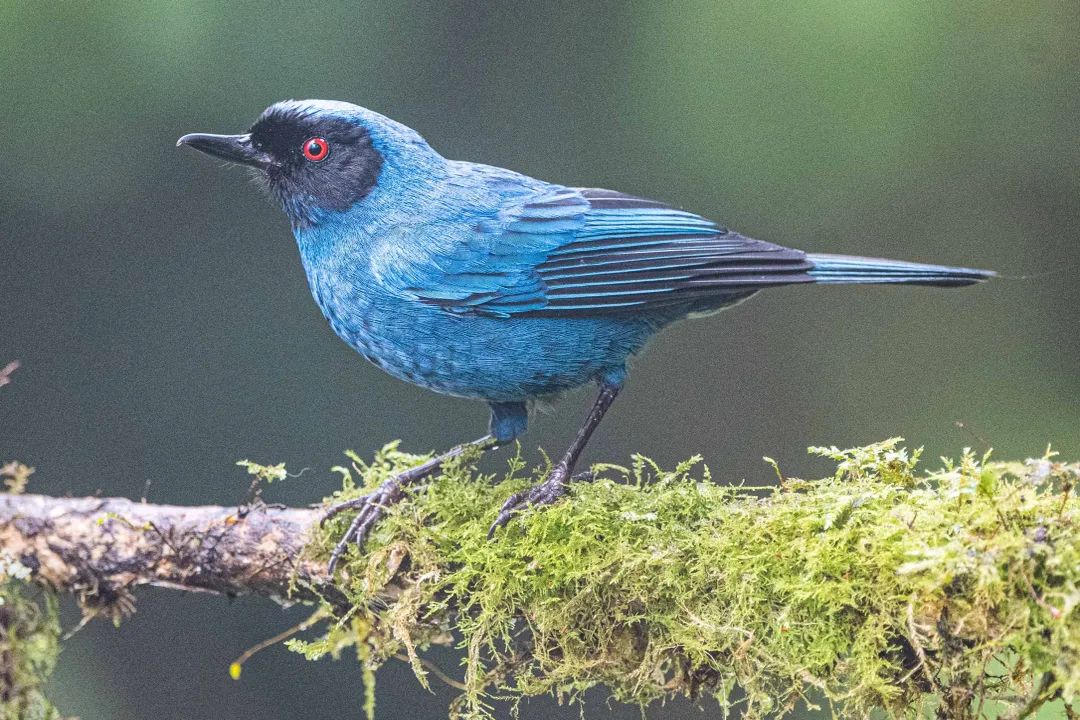
What contributes to the intense saturation and sheen of the yellow areas in the Black-and-Yellow Tanager's plumage?
The physical structure of the feathers, where nanostructures scatter light, working in combination with pigments like carotenoids.
The striking brilliance and sheen observed in the yellow plumage of the Black-and-Yellow Tanager are not solely attributable to the pigments present. While pigments such as melanins (for black) and carotenoids (likely for yellow) contribute to the base coloration, the intense saturation and the noticeable sheen result from structural color. Structural color is produced when microscopic nanostructures found within the feather barbules manipulate light by scattering it in specific ways. This phenomenon is analogous, though structurally distinct, to how iridescence functions in birds like hummingbirds or peacocks. Furthermore, research, such as the highlighted Princeton study on songbirds, suggests that underlying white feather layers beneath the colored surface can reflect light back through the outer layers, modifying the perceived surface color and enhancing the visual signal. This complex interplay between deposited pigments and physical microstructure creates a powerful visual signal optimized for transmission in the shaded environment of the tropical understory.