What biological event, contrary to popular myth, does the segmented rattle of *Crotalus oreganus* actually indicate?
Answer
The number of successful sheds since the terminal segment was formed.
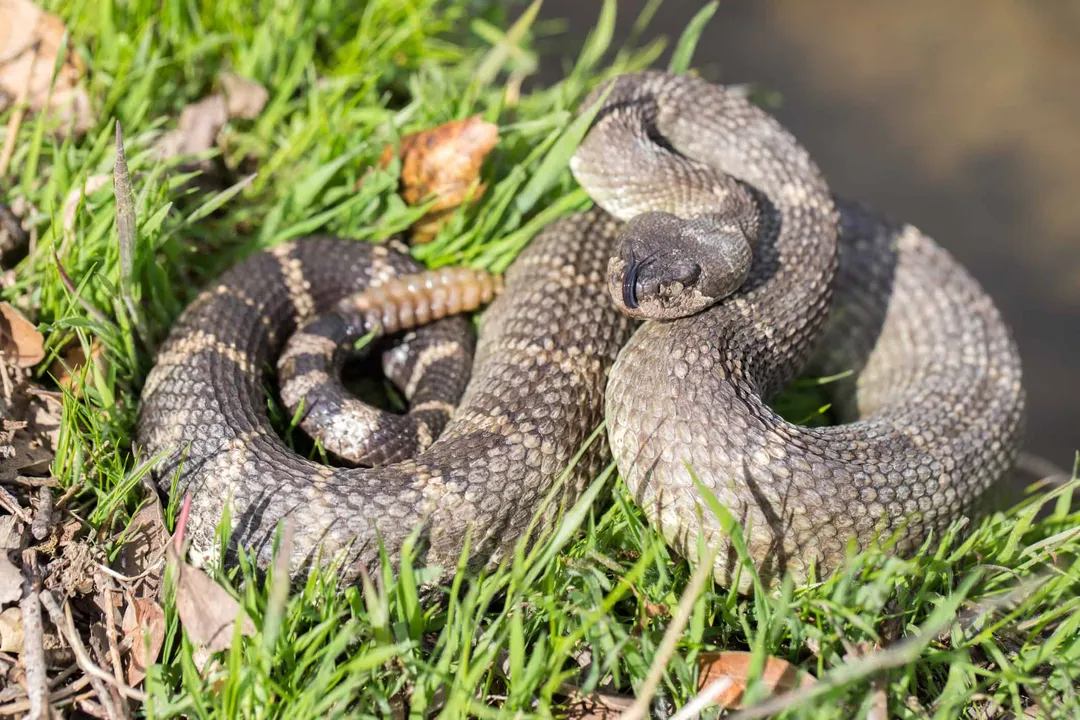
The rattle segment on a Western Rattlesnake does not serve as a direct indicator of the snake's age, despite a common popular belief. Instead, each segment added to the rattle signifies a successful shedding event that the snake has undergone after the initial rattle segment was formed. The rattle is a structure built up over time through successful ecdysis (shedding of the skin), meaning the total count relates to the reptile's history of growth and skin replacement rather than how many years it has lived.
Related Questions
What distinguishes the Crotalinae subfamily, to which *Crotalus oreganus* belongs?What biological event, contrary to popular myth, does the segmented rattle of *Crotalus oreganus* actually indicate?Under which broader historical classification were many populations now recognized as *C. oreganus* previously grouped?What major geological era is central to the deep evolutionary history and range dynamics of *C. oreganus*?What process, revealed by phylogeographic analysis, is evidenced by genetic breaks tracing back to barriers present during glacial maximums?What environmental pressures are cited as highly influential in shaping the diverse phenotypes within the *C. oreganus* species complex?What finding often results when comparing the deep genetic separations in *C. oreganus* molecular data with current subspecies classifications?What biochemical defense mechanism in *C. oreganus* varies significantly based on geographic location?What modern human activities pose a threat by causing fragmentation to localized *C. oreganus* populations?What is the general conservation security ranking assigned to the *Crotalus oreganus* designation by conservation bodies?