How does the appearance of the male Western Tanager change when moving from breeding season to wintering far south?
Answer
He loses his intense red hood
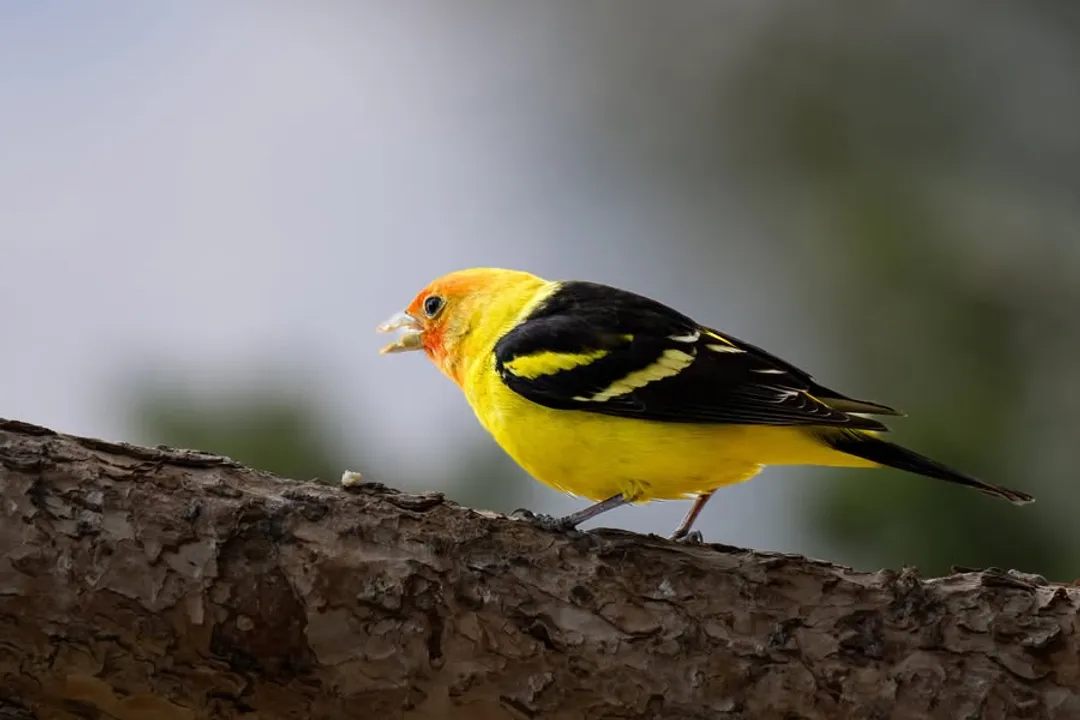
A striking visual difference between the seasonal appearances of the male Western Tanager is the loss of the vibrant breeding plumage coloration upon migration south. During the summer months, the male is recognizable by his iconic bright red head. When wintering in Central America and Mexico, this intensity fades, and the male presents a more subdued appearance, making him less conspicuous amongst the leafy cover of the warmer tropical habitats compared to his conspicuous state on northern nesting sites. This shift is a key indicator of their current life stage.
Related Questions
Where do the wintering grounds of the Western Tanager ultimately stretch to in Central America?What kind of forest structure do Western Tanagers favor during their summer breeding months in western mountains?How does the appearance of the male Western Tanager change when moving from breeding season to wintering far south?What dietary focus drives the high-canopy insect hunting characteristic of the summer Western Tanager?Which habitat trait replaces the cool mountain slopes for the Western Tanager in its warmer, lower-elevation tropical wintering grounds?Why can the autumn appearance of the Western Tanager in states like Arizona or Texas be somewhat unpredictable for birders?What are common tree associates frequently found in the summer coniferous habitat of the Western Tanager?What distinct vocalization should birders listen for when seeking the peak summer Western Tanager high in mature coniferous stands?Around what time does the spring arrival of the Western Tanager back to its northern breeding grounds typically commence?What transitional habitats do Western Tanagers frequently utilize during their northbound movement through the US mountains?