Western Blind Snake Locations
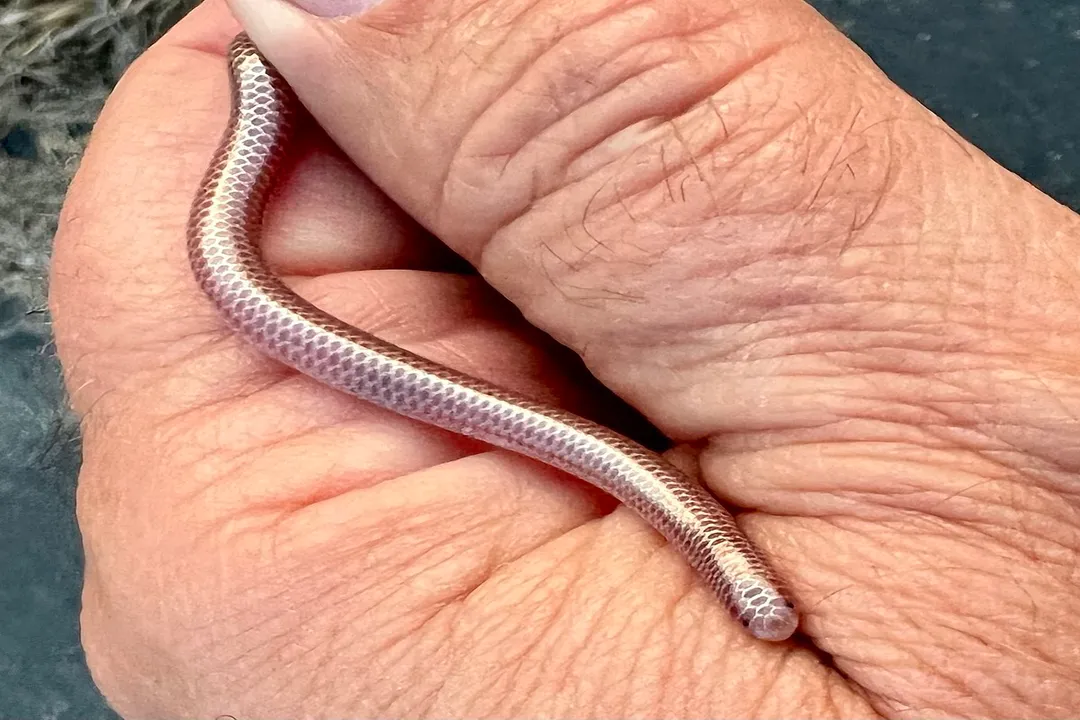
The small, worm-like creature often mistaken for an earthworm meandering across a damp desert road at night is actually Rena humilis, more commonly known by its recognized names: the Western Blind Snake, Western Slender Blind Snake, or Western Threadsnake. This species is a fascinating inhabitant of the arid Southwest, possessing numerous adaptations perfectly suited for a life spent beneath the soil surface. While they share a similar appearance across their wide range, subtle variations in appearance and subspecies designation mark their presence in different ecological corners, from the valleys of Utah to the scrublands of New Mexico. Understanding where to find this secretive reptile requires looking past the stark desert landscape and focusing on the specific subterranean conditions it requires to thrive.
# Description and Form
The Western Blind Snake lives up to its common names, presenting a slender, cylindrical body shape reminiscent of an earthworm. Adults are generally quite small, rarely exceeding () in total length, and are notably thin. Coloration varies, often appearing pink, purplish, silvery-brown, or grayish, possessing a distinctive shiny quality due to their smooth, tightly overlapping scales. One unique characteristic shared across the species is its fluorescence under low-frequency ultraviolet light, a feature that makes observation possible for researchers equipped with specialized gear.
As a species adapted to a fossorial existence, its physical structure reflects a life underground. The eyes are vestigial, reduced to tiny black spots beneath the ocular scales, having little to no functional vision. To aid in pushing through soil, the snake has a noticeably thick skull. Furthermore, the tail terminates in a small, sharp spine, which serves a crucial purpose for movement. This spine can be jabbed into tunnel walls to provide purchase or leverage while navigating tight spaces underground. Primitive characteristics are noted in this group, including the retention of rudimentary femur bones and pelvic remnants embedded in the musculature. Interestingly, unlike many other snakes, their belly scales are not distinctly enlarged, retaining the same size and shape as the dorsal scales.
# Geographical Span
Rena humilis maintains a broad distribution across the southwestern United States and into northern Mexico. Within the US, its range covers southern California, southern Nevada, southwestern Utah, southern and central Arizona, and extends east into Trans-Pecos Texas.
In California, the snake is widely distributed throughout the southern portion of the state, ranging from the coast eastward to the state line, inhabiting elevations up to about (). California hosts at least two native subspecies: the Southwestern Threadsnake (R. h. humilis) and the Desert Threadsnake (R. h. cahuilae). It is important for California observers to distinguish these natives from the introduced Brahminy Blindsnake (Indotyphlops braminus), which can be differentiated by scale counts, rostral scale shape, and the positioning of the dark eye spot relative to the ocular scale.
Utah observations are highly restricted, confined only to the extreme southwestern part of the state, specifically within Washington County. Here, they are found in the Mojave Desert portions, typically between elevation. The subspecies endemic to this region is often referred to as the Utah Blind Snake, R. h. utahensis.
Moving east, New Mexico is home to the Trans-Pecos Blindsnake, Leptotyphlops humilis segregus. Their habitat description emphasizes lower reaches below steep terrain, including bajadas, foothills, canyon bottoms, and low valleys. The species shares a similar range context in Southern Nevada and Arizona, typically being associated with the Mojave Desert environments in those regions.
A fascinating point of comparison arises when looking at distinguishing features. For instance, differentiating this snake from the similar New Mexico Threadsnake involves counting the scales on the head; R. humilis possesses only one scale between the ocular scales, whereas the other species has three. This level of detail highlights how even closely related, geographically proximate species can be reliably separated by minute morphological traits.
# Habitat Niches
While they inhabit desert environments, the Western Blind Snake is not distributed randomly across arid land. They necessitate specific substrate conditions that allow for successful burrowing and foraging. The requirement for loose soil is stressed across multiple regional accounts. In Utah, they are found where soils are sandy or in loose, gravelly deposits and alluvial fans. Similarly, in California, they prefer stony deserts, rocky slopes, and scrub areas where they can easily dig. They are seldom found in strictly sandy areas or dry lake beds.
The preference for moisture is a recurring theme. Even in arid zones, these snakes frequent areas associated with water retention or runoff. They are documented in riparian habitats in Utah, and California descriptions note their presence in canyons and areas where loose soil merges into brushy hillsides. This sensitivity suggests that the actual limiting factor for population density might not be the overall biome classification (like "Mojave Desert") but rather the availability of subsurface moisture that supports both the snake and its prey base. A resident in a dry area who notices regular, deep shade provided by large boulders or who lives near an intermittent stream bed might have a higher probability of finding one, as these locations retain necessary humidity deeper in the soil profile.
# Daily Life Behavior
The primary life mode of R. humilis is subterranean. They spend the vast majority of their lives beneath the surface, sometimes burrowing as deep as (), though often encountered closer to the surface among roots or beneath rocks and logs. They are predominantly nocturnal. Surface activity is generally restricted to the dark hours of the night or dusk, especially following warm rainstorms, which softens the soil and brings prey to the surface. Encounters by humans often occur when gardening, digging post holes, or when the snake crosses a roadway on a warm spring evening.
When they are captured or disturbed, their defensive sequence is quite active for such a small animal. They will writhe violently, attempt to poke a predator with the tail spine, and release foul-smelling secretions from cloacal scent glands. The secretions and musk are noted as a significant defensive tactic. When ants are encountered, the snake has evolved sophisticated methods to avoid being bitten while feeding. It can angle its scales to make gripping difficult for the ants and relies on the cloacal discharge to repel attackers. This intricate defense against its primary food source highlights a high degree of specialization in its underground ecosystem interactions. This defensive strategy—combining physical agitation with chemical deterrents—is often successful in startling a predator long enough for the snake to retreat back into the substrate.
# Diet and Prey Relations
The diet of the Western Blind Snake is narrow, focusing almost exclusively on small, soft-bodied invertebrates found underground. Their sustenance comes primarily from the galleries of social insects.
The main dietary components are:
- Ants and their eggs and larvae.
- Termites and their eggs and larvae.
- Spiders and centipedes.
They are highly specialized foragers, locating ant and termite colonies by following the pheromone trails left by the insects. An interesting analytical view suggests that their ability to angle their scales and deploy musk against ants, while simultaneously eating ant eggs and larvae, points to a highly evolved co-evolutionary relationship. They are not simply occasional scavengers; they are highly adapted tenants within the insect nest architecture, capable of navigating a chemically defended environment to harvest resources.
# Reproduction Cycles
Information regarding the reproductive habits of R. humilis is somewhat less detailed than their habitat needs, though some consistent patterns emerge. Mating is presumed to occur during the spring months. In late summer, females deposit a small clutch of eggs underground in protected nurseries. The typical clutch size ranges from two to six eggs, although some records for a related subspecies suggest up to eight eggs. A notable reproductive behavior is that females may remain with the eggs until after the young have hatched. Furthermore, communal nesting has been observed, meaning several females may utilize the same protected underground location to deposit their clutches. The hatchlings are quite small, measured around long, indicating that the entire subterranean nursery cycle happens in a very confined space until emergence.
Related Questions
#Citations
Rena humilis - Wikipedia
(species) rena humilis - Utah Natural Heritage Program Field Guide
Western Blind Snake (Leptotyphlops humilis)
Wildlife Around Las Vegas, Western Blind Snake (Rena humilis)
NMHS - Leptotyphlops humilis - New Mexico Herpetological Society
Threadsnakes (Blindsnakes) found in California
[PDF] Life history account for Western Threadsnake