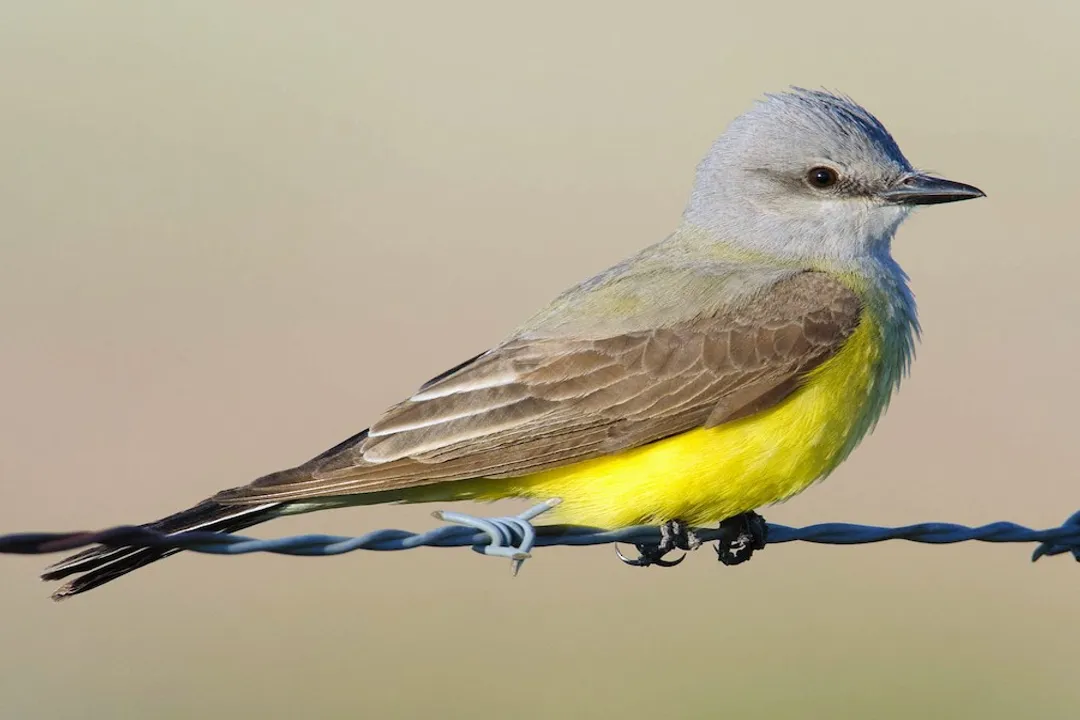
What key environmental characteristic defines Western Kingbird breeding habitat?
Open country that provides a balance of open ground for foraging and scattered vertical structures for perching
The Western Kingbird exhibits a strong preference for landscapes that offer high visibility and specific perching opportunities, which is why open country is essential for their breeding environment. They need large tracts of open ground to effectively conduct their aerial insect hunting technique, known as hawking. Simultaneously, they require isolated vertical elements within or near these open areas, such as utility poles, fence posts, or isolated trees, which serve as crucial vantage points for scanning, territorial defense, and launching their foraging sallies. Dense, unbroken forest canopies are explicitly detrimental as they obstruct the wide view required for hunting and establishing territory.