Western Rat Snake Locations
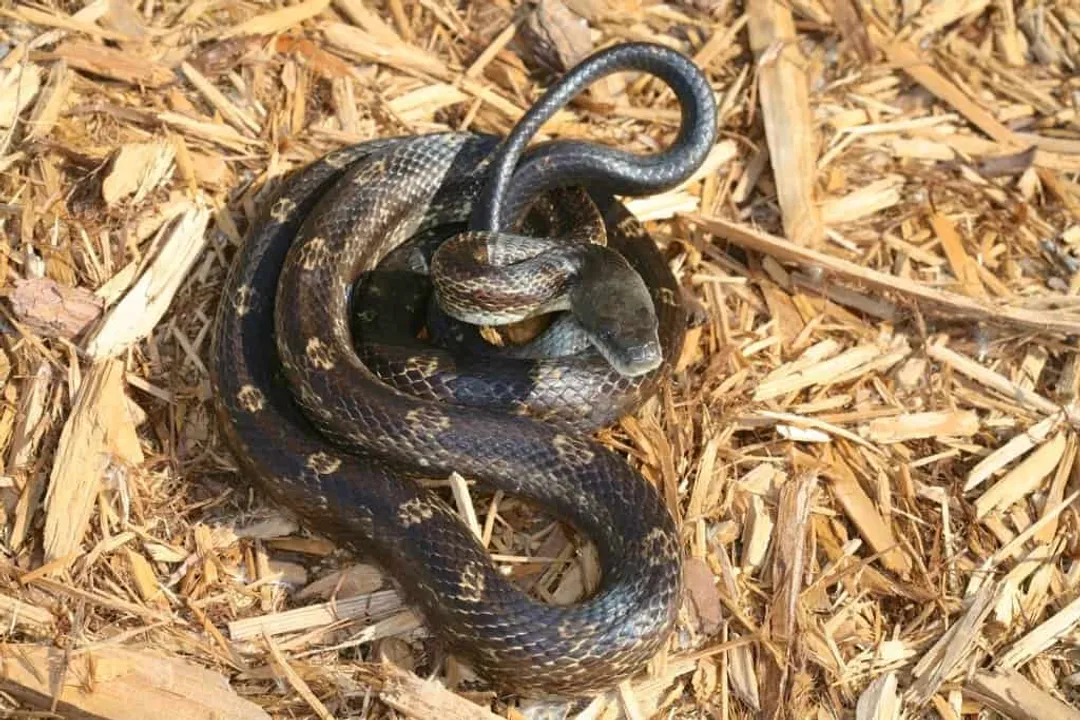
The geographical reach of the Western Rat Snake (Pantherophis obsoletus) is a fascinating study in central North American herpetology, spanning a significant swathe of the continent west of the Mississippi River. [1][2] While its conservation status is generally listed as Secure globally (G5) or Least Concern by the IUCN, its presence and stability vary dramatically from the southern edges of Texas up to the fringes of the upper Midwest. [1][4] Understanding where to find this nonvenomous constrictor requires a look not just at state lines, but at the specific ecological corridors that sustain its populations.
# Name Complexity

Before mapping its locations, it is important to address the name itself, as it causes frequent confusion in field identification. [4] Pantherophis obsoletus, sometimes historically known as Elaphe obsoleta, is often called the Western Rat Snake, Black Rat Snake, or Pilot Black Snake. [2][3] The term "black snake" is shared with other species, such as the Eastern Indigo Snake and the Eastern Racer. [2] Furthermore, taxonomic divisions are actively debated; some research suggests splitting the broader group into three distinct species—the Eastern, Central, and Western Rat Snakes—though these proposed species do not show clear morphological breaks and may still interbreed where their ranges meet. [1][2][3] In Louisiana, this snake may even be referred to as the Texas Ratsnake, especially the color variant found in the southern parts of the state. [1][2]
# Core Range Mapping

The established distribution for Pantherophis obsoletus centers firmly in the central United States, primarily west of the great river that marks its historical eastern boundary. [1] In the south, this snake stretches from southern Louisiana, moving westward across the lower half of Texas, including the Edwards Plateau region. [1][4] From these southern points, the range extends northward, covering Oklahoma and eastern Kansas, passing through Missouri, and continuing into southeastern Nebraska and southeastern Iowa. [1][3] This central block represents the heartland for the species, where it is often listed as Secure (S5 in Kansas, Missouri, and Texas). [1][3]
# Eastern and Northern Limits
The Mississippi River acts as a significant demarcation point, though not always a hard stop for snake movement or overlapping concepts of species identification. [1] While P. obsoletus is characteristically found to the west, adjacent states like Indiana and Illinois have populations designated as S4 (Apparently Secure) within the NatureServe system, suggesting established populations or at least historical confirmed presence that warrants status tracking. [1]
The northernmost extent is particularly noteworthy because the snake's status shifts dramatically at this edge. In southeastern Minnesota, the Western Ratsnake is documented but rare, listed as S2 (Imperiled) globally by NatureServe, and officially classified as a threatened species by the state as of 2013. [1][5] This contrast—from being S5 Secure in Missouri to Threatened in Minnesota—highlights how subtle changes in climate or historical habitat availability can drastically impact a species’ viability at the margins of its historical range. [5] The few Minnesota records are concentrated in the Paleozoic Plateau Section, specifically on wooded bluffs. [5]
A fascinating aspect of tracing the range is recognizing the historical confusion versus current classification. The SREL description of Rat Snakes notes that the Eastern Rat Snake (P. alleghaniensis) is found from New Jersey south through most of the Southeast (excluding Florida), and adults are typically black dorsally. [6] Where P. obsoletus meets P. alleghaniensis—often near the central Mississippi River valley—the potential for hybridization and overlap in common nomenclature is high. [2][6] This means that while the Western Rat Snake is defined by its geography west of the river, the name "black rat snake" may apply to different, though closely related, lineages just a few miles to the east. [6]
# Habitat Mosaic
Location is inextricably linked to habitat preference for the Western Rat Snake. They are adaptable, moving easily between structured woodlands and altered rural landscapes. [1][4] The primary habitat type across their distribution involves wooded areas—hardwood forests, mixed woodlands, and wooded canyons. [1] However, they thrive where these wooded patches intermix with open areas like farmland, old fields, or savannas. [1][4]
A striking feature of their presence along the western edge of their range, such as in Kansas and Nebraska, is their reliance on riparian corridors—the wooded areas associated with streams and rivers—where suitable forest cover persists even in otherwise drier plains environments. [3][5] In Kansas, they inhabit rocky hillsides and open woodlands, but along the range edge, those wooded river bottoms become essential. [3] Similarly, in Nebraska, where they are also found, they seek moist woodlands and rocky outcrops near rural buildings. [3]
Their arboreal nature is a key component of their habitat use. They are excellent climbers, frequently utilizing rough-barked trees or trees with heavy vine cover. [1][4] Reports indicate they can be found many meters up in the canopy, sometimes seeking rodent or bird nests. [1][3] Conversely, for overwintering, they retreat to secure dens, often communal sites shared with venomous snakes like copperheads and timber rattlesnakes, favoring deep underground crevices or burrows on wooded hillsides. [1][4]
If you are looking for a reliable place to spot one in the central part of their range, look for old, woody farm structures. They are often found in abandoned barns and rural buildings, which provide excellent cover and a steady supply of rodent prey. [1][3][4] This willingness to co-exist with human structures, particularly in suburban areas adjacent to woodlands, explains why they can be one of the most common large snakes encountered in those niches. [3]
# Range Edge Dynamics and Conservation Implications
The ecological pressure on the Western Rat Snake varies significantly based on its latitude and local status. In states where the snake is abundant and secure, like Missouri or Arkansas, the main threats involve road mortality during agricultural harvests or simple persecution due to mistaken identity. [3] For instance, mowing equipment in Kansas has been recorded killing dozens of snakes during harvest periods. [3]
However, consider the situation in Minnesota. The state's records are limited to a small area in the southeastern bluffs. [5] Here, the combination of limited suitable, undeveloped woodland habitat and susceptibility to localized threats, like the destruction of den sites or the impact of Snake Fungal Disease (SFD), pushes their status to threatened. [5] The fact that a species is G5 Secure globally, yet imperiled locally, underscores a critical point in conservation: broad range stability does not guarantee local population health. [1][5] A snake that successfully utilizes human structures in suburban Texas might find those same structures absent or inappropriate in a more rural, geographically restricted northern zone, increasing their reliance on specific natural features like mature oak cavities for summer shelter and deep bluff crevices for winter survival. [5]
An observation that arises when comparing the central and northern ranges is the distinct reliance on specific geology in the north. While central populations seem adaptable to various substrates mixing woodland and open ground, the confirmed Minnesota sightings are exclusively tied to the wooded bluffs of the Paleozoic Plateau. [5] This suggests that, while the snake is generally an edge-habitat opportunist, populations restricted to the colder extremes depend more heavily on predictable, high-quality geological features for successful hibernation, making those localized sites disproportionately important for the persistence of the entire northern metapopulation. [5]
# Color Variation and Location
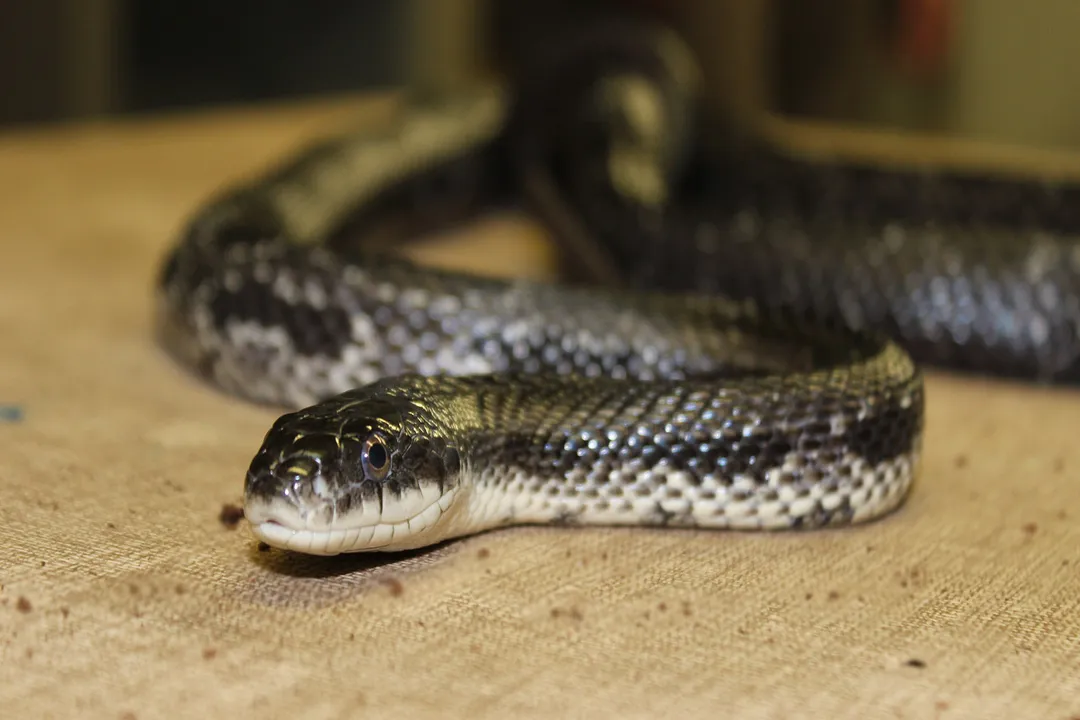
The snake’s appearance can often provide a clue to its general location within the overall range. While adults in many areas, like Kansas, tend toward a glossy black that obscures the juvenile pattern, variation exists. [2][3] In Louisiana and southern areas like southern Oklahoma and Texas, the Texas rat snake variant is recognized—a brown-to-black individual that frequently shows orange or red pigmentation in the skin between the scales, resulting in a calico appearance in southern Louisiana. [1][2][6] This color phase contrasts slightly with the overall dark or faintly blotched adults seen in states like Kansas. [3]
It is worth noting that the Western Rat Snake’s capacity to darken with age is a near-universal trait, yet the degree to which the juvenile pattern is retained seems to correlate geographically. [3] Snakes in the southwestern parts of the range, near Texas, seem more likely to maintain a blotched pattern into adulthood compared to their counterparts further north or east within the species' distribution. [3] This gradient in adult morphology across a continuous, albeit large, area suggests a complex interplay between genetic lineage and local environmental pressures influencing scale pigmentation over generations. The ability of this species to occupy habitats ranging from lowland swamps (as suggested by its presence in Louisiana's marsh country edge) to rocky uplands makes mapping its precise locations challenging, as it is less tied to a single substrate than some more specialized species. [1][6]
# Adaptability and Human Interaction
The Western Rat Snake’s success is partly due to its flexible behavior, especially its activity schedule. They are generally diurnal in spring and fall when temperatures are moderate, but they switch to being largely nocturnal during the intense heat of summer. [1][4] This behavioral plasticity likely allows them to exploit different food sources or avoid temperature extremes, contributing to their wide distribution. [1]
When encountering humans, their defensive suite is well-known: kinking the body, vibrating the tail, or biting while releasing musk. [2][4] The tail vibration, often confused with that of a rattlesnake, is an ancient defense mechanism not solely evolved as mimicry. [2] For property owners in the core range, understanding that these large snakes are primarily seeking shelter or prey, rather than being aggressive, is key to their coexistence. When a large individual is found high in a tree or barn rafters, it is almost certainly fulfilling its role as an effective predator of rodents and birds. [4][6]
In summary, finding the Western Rat Snake means looking west of the Mississippi into a broad band of states stretching from the Gulf Coast to southern Minnesota. [1] You are most likely to find it in or near wooded edges, stream corridors, or old farmsteads in Missouri, Kansas, or Arkansas. [3] However, its presence in threatened Minnesota highlights that while its historical range is vast, pockets of high-quality, interconnected habitat are necessary to maintain security, even for a globally secure species. [5] The very adaptability that allows it to thrive across this latitudinal gradient also makes its local protection dependent on appreciating the specific habitat needs of each distinct regional population. [1]
Related Questions
#Citations
Pantherophis obsoletus - Wikipedia
Pantherophis obsoletus | NatureServe Explorer
Western Ratsnake - Oklahoma Herpetofaunal Atlas
Western Rat Snake - Pantherophis obsoletus - A-Z Animals
Western Ratsnake | Louisiana Department of Wildlife and Fisheries
Rat Snake (Pantherophis alleghaniensis) - SREL herpetology
Western Black Ratsnake | Amphibians, Turtles & Reptiles of Nebraska
Pantherophis obsoletus : Western Ratsnake | Rare Species Guide
Western Rat Snake - Elmwood Park Zoo