Yellow Tanager (Black-and-Yellow Tanager) Locations
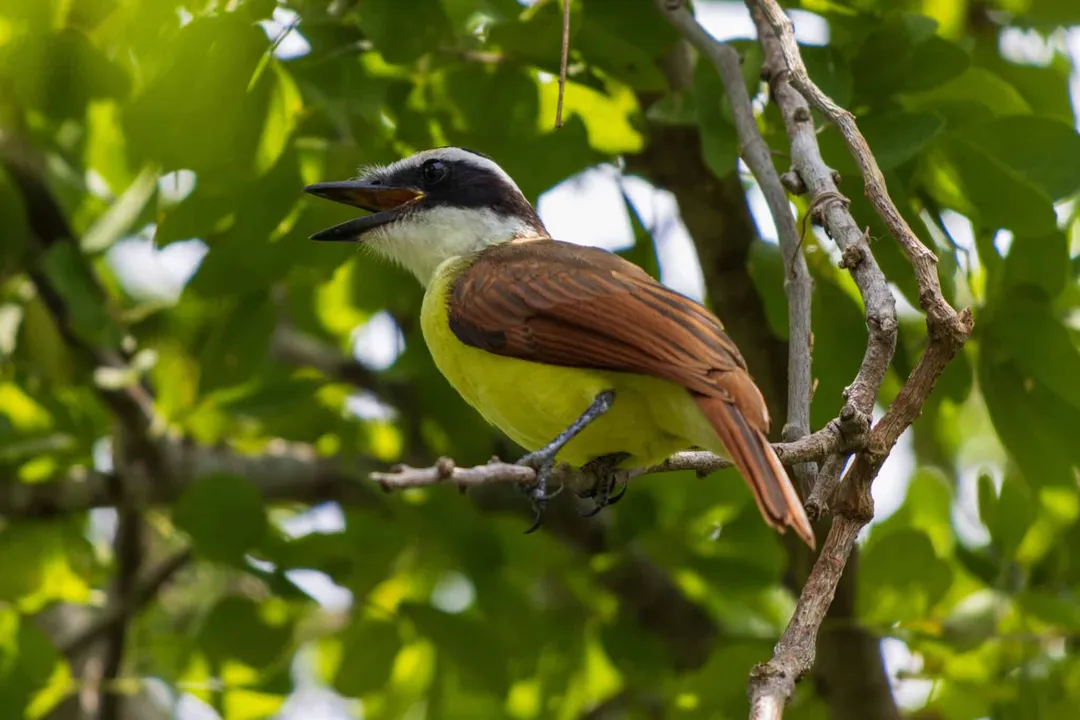
The Black-and-Yellow Tanager, a flash of tropical brilliance, is often more sought after by birders for its startlingly bright plumage than it is widely known outside of its humid home range. With males sporting a vivid lemon-yellow contrasting sharply against glossy black across the head, back, and wings, spotting this species, scientifically named Chrysothlypis chrysomelas, is a rewarding endeavor for those looking in the right places. [2][4] Unlike some of its tanager relatives that make extensive migrations, this bird is firmly rooted in the Neotropics, meaning a successful sighting depends entirely on knowing the specific swath of mountains where it resides year-round. [2]
# Three Nations Home
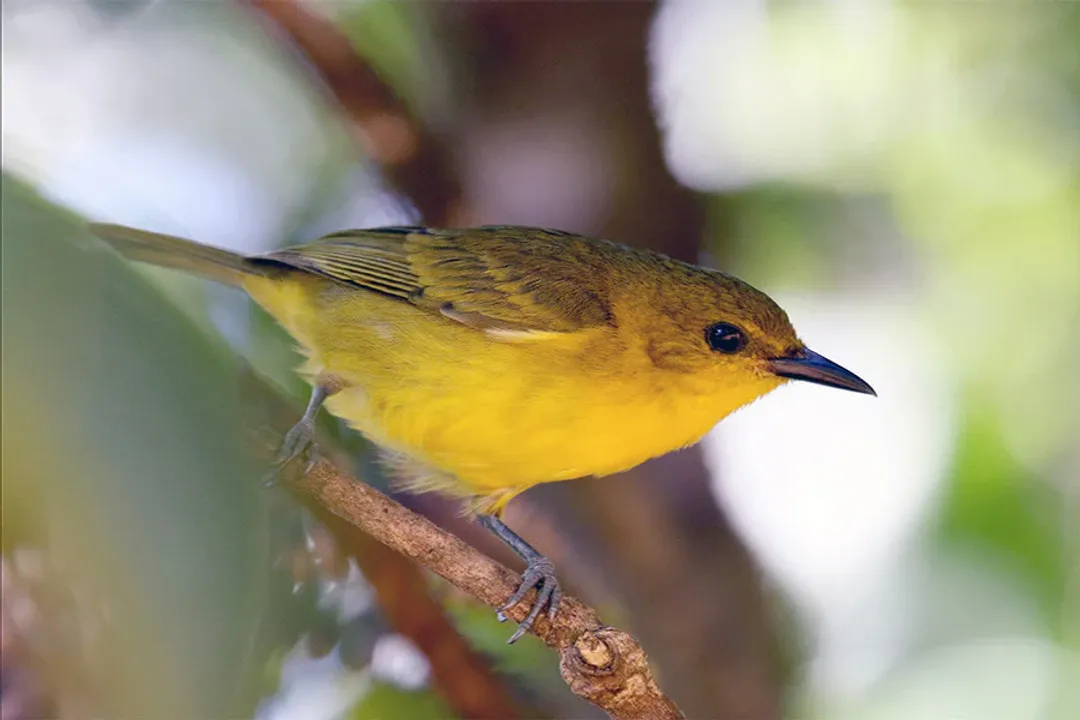
The core distribution of the Black-and-Yellow Tanager is concentrated in the northern part of South America and the southern reaches of Central America. Specifically, field guides and sighting records place this species within the borders of Colombia, Costa Rica, and Panama. [2][4] In Colombia, the bird is noted to be found primarily in the departments bordering Panama, such as the Chocó department. [4] For those planning expeditions specifically for this species, understanding that it is a nonmigratory, or resident, species is key; you don't need to track seasonal movements, as they stay within their established environments where food and shelter remain abundant. [2] While the species is generally listed as Least Concern by the IUCN, its localized range makes concentrated habitat preservation in these three nations particularly vital for its long-term stability. [2][4]
# Slope and Altitude Niches
Pinpointing the exact elevation and topography is what separates a hopeful search from a successful observation. The preferred domain of the Black-and-Yellow Tanager lies within the humid foothills and slopes of the central mountain ranges of these countries. [2] While one source notes its presence spans from the Caribbean to the Pacific slopes in Costa Rica and Panama, [4] others emphasize the Caribbean side of these central ranges. [2] This slight difference in description suggests that while they might occasionally be found on the Pacific side, the core habitat appears tied to the wetter Caribbean incline.
The altitudinal band where observers are most likely to encounter them is quite specific. They inhabit humid tropical and subtropical forests typically found between 450 and 1,200 meters above sea level. [4] Even broader data suggests a range from 300 to 1,500 meters. This vertical banding is crucial; venture too low into dry scrub or too high into the cold, cloud forest zones, and your chances of spotting this yellow-and-black jewel diminish significantly.
# Forest Structure Matters
Once you are in the correct country and at the appropriate elevation band, the structure of the forest itself becomes the next critical factor. The Black-and-Yellow Tanager has a strong affinity for the mid-canopy levels of wet forests. [4] They prefer dense vegetation where they can forage, often within small groups or mixed-species flocks. [2]
While they are associated with wet forest canopies and dense primary forest, they are not entirely confined to pristine wilderness. They will venture out to edges and clearings to feed. [2] Moreover, they show some adaptability, occasionally occupying secondary growth areas or even plantations, though this often correlates with the presence of remaining mature trees. The genus name, Chrysothlypis, derived from Ancient Greek for "gold," certainly suits their appearance, but their preference for the dense, moist mid-story is a defining characteristic of their location strategy. [2] For a birdwatcher familiar only with widespread North American tanagers, like the Summer Tanager frequenting streamside cottonwoods or the Western Tanager favoring high-elevation conifers, [1] the Black-and-Yellow Tanager's niche in the middle-story of a Neotropical wet forest is distinctly different. [2]
The social behavior itself can be an indicator of location quality. Because they frequently join mixed-species flocks, [2][4] finding a flurry of activity in the mid-canopy of a humid forest, even if you don't immediately spot the target species, suggests you are in the correct habitat stratum where they are actively feeding. If the forest structure around you is mostly open grassland or very high elevation páramo, you have drifted outside the bird's known boundaries. [2]
# Locating Your Target Bird
For anyone specifically seeking the Black-and-Yellow Tanager, integrating the habitat data with modern tracking technology offers an advantage. While the species does not migrate, local movements for food might occur, meaning a high-quality sighting database can be more useful than historical range maps alone.
One practical approach for the keen observer lies in focusing fieldwork along the Caribbean slopes of Costa Rica and Panama, particularly in areas offering both mature forest canopy and accessible forest edges within the 450 to 1,200-meter band. [2][4] Given that several community sighting platforms show recent activity clustered near the Panamanian border area of Costa Rica, [4] targeting eco-lodges or reserves known for preserving these specific mid-elevation, humid zones might narrow the search considerably. A good guiding principle is this: if you are in a location known for other humid foothill tanagers and mixed-species flocks, you are on the right track, as these gregarious birds often travel with companions. [2]
A subtle point for identification, which aids in confirming location success, involves the subtle differences between the sexes and subspecies. The male's strong black-and-yellow contrast is unmistakable. [4] However, the female's duller olive-green and yellow plumage means that observers must be careful not to overlook her while scanning for the brighter male, especially in the specific region where the C. c. ocularis subspecies, noted for a distinct black spot on the lores, occurs. [4] Successfully locating the bird requires matching the right elevation, the right moisture level, and the right canopy layer across those three key countries.
# Vocal Clues to Location
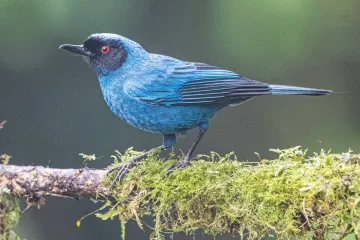
While the striking visual appearance is the goal, listening can sometimes confirm you are in the right place before the bird reveals itself. The Black-and-Yellow Tanager possesses a distinctive vocalization that can help an observer pinpoint a foraging flock. Its call is described as a scratchy 'tsew', which is higher pitched and faster than the call of the Silver-throated Tanager. [4] Other descriptions note a series of high-pitched, clear notes, sometimes characterized as a rapid, musical trill. If you hear these sharp, scratchy calls emanating from the middle levels of the forest canopy in the humid mountains of Panama, Costa Rica, or western Colombia, patience is advised, as the bird is likely close by. [2][4] Unlike the lazy, burry songs of some other tanagers found further north, the call of Chrysothlypis chrysomelas is an active, quick sound suggesting energetic foraging within the dense foliage. [1][4]
Related Questions
#Citations
Black-and-yellow Tanager (Chrysothlypis chrysomelas) identification
Yellow Tanager (Black-and-Yellow Tanager) Bird Facts - A-Z Animals
Black-and-yellow Tanager - Birds of Colombia
Tanagers - Desert Museum
Black-and-yellow Tanager