What dietary focus drives the high-canopy insect hunting characteristic of the summer Western Tanager?
Answer
Securing enough protein for nesting and raising young
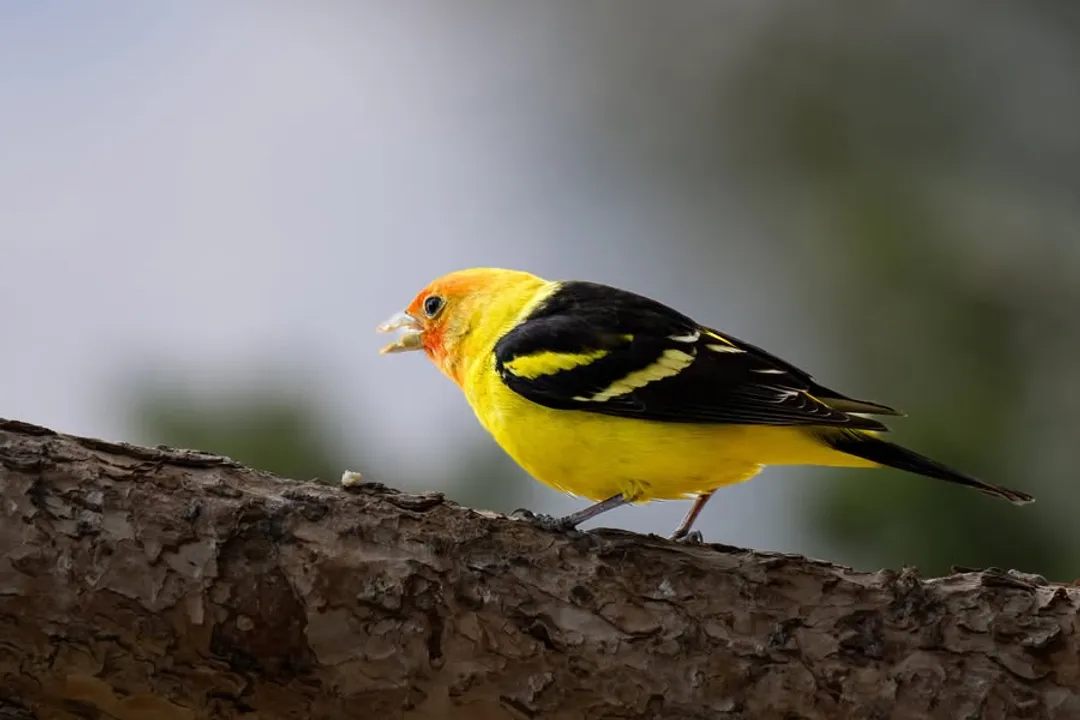
The energetic demands of reproduction heavily influence the foraging strategy during the summer breeding season. The primary goal is obtaining sufficient high-protein food sources, which translates directly into active insect hunting. This pursuit often occurs high up in the tree canopy, leading to observations of the birds singing from the tallest available trees on clear mornings. This focused protein intake is essential for fueling the demanding processes of egg production, incubation, and subsequent feeding of developing nestlings, contrasting with the more generalized foraging seen during other times of the year.
Related Questions
Where do the wintering grounds of the Western Tanager ultimately stretch to in Central America?What kind of forest structure do Western Tanagers favor during their summer breeding months in western mountains?How does the appearance of the male Western Tanager change when moving from breeding season to wintering far south?What dietary focus drives the high-canopy insect hunting characteristic of the summer Western Tanager?Which habitat trait replaces the cool mountain slopes for the Western Tanager in its warmer, lower-elevation tropical wintering grounds?Why can the autumn appearance of the Western Tanager in states like Arizona or Texas be somewhat unpredictable for birders?What are common tree associates frequently found in the summer coniferous habitat of the Western Tanager?What distinct vocalization should birders listen for when seeking the peak summer Western Tanager high in mature coniferous stands?Around what time does the spring arrival of the Western Tanager back to its northern breeding grounds typically commence?What transitional habitats do Western Tanagers frequently utilize during their northbound movement through the US mountains?