How do Ixodes pacificus ticks typically encounter a host when questing?
Answer
Waiting on low vegetation for a host to brush against them
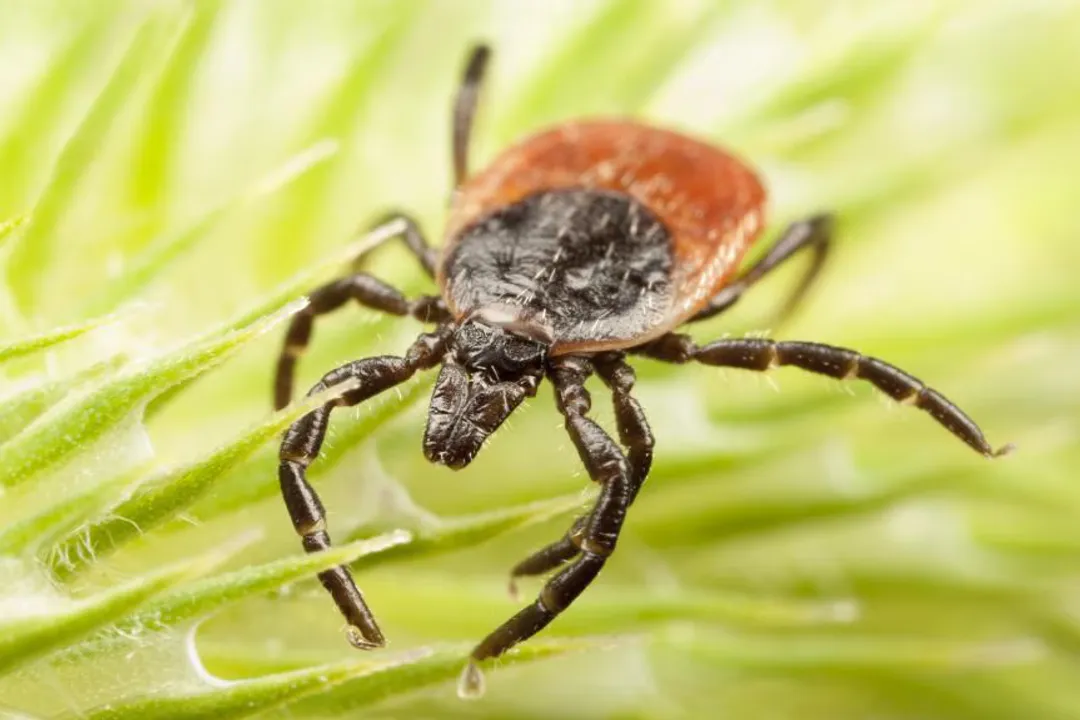
Ticks, including *I. pacificus*, do not possess the ability to jump from trees or propel themselves toward a host; instead, they utilize a behavior known as 'questing.' Questing involves the tick positioning itself on low-lying vegetation, typically remaining less than three feet off the ground. From this elevated perch, they extend their forelegs and wait patiently for a suitable host, such as a passing deer, rodent, or human, to brush into the vegetation. This action causes the tick to make contact, allowing it to grasp the host and begin searching for a suitable attachment site on the skin, making low brush and leaf litter the critical zones for potential encounters.
Related Questions
What is the primary disease transmitted by Ixodes pacificus in the western US?Which Ixodes pacificus life stage causes the majority of Lyme disease transmissions?What type of environment does Ixodes pacificus strongly favor over open, sunny fields?What is the scientific name for the Eastern cousin of Ixodes pacificus?How do Ixodes pacificus ticks typically encounter a host when questing?What minimum attachment duration is usually required for Borrelia burgdorferi transmission?Besides Lyme disease, what two other illnesses has I. pacificus been found to carry?Where is the highest tick density observed near cleared areas, per park management observation?What specific substrate is crucial for the preferred habitat of I. pacificus?What common surveillance method physically captures I. pacificus by dragging across vegetation?