What ancestral feature confirms H. nasicus's developmental inclusion in Phylum Chordata?
Answer
Possession of a notochord at some developmental stage
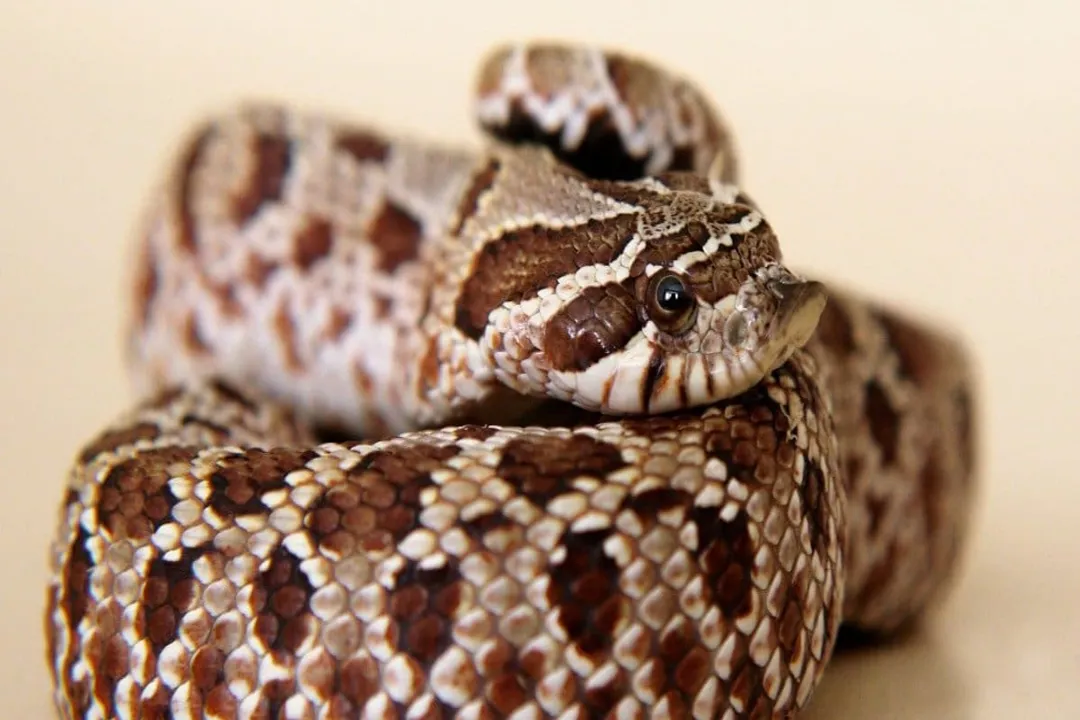
Inclusion in the Phylum Chordata is determined by the presence of four key anatomical features at some point during the organism's life cycle. These features include a notochord, a dorsal nerve cord, pharyngeal slits, and a post-anal tail. Although the adult Western Hognose Snake has undergone metamorphosis where structures like the notochord are replaced by the more complex vertebral column that forms the backbone, the retention of these ancestral traits during development confirms its membership in Chordata. This placement is essential for understanding its fundamental evolutionary relationship with vertebrates.
Related Questions
What specific dental structure defines Heterodon nasicus's placement in Family Colubridae?Which physical adaptation defines the Genus Heterodon for H. nasicus, aiding in its fossorial behavior?What characteristic of Class Reptilia dictates that H. nasicus must bask in the sun to become active?Which groups besides snakes are explicitly included in the diverse Order Squamata?What does the specific species designation nasicus signify regarding the morphology of Heterodon nasicus?What primary characteristic places H. nasicus in Kingdom Animalia instead of the Plant Kingdom?How does the Colubridae family placement affect the specialized captive diet requirements for H. nasicus?What ancestral feature confirms H. nasicus's developmental inclusion in Phylum Chordata?Besides the pointed snout, what visual trait helps confirm the H. nasicus species identification in the field?How does the Colubridae placement contrast H. nasicus with Vipers or Cobras regarding venom apparatus structure?