What structure characterizes the genus Crotalus according to its Greek derivation?
Answer
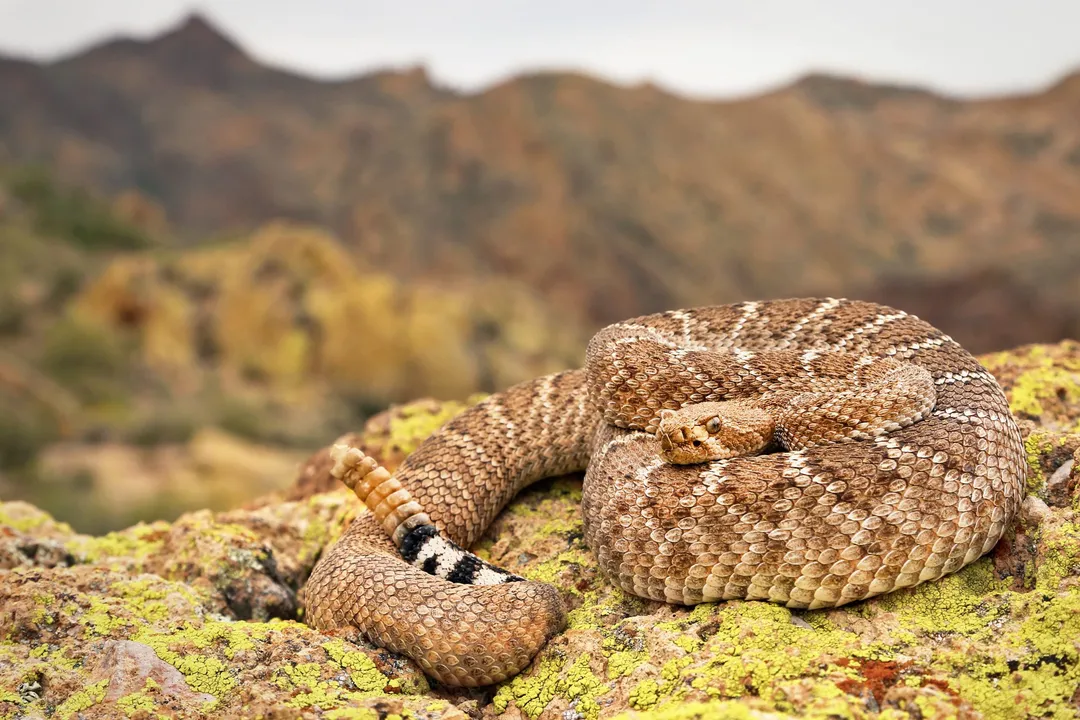
The interlocking keratinous segments at the tail tip.
The genus name Crotalus is specifically derived from the Greek word krotalon, which translates to 'a clapper or rattle.' This morphological feature, the rattle, is unique to snakes within this genus and serves as an aposematic signal, warning potential threats of danger. This defining characteristic, found at the tail tip via interlocking keratinous segments, is the basis for its inclusion in the genus Crotalus, differentiating it from other pit vipers.
Related Questions
What structure characterizes the genus Crotalus according to its Greek derivation?What specialized thermoreceptive organ defines the subfamily Crotalinae, placing Crotalus atrox within it?What is the likely Latin translation of the species epithet atrox in Crotalus atrox?What unifying morphological characteristic defines the reptile Order Squamata, which includes Crotalus atrox?What dangerous attribute separates the Family Viperidae, housing Crotalus atrox, from families like Colubridae?What type of venom is primarily implied by placing Crotalus atrox within the family Viperidae for medical personnel?What is the global conservation status assessment (G-rank) provided for Crotalus atrox by NatureServe?Which Phylum designation does Crotalus atrox share with earthworms and blue whales?How does Crotalus atrox generally compare physically to the Eastern Diamondback Rattlesnake (C. adamanteus)?Which geographical areas primarily encompass the distribution where Crotalus atrox is concentrated according to ecological observation?