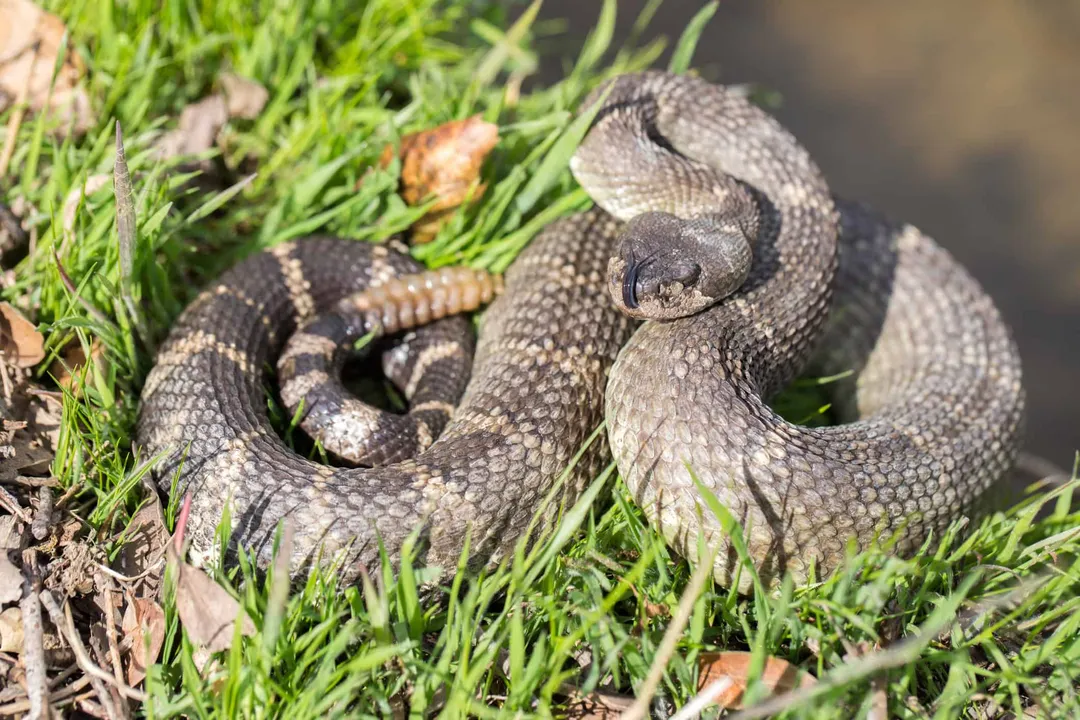
What anatomical feature defines membership in the pit viper subfamily Crotalinae?
The distinctive heat-sensing pits located between the eye and the nostril on each side of the head.
The classification of *Crotalus oreganus* places it within the subfamily Crotalinae, which specifically identifies it as a pit viper. The defining physical characteristic that grants this group its name is the presence of specialized, thermosensitive pits located on the face, situated precisely between the eye and the nostril on both sides of the head. These pits allow the snake to detect infrared radiation emitted by warm-blooded prey, significantly enhancing their predatory accuracy, especially in low-light conditions. While the presence of fangs and venom is a shared characteristic with other vipers, the heat-sensing pits are the key morphological trait distinguishing the Crotalinae subfamily.