Worm Snake Scientific Classification

The process of scientifically classifying any organism, including the small, often unseen worm snakes, reveals a detailed map of its evolutionary history and its place within the vast web of life. To place the Eastern Worm Snake, Carphophis amoenus, into a precise scientific category involves tracing its lineage from the broadest possible biological realms down to its specific species and subspecies designations, a system established by Carl Linnaeus centuries ago that remains foundational to biology today. [1] This classification is not arbitrary; each rank reflects shared characteristics, anatomical features, and ancestry that link this secretive reptile to others across the globe. [2]
# Broadest Groupings
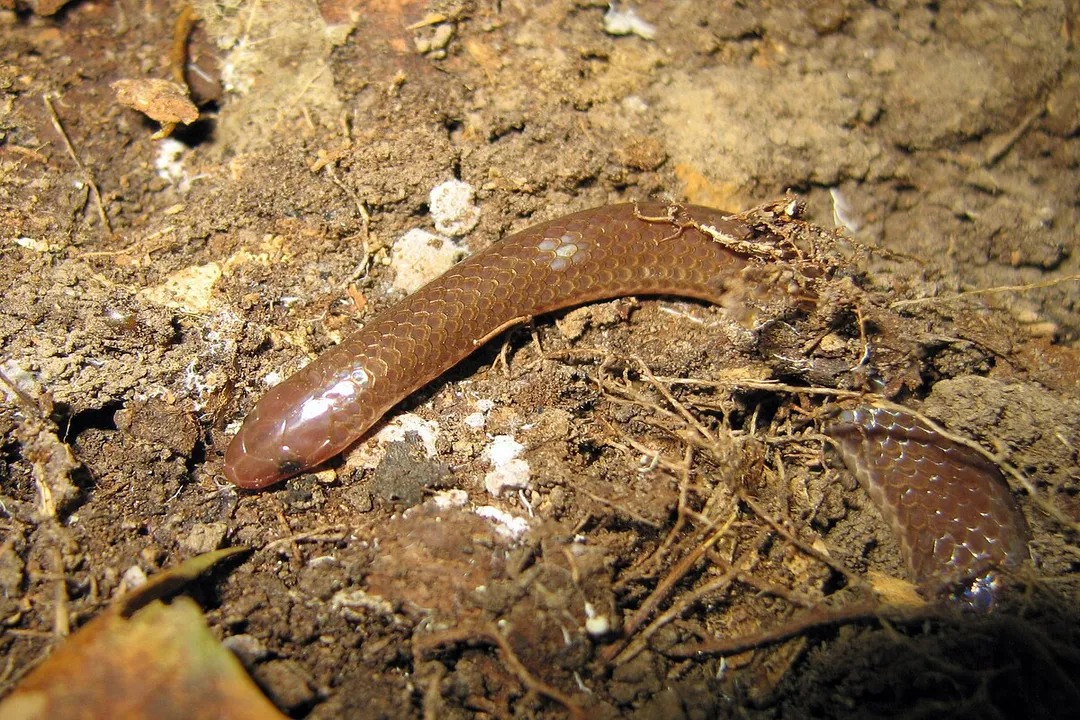
The very beginning of this classification journey places the worm snake squarely within the Kingdom Animalia. [1][3] This is the most general designation, signifying that the organism is multicellular, heterotrophic (obtaining energy by consuming other organisms), and typically possesses motility, placing it alongside everything from sponges to elephants. [2] Following this broad grouping, the worm snake belongs to the Phylum Chordata. [1][3] Membership in Chordata means the creature possesses, at some stage in its life, a notochord, a dorsal hollow nerve cord, pharyngeal slits, and a post-anal tail. [2] While the adult snake lacks many of these features in their most primitive form, their embryonic development confirms this ancient lineage. [3]
The next step down brings us to the Class Reptilia. [1][3] This is where the organism's defining external characteristics become more apparent. Reptiles are characterized by being vertebrates that breathe air, possess scales or scutes, and are generally ectothermic, meaning they rely on external sources to regulate their body temperature. [2] This distinction separates the worm snake from amphibians, which typically undergo metamorphosis and have moist, permeable skin, and from mammals and birds, which are endothermic. [5]
# Reptilian Order
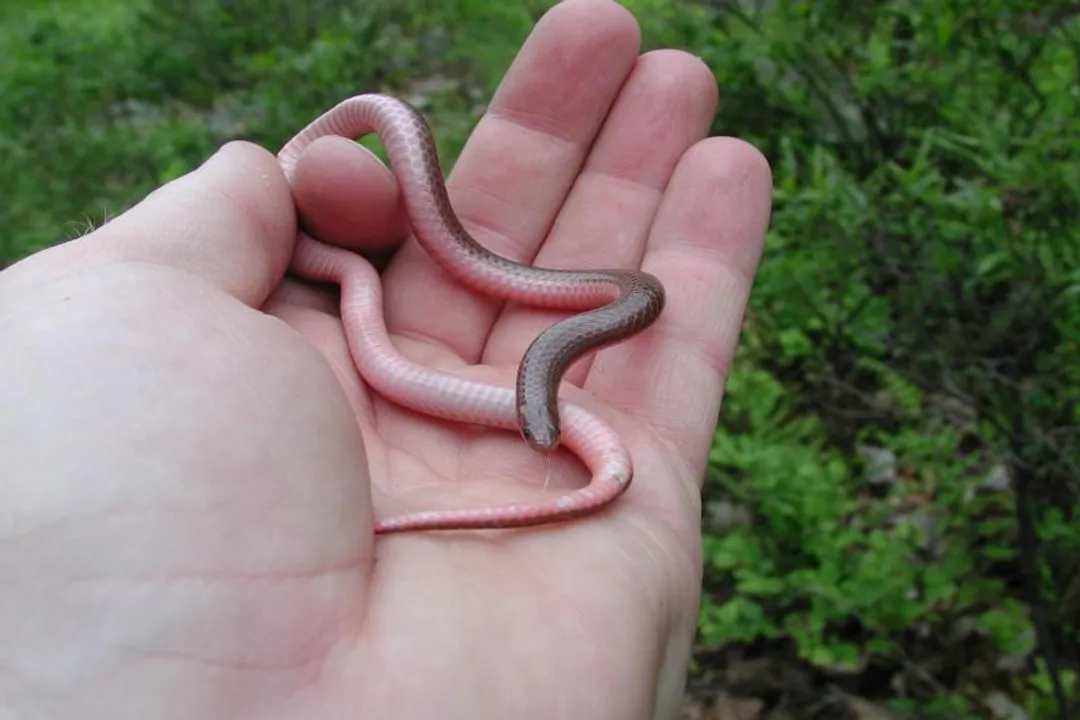
Within Reptilia, the worm snake falls into the Order Squamata. [1][3] Squamata is the largest order of reptiles, encompassing all snakes, lizards, and amphisbaenians (worm lizards). [2] The key feature defining this order is the presence of kinetic skulls, which allow for a wide range of jaw movement, and, crucially for snakes, movable quadrate bones that permit the swallowing of prey much larger than the head. [1] This order represents a massive evolutionary success story, dominating many terrestrial niches. [4]
# Snake Family
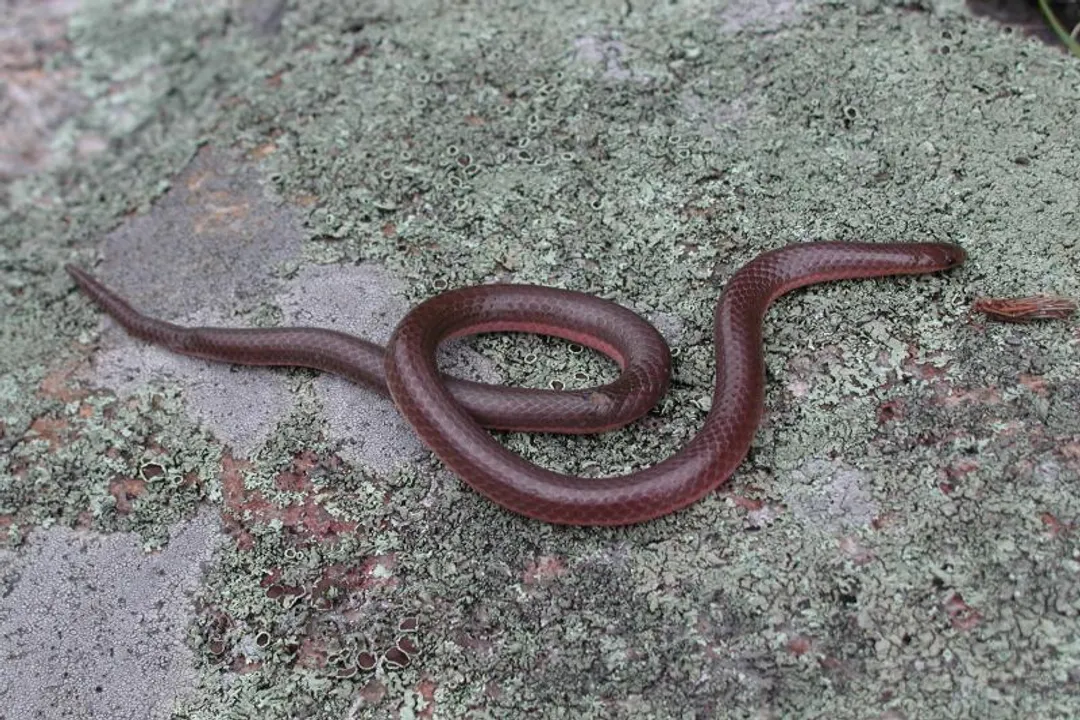
Moving down the hierarchy, the classification becomes more specific, focusing on shared anatomical traits that define snakes versus lizards. The worm snake is placed in the Family Colubridae. [1][3] This is the largest snake family, comprising roughly two-thirds of all known snake species. [2] Snakes within Colubridae are generally characterized by having small rearward-pointing teeth, and most are non-venomous or possess only mildly venomous saliva not dangerous to humans. [5][6] A defining characteristic shared across many colubrids, and especially prominent in the worm snake, is the structure of their scales. The Eastern Worm Snake possesses smooth, glossy scales, which aids its primary mode of existence. [4]
When considering the characteristics that place Carphophis into this family, it's interesting to note how their specialized body plan contrasts with more generalist colubrids like rat snakes or garter snakes. While many Colubrids are active foragers, the smooth, almost cylindrical body and reduced head structure of Carphophis strongly suggest a strong adaptation to a fossorial life. [1]
One insight becomes clear when looking at the smooth scales typical of Carphophis against the backdrop of the broader Colubridae family. Where many terrestrial, surface-dwelling snakes in this family might benefit from keeled or rougher scales for grip when climbing or wrestling prey, the worm snake's uniformly smooth, glossy skin is perfectly evolved for minimum friction as it pushes through dense, moist soil and leaf litter. This physical trait directly reflects an ecological niche, showing classification is as much about lifestyle as it is about skeletal structure. [4]
# The Genus Boundary
The next step isolates the worm snakes into the Genus Carphophis. [1][7] This designation groups together species that share a very specific set of morphological features that distinguish them from other colubrids. Snakes in the genus Carphophis are uniformly small, slender, and possess a relatively short tail. [1] Their eyes are tiny, an adaptation for low-light, subterranean environments. [7] Perhaps the most striking feature associated with the genus is the presence of a hardened, pointed, or slightly upturned scale on the very tip of the tail, which is used as a digging implement. [4][7]
Within North America, the genus Carphophis is represented by two generally recognized species: the Eastern Worm Snake (Carphophis amoenus) and the Western Worm Snake (Carphophis vermis). [7] Understanding the classification of the group requires acknowledging this sibling species, as their shared genus placement dictates a strong recent common ancestry and highly similar ecological roles. [1]
# Species Distinction
The split between the two recognized species within the genus is geographical and based on subtle but consistent morphological differences.
# Eastern Wormsnake (C. amoenus)
The Eastern Worm Snake, Carphophis amoenus, is the focus of many regional guides in the eastern half of the United States. [4][6] Its distribution spans areas from southern New England, such as New York, down through the mid-Atlantic and southeast states like North Carolina and Virginia. [4][5][6] The common name, Eastern Wormsnake, directly reflects its range relative to its western counterpart. [1]
# Western Wormsnake (C. vermis)
In contrast, the Western Worm Snake, Carphophis vermis, occupies a distinct range, generally located west of the Mississippi River valley, covering states like Nebraska. [7] While both species share the same general body plan—small, cylindrical, smooth scales—they are reproductively isolated and genetically distinct enough to warrant separate species status. [7] The visual differences are often subtle, sometimes involving the number of ventral scales or minor variations in head shape, but they are consistent enough for reliable identification by herpetologists. [1] For instance, the Western Worm Snake is frequently described as having a slightly more pinkish or purplish hue in its ventral coloration compared to the Eastern species, though individual variation in color makes this unreliable for casual observation. [7]
This regional division within a single genus provides an excellent example of how geographic isolation drives speciation, even among species that appear nearly identical superficially. [2]
# Subspecies Detail
For the Eastern Worm Snake, Carphophis amoenus, the classification often extends into the subspecies level, highlighting finer regional variations within its own species range. [9] The most commonly referenced subspecies, particularly in the northern parts of its range, is Carphophis amoenus amoenus. [9] This level of classification is reserved for populations that are geographically separated but still able to interbreed, yet show consistent differences in traits like scale counts, pattern intensity, or size when compared to other subspecies within C. amoenus. [1] The designation of a nominate subspecies, where the subspecies name is the same as the species name (amoenus amoenus), typically applies to the population originally described by the original species author. [9]
The hierarchical structure confirms the snake's identity:
| Rank | Classification | Significance |
|---|---|---|
| Kingdom | Animalia | Multicellular, heterotrophic life [2] |
| Phylum | Chordata | Possesses a notochord ancestrally [3] |
| Class | Reptilia | Vertebrate with scales, air-breathing [1] |
| Order | Squamata | Kinetic skull, true snakes and lizards [2] |
| Family | Colubridae | Largest family of non-venomous snakes [5] |
| Genus | Carphophis | Small, fossorial snakes with pointed tails [7] |
| Species | C. amoenus | Eastern Wormsnake [4] |
| Subspecies | C. a. amoenus | Nominate subspecies of the Eastern species [9] |
# Classification in Practice
Understanding the scientific classification is essential because it dictates how biologists study the snake, how conservation efforts are structured, and how local guides categorize them. [2] For instance, state agencies place high value on identifying native species correctly. The New York Natural Heritage Program recognizes the Eastern Wormsnake, linking its presence or absence to local habitat health. [4] Similarly, the North Carolina State Parks checklist includes Carphophis amoenus, grounding its management within the state's herpetofauna inventory. [5] These local acknowledgments, from New York to Virginia, confirm the species' established identity within the scientific framework. [6]
An interesting comparison arises when observing how different state agencies might use common names alongside the Latin binomial. Louisiana refers to it as the Common Wormsnake, [8] while other states often use Eastern Wormsnake. [6] Despite the difference in the common label, the scientific standard, Carphophis amoenus, remains the same, ensuring universal communication regarding the precise organism being discussed, regardless of local dialect or common vernacular. [8]
The reliance on scientific naming becomes critically important when dealing with cryptic species, like the two Carphophis members. If a researcher in Missouri finds a small, fossorial snake, simply calling it a "worm snake" might be ambiguous. However, identifying it as C. vermis immediately tells a colleague in Virginia, who studies C. amoenus, that they are dealing with two distinct evolutionary lineages, even if their habitats and habits are parallel. [7]
This detailed classification system allows us to infer information even before direct observation. Knowing Carphophis amoenus is a Colubrid tells us it lacks fangs and specialized venom glands dangerous to humans. [5] Knowing it is in the genus Carphophis tells us to look under stones, logs, and in loose soil in damp woodlands, as its body is not built for prolonged surface activity. [4]
An additional layer of practical insight for naturalists involves recognizing the implication of the genus name itself. Carphophis is derived from Greek roots often translated to "worm snake," which speaks to its remarkable mimicry of earthworms—its primary food source. [1] This mimicry is so effective that even the shape of its head and the small, tapering tail tip (used for burrowing) contribute to its resemblance. This mimicry is an evolutionary outcome directly tied to its classification as a specialized predator, demonstrating how the scientific grouping reflects ecological specialization as much as genetic relationship. [4] The very definition of the genus is etched into its superficial appearance because its survival depends on looking like its prey or avoiding detection entirely within its subsurface realm.
The precision offered by the taxonomic tree, from the Kingdom Animalia down to Carphophis amoenus amoenus, allows for global communication in biology while simultaneously providing the detail needed for local conservation management. It is a structure built on accumulated knowledge, constantly refined but fundamentally sound, that successfully catalogues the distinct evolutionary pathways that resulted in this diminutive, secretive reptile.[1][2][3]
Related Questions
#Citations
Carphophis amoenus
Carphophis amoenus
Explore the Taxonomic Tree | FWS.gov
Eastern Wormsnake - Conservation Guides
Carphophis amoenus - Common Wormsnake
Eastern Wormsnake
Western Worm Snake
Common Wormsnake
ITIS - Report: Carphophis amoenus ...