Besides the pointed snout, what visual trait helps confirm the H. nasicus species identification in the field?
Answer
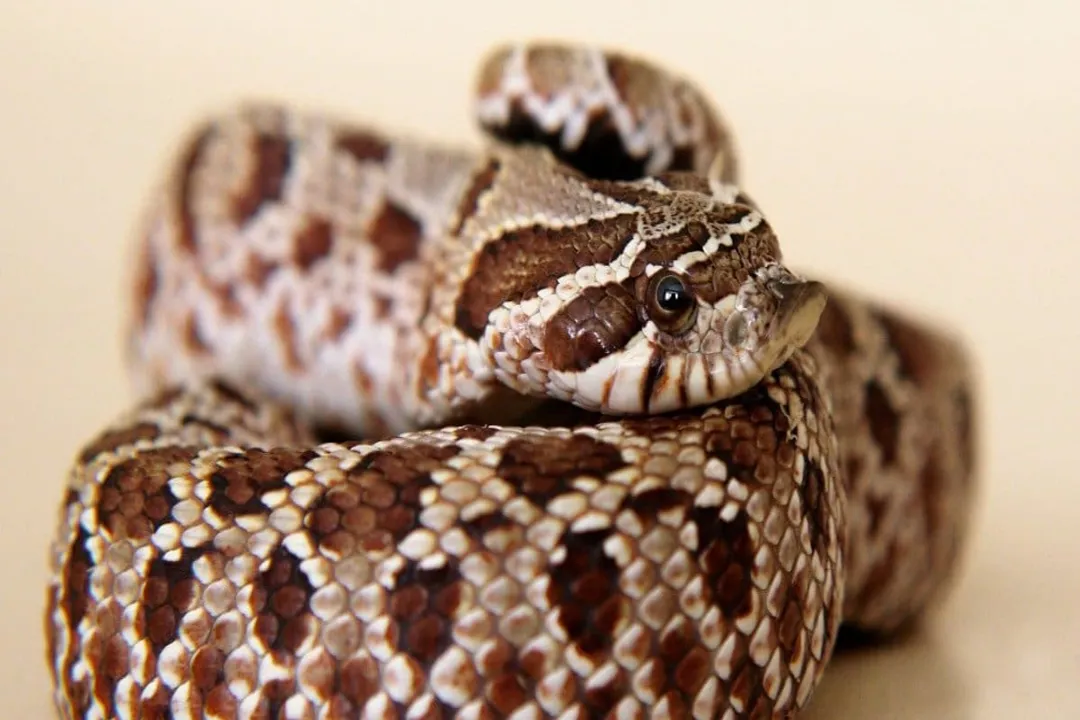
Distinct dark blotches or saddles along its back
While the pointed snout is the key identifier for the genus *Heterodon*, confirming the specific species designation as *H. nasicus* requires noting patterns that distinguish it from close relatives like the Eastern Hognose. The most readily observable specific trait mentioned for *H. nasicus* is the presence of distinct dark blotches or saddles that run along its dorsal surface. Experienced observers, particularly those studying populations in areas like the Great Plains or Mountain West, use this combination of the specialized snout morphology and this specific pattern of dorsal markings as the fastest way to visually confirm the species identity without relying on complex genetic analysis.
Related Questions
What specific dental structure defines Heterodon nasicus's placement in Family Colubridae?Which physical adaptation defines the Genus Heterodon for H. nasicus, aiding in its fossorial behavior?What characteristic of Class Reptilia dictates that H. nasicus must bask in the sun to become active?Which groups besides snakes are explicitly included in the diverse Order Squamata?What does the specific species designation nasicus signify regarding the morphology of Heterodon nasicus?What primary characteristic places H. nasicus in Kingdom Animalia instead of the Plant Kingdom?How does the Colubridae family placement affect the specialized captive diet requirements for H. nasicus?What ancestral feature confirms H. nasicus's developmental inclusion in Phylum Chordata?Besides the pointed snout, what visual trait helps confirm the H. nasicus species identification in the field?How does the Colubridae placement contrast H. nasicus with Vipers or Cobras regarding venom apparatus structure?