Zebra Snake Scientific Classification

The classification of the creature commonly known as the Zebra Snake, or Zebra Spitting Cobra, places it firmly within one of the world's most notorious reptilian families, tracing its lineage back through several distinct taxonomic ranks. [1][2] Understanding this classification—the systematic organization that defines its place in the animal kingdom—is the first step in appreciating its biology and medical significance. [1]
# Kingdom Animalia
At the broadest level, the Zebra Snake belongs to Kingdom Animalia. [1][2] This is the vast grouping that encompasses all living organisms that are multicellular, eukaryotic, heterotrophic (meaning they consume other organisms for energy), and lack cell walls. [1] This places the snake alongside everything from microscopic invertebrates to large mammals. [1]
# Phylum and Subphylum
Moving deeper into the hierarchy, Naja nigricincta falls under Phylum Chordata. [1] Chordates are characterized by possessing a notochord at some stage of their development, though in snakes this is superseded by a backbone. [1] Within Chordata, it is classified in Subphylum Vertebrata, identifying it as an animal with a segmented backbone or spinal column, distinguishing it from invertebrates. [1]
# Class and Order
The next major division is Class Reptilia. [1][2] This classification groups together cold-blooded vertebrates characterized by scaly skin, which includes lizards, turtles, crocodiles, and snakes. [1][3] The Zebra Snake is further placed in Order Squamata, the largest order of reptiles, which contains all snakes and lizards. [1] This order is further broken down into Suborder Serpentes for snakes. [1]
# Family and Genus
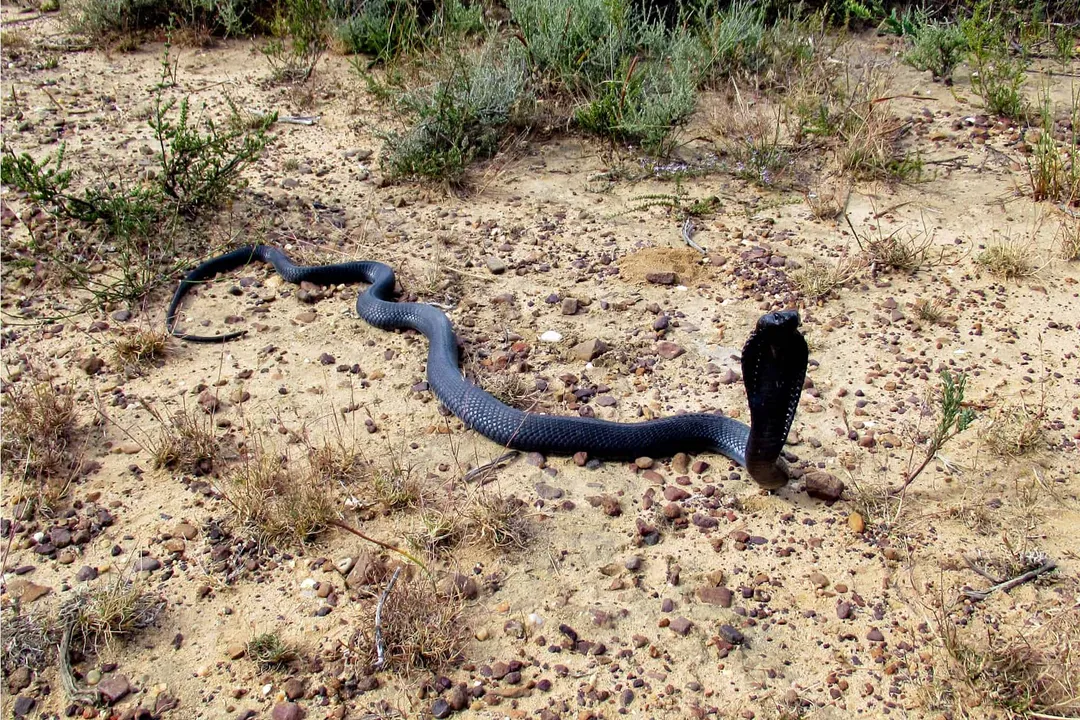
It is within the Family and Genus that the identification becomes much more specific, revealing its true danger profile. The Zebra Snake belongs to Family Elapidae. [1][2] This family is globally recognized for housing some of the most medically significant snakes, as they possess fixed, hollow front fangs used to inject venom. [3][3] All members of the Naja genus are commonly referred to as cobras. [2]
The specific genus is Naja. [1][2] This genus contains the true cobras of the Old World, distinguished from other elapids by their ability to flatten their neck and head into a characteristic hood when threatened. [1][2]
The species epithet, as established by Bogert in 1940, is Naja nigricincta. [2] The name itself hints at its appearance: nigri- referring to black and cincta relating to a belt or band, describing the prominent dark striping seen on the nominate subspecies. [1][2]
# Taxonomic History Insight
It is interesting to note the historical context surrounding this species' current classification. [2] For a significant period, Naja nigricincta was not recognized as its own species but was instead treated as a subspecies of the Black-necked Spitting Cobra (Naja nigricollis). [1][2] This highlights a common occurrence in taxonomy where ongoing morphological and, more recently, genetic research leads to the splitting of species when differences are found to be significant enough to warrant independent status. [2] While both are spitting cobras within the Naja nigricollis complex, the distinct differences in size, appearance (especially the woodi subspecies), and geographic isolation have cemented N. nigricincta as a separate, valid species today. [2] This revision demonstrates that classifying venomous snakes is not static; new evidence continuously refines our understanding of evolutionary divergence within genera like Naja. [2]
# Subspecies Differentiation
The species Naja nigricincta is currently recognized as containing two distinct subspecies, each adapted to slightly different, yet generally arid, southern African environments. [2] Understanding these variations is key, as their appearance and specific range can differ greatly. [2][3]
# The Barred Form
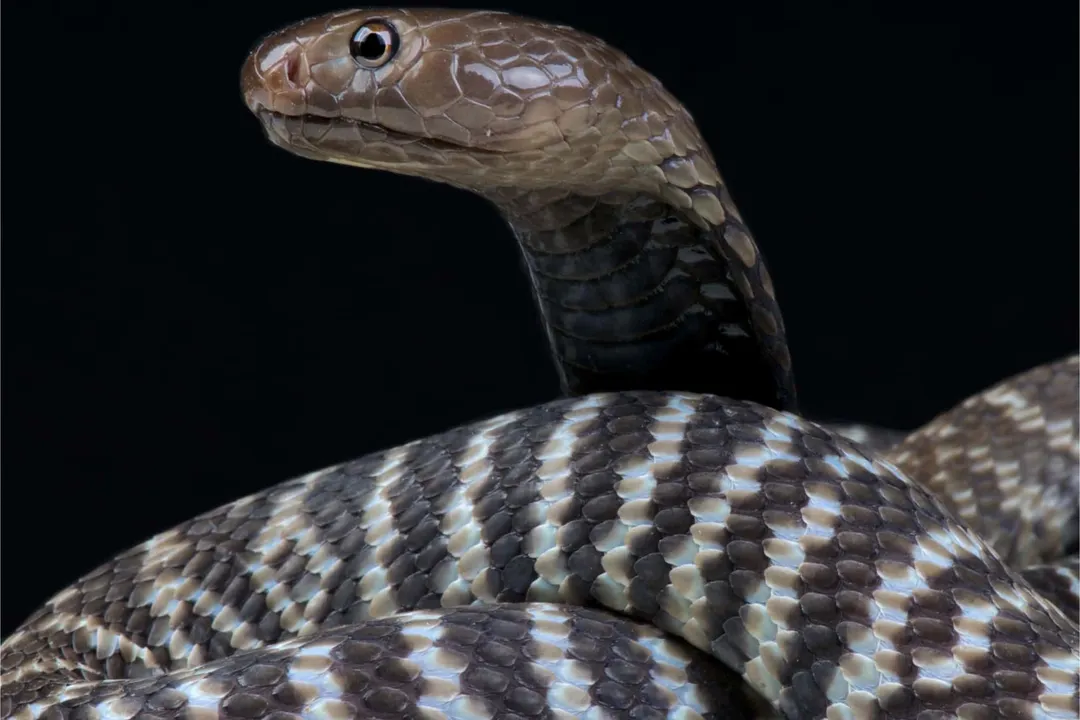
The nominate subspecies, Naja n. nigricincta, is what most people refer to when using common names like Zebra Spitting Cobra, Western Barred Spitting Cobra, or simply Zebra Snake. [2][3]
- Appearance: This form displays the striking coloration from which it derives its name—a dark brown to black body marked with evenly spaced, vertical whitish or light yellow stripes running down its dorsal side. [1] These bands can sometimes be broken or fragmented. [1] The ventral scales often range from white to orange. [1] Juveniles generally exhibit a lighter overall coloration than mature adults. [1]
- Geographic Range: This subspecies is primarily found in central and northern Namibia, extending northward into southern Angola. [2][3]
# The Black Form
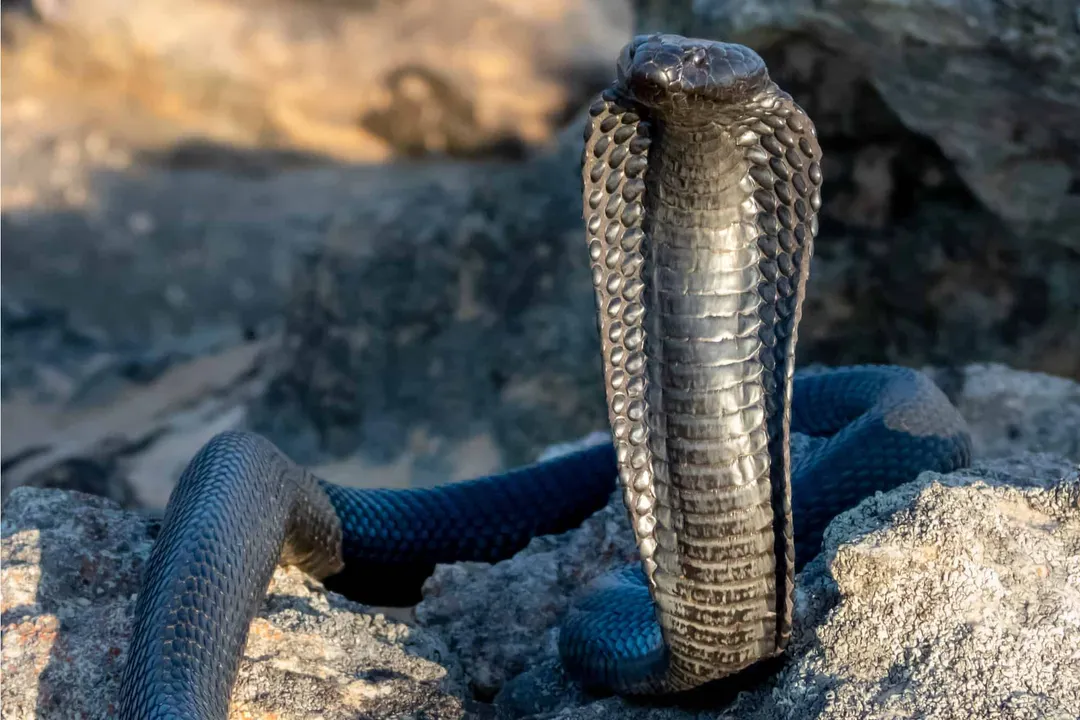
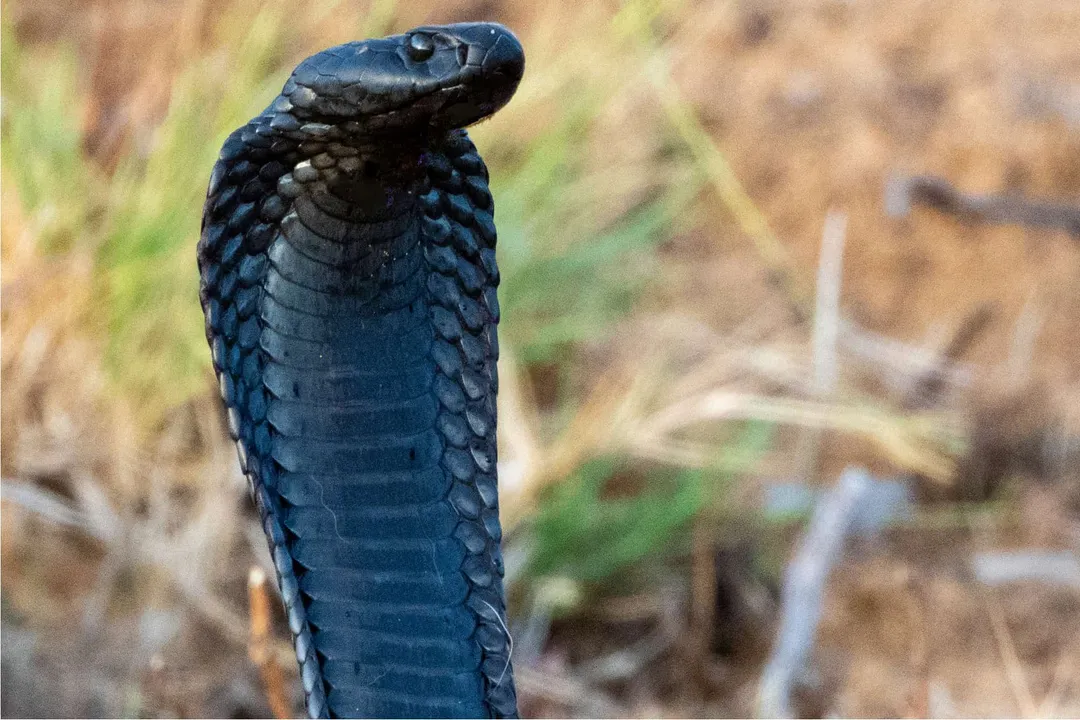
In contrast, the second recognized subspecies is Naja n. woodi, commonly known as the Black Spitting Cobra or Woods Black Spitting Cobra. [2]
- Appearance: This form is characterized by being solid matte black as an adult, lacking the distinct barring of its counterpart. [2] A key identifying feature in the young of this subspecies is that while the body is grey, the head remains a solid black, setting it apart from N. n. nigricollis. [2]
- Geographic Range: N. n. woodi is more geographically restricted, found specifically in southern Namibia, southern Botswana, Lesotho, and parts of South Africa. [2][3]
A general point of comparison across both subspecies is size; both are notably smaller than N. nigricollis, with average adult lengths falling under $1.5$ meters or $4.9$ feet. [2]

# Habitat and Behavior
The Zebra Snake occupies drier ecological niches across its distribution in southern Africa, which includes regions in Angola, Namibia, Botswana, Lesotho, and South Africa. [1][2][4] Habitats are often described as deserts, dry rocky areas, shrubland, and savannas. [1] One source notes that the nominate subspecies, N. n. nigricincta, is often encountered on tarred roads, particularly after rainfall, as these snakes are largely nocturnal. [3]
As a typical cobra, this species can spread its head and neck into a distinctive hood when feeling threatened. [1][2] Behaviorally, these snakes are generally shy and secretive, preferring to escape rather than confront a potential threat. [1][3] They are primarily terrestrial, though they possess the ability to swim and even climb trees. [1]
# Activity Patterns and Defense
These cobras are largely nocturnal, frequently observed crossing roads under the cover of darkness. [1][3] While they will readily bite if cornered or provoked, their preferred first line of defense is spitting their venom. [1][3] The ability to accurately eject venom directly at an aggressor is a defining characteristic of this group. [1] Some accounts suggest they can spit their venom up to a distance of about $6$ feet, [4] while another measurement puts the maximum range closer to nine feet. [1]
# Venom Profile and Safety Consideration
The venom profile of Naja nigricincta is a significant concern, classifying it as highly venomous. [2][3] The venom is potently cytotoxic, meaning it destroys cell tissue upon contact. [1][3] Bites often result in severe local effects, including intense pain, swelling, blistering, and, critically, tissue damage or necrosis. [1][3] Systemic effects can include paralysis. [1][2] When spat into the eyes, the venom can cause temporary or even permanent blindness. [2]
# Medical Implications Insight
It is vital for residents and visitors in the endemic regions to note a specific medical context surrounding this species and its antivenom availability. [3] While the venom causes severe cytotoxic effects, one source explicitly states that the venom of the Zebra Cobra (N. n. nigricincta) is not currently used in the manufacturing process of the standard polyvalent antivenom used in the region. [3] This implies that the effectiveness of the readily available antivenom to neutralize N. nigricincta venom specifically may not be fully confirmed or optimized, placing a higher emphasis on immediate first aid—thorough irrigation of the eyes or flushing of the wound with copious amounts of running water—before seeking advanced medical care. [3] When dealing with a highly cytotoxic snake whose specific antivenom neutralization status is uncertain, prevention and immediate decontamination become the most actionable steps for the public. [3]
# Ecological Role and Status
Despite the danger their venom poses, Naja nigricincta maintains a Least Concern (LC) conservation status on the IUCN Red List, with population numbers assessed as stable. [1][2] This suggests that, for the time being, the species is widespread enough that immediate extinction threats are not a primary concern. [1]
Their diet reflects their role as active predators in the savanna and desert ecosystems. [1][3][4] They consume a variety of prey, including lizards, frogs, other snakes, small mammals, birds, and even insects. [1][3][4] By regulating these populations, the Zebra Snake contributes to ecosystem health, acting as a natural check on prey numbers. [3]
The lifespan in the wild is estimated to be over $12$ years, with some estimates extending up to $20$ years. [1][3][4] As an oviparous species, females reproduce by laying clutches of approximately $10$ to $20$ eggs. [1] Their coloration, particularly the zebra stripes of the western form, likely aids in camouflage, helping them blend into environments with dappled light, whether hiding from larger predators or ambushing unsuspecting prey. [3] The ability to bask in the sun allows them to regulate their body temperature, essential for the cold-blooded reptiles to properly fuel their active hunting lifestyle. [3]
Related Questions
#Citations
Naja nigricincta - Wikipedia
Zebra Snake Animal Facts - Naja nigricincta
Zebra Cobra - African Snakebite Institute
Naja nigricincta - Facts, Diet, Habitat & Pictures on Animalia.bio
Zebra Snake Facts & Photos | Wowzerful
Zebra Spitting Cobra | Made in the Wild