Western Gorilla Scientific Classification

The scientific classification of the Western Gorilla (Gorilla gorilla) provides a precise map of its place within the animal kingdom, moving from the broadest categories down to the specific lineage that defines this great ape. As one of the two recognized species of gorilla, understanding this arrangement is the first step in appreciating its evolutionary history and its distinct characteristics when compared to its eastern relatives. Researchers recognize the Western Gorilla under the binomial name Gorilla gorilla, a designation assigned by Thomas Savage in 1847. This species is further divided into two geographically isolated subspecies, highlighting subtle but significant differences within the western group.
# The Taxonomic Ladder
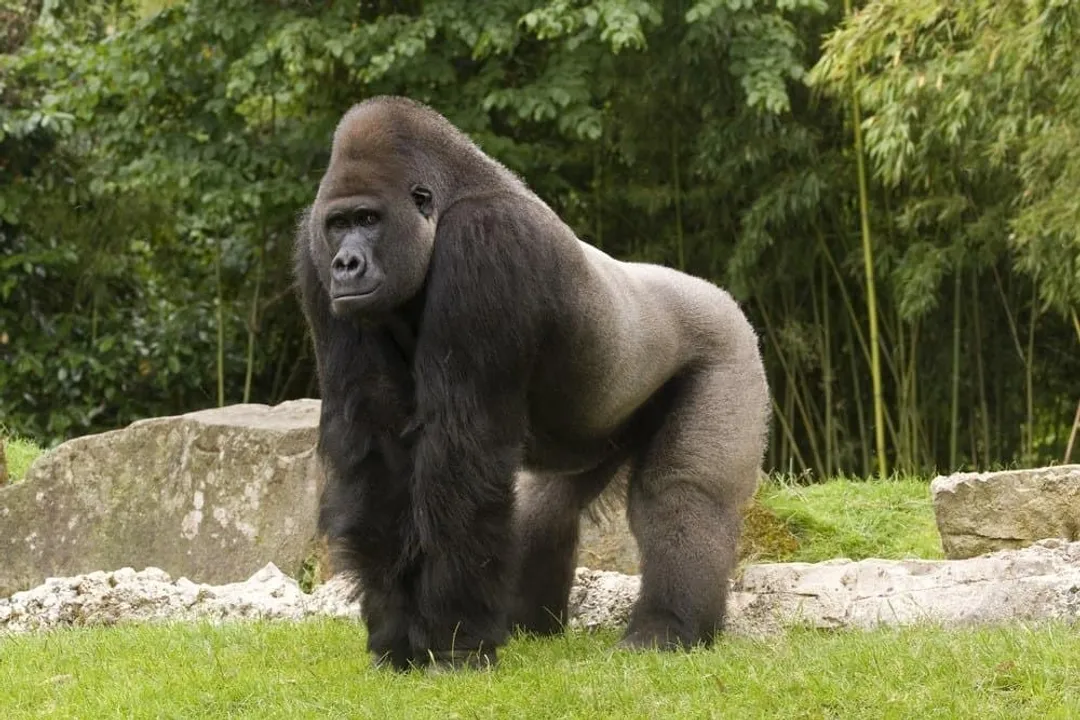
The placement of the Western Gorilla within the established system of biological taxonomy follows a familiar path shared by all primates. This hierarchical structure, developed through the work of scientists like Linnaeus, assigns organisms to increasingly specific nested groups based on shared ancestry and characteristics. The classification begins broadly at the Kingdom level and narrows down through several ranks until it arrives at the genus and species names that define Gorilla gorilla.
Here is a breakdown of the major taxonomic ranks assigned to the Western Gorilla:
| Taxonomic Level | Taxon | Supporting Source |
|---|---|---|
| Kingdom | Animalia | |
| Phylum | Chordata | |
| Class | Mammalia | |
| Order | Primates | |
| Family | Hominidae | |
| Genus | Gorilla | |
| Species | Gorilla gorilla |
The family Hominidae signifies that the Western Gorilla belongs to the great apes, which includes humans, chimpanzees, and orangutans. Within the Order Primates, gorillas belong to the Suborder Haplorrhini and Infraorder Simiiformes. The overall structure confirms their status as large, robust mammals native to Africa.
# Species Distinction
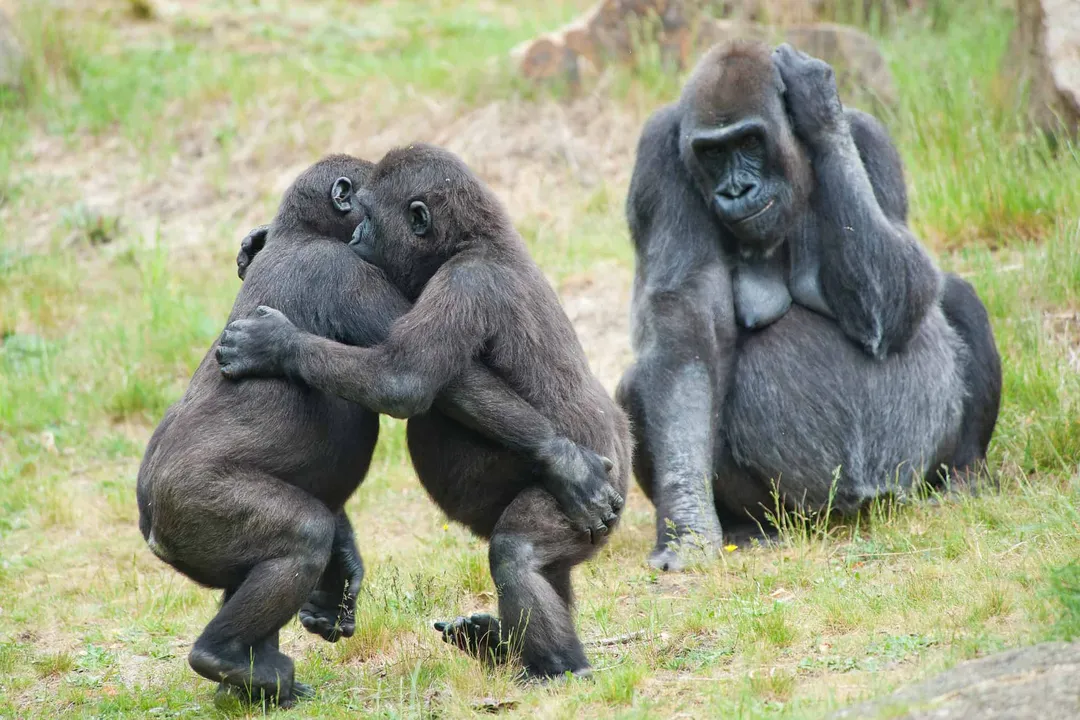
Modern consensus recognizes two distinct species of gorilla: the Eastern Gorilla (Gorilla beringei) and the Western Gorilla (Gorilla gorilla). This represents an important update from older classifications that sometimes grouped them as a single species with three subspecies. Genetic research suggests that these two major groups diverged from a common ancestor approximately 77,700 years ago. This separation has led to measurable physical differences between the eastern and western populations.
Western gorillas, as a species, are generally characterized by having significantly lighter-colored hair compared to their eastern counterparts. Furthermore, Western Gorillas are the second largest primates overall, surpassed in size only by the Eastern Gorilla species. Specifically, the Western Lowland Gorilla, the most numerous subspecies, has males averaging around 168 kilograms (370 lb), which is lighter than the average male Eastern Gorilla.
# Subspecies Recognition
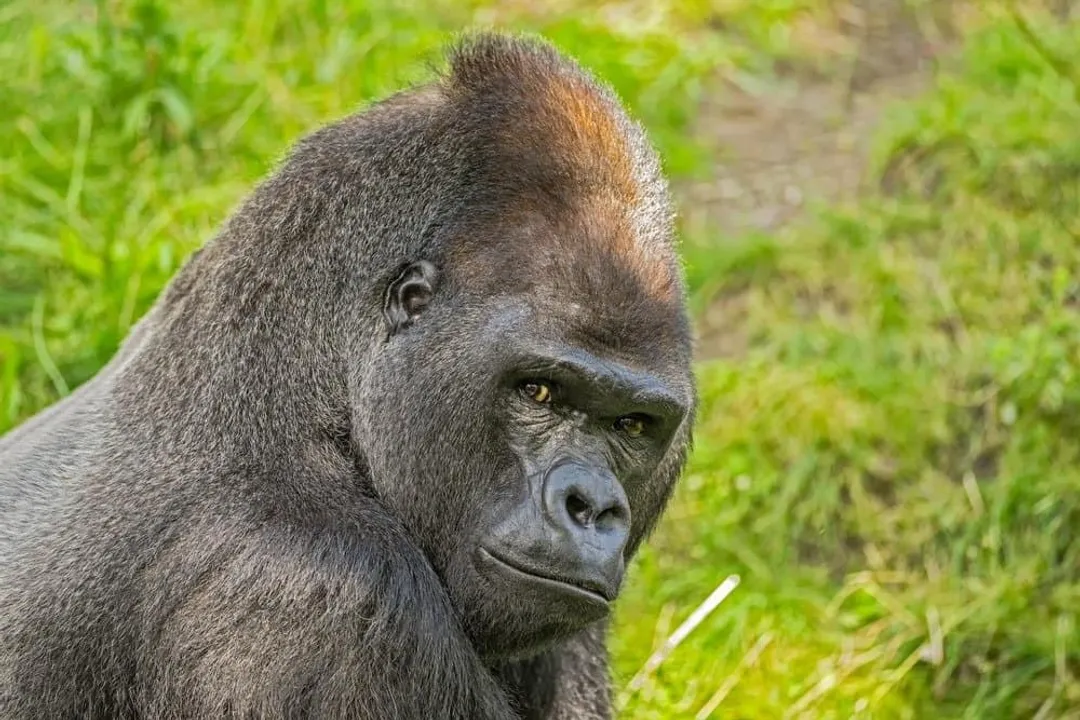
The species Gorilla gorilla is officially delineated into two subspecies, each confined to separate geographical regions in midwest Africa.
The two recognized subspecies are:
- Western Lowland Gorilla (Gorilla gorilla gorilla): This is the nominate subspecies, meaning its name matches the species name (gorilla gorilla), and it is by far the most widespread and numerous. Its population is estimated to be around 276,000 individuals, though other estimates place the total Western Gorilla population near 316,000. They inhabit lush rainforests across a broad swathe of Central Africa.
- Cross River Gorilla (Gorilla gorilla diehli): This subspecies is severely restricted to a smaller area near the border of Cameroon and Nigeria. Their numbers are critically low, estimated to be only 250 to 300 individuals remaining in the wild.
The sheer numerical disparity between these two subspecies presents a fascinating challenge in conservation biology. While the IUCN lists the entire Gorilla gorilla species as Critically Endangered, the immediate threat profile for the Cross River subspecies is far more acute, bordering on functional extinction based on population size alone. It is an analytical observation that conservation efforts must be heavily weighted toward G. g. diehli to prevent the immediate loss of an entire recognized subspecies, even while managing the broader habitat pressures facing the much larger G. g. gorilla population. The relative health of the Lowland Gorilla population, even if threatened, is sometimes used as an "umbrella species" approach to protect the broader ecosystem they inhabit.
# Naming History and Tautonyms
The establishment of the scientific name is rooted in mid-19th-century exploration and taxonomy. Thomas Savage provided the formal description of the species in 1847. He initially classified the animal under the genus Troglodytes, naming it Troglodytes gorilla. This genus name, however, was already in use for certain species of wren, making it invalid for the great ape.
When a genus name becomes invalid, taxonomists must propose a new one while retaining the specific epithet if possible. In this case, a new genus, Gorilla, was established, resulting in the species name Gorilla gorilla. The root word gorilla itself is believed to derive from the Greek word gorillai, which Savage supposedly used based on an account from the Carthaginian navigator Hanno, describing "wild men" encountered on the African coast around 500 BCE.
The resulting name, Gorilla gorilla, is an example of a tautonym, where the genus and the specific epithet are identical. This naming convention is not unique in zoology; other examples cited include Lynx lynx (the Eurasian lynx) and Rattus rattus (the house rat). In the context of historical taxonomy, giving a species the same name as its genus was sometimes done to formally designate that species as the type species for that genus—the representative example that anchors the definition of the entire group. While modern taxonomic thinking often prioritizes evolutionary relationships over mere visual representation, the name Gorilla gorilla serves as a direct historical marker of this initial classification process. Adding further specificity, the Western Lowland Gorilla takes the tritonym Gorilla gorilla gorilla, adding the subspecies epithet to the genus and species names. It is interesting to note that this tautonym construction is permissible in zoology but explicitly prohibited in botany.
# Physical and Ecological Context
While classification focuses on naming and relatedness, the Western Gorilla's physical traits help distinguish it from the Eastern species, reinforcing its separate standing in the taxonomy. Western gorillas, including the Lowland subspecies, tend to have hair that is brownish-gray or black, often with a brownish forehead, setting them apart from the darker Eastern Gorillas. Males develop the characteristic silver saddle on their backs as they mature.
Furthermore, Western Lowland Gorillas are generally smaller than Eastern Gorillas. Adult males stand up to 1.8 meters (6 feet) tall and weigh an average of 136 kilograms (300 pounds). They are also distinct in facial structure, possessing a more pronounced brow ridge and smaller ears relative to their heads when compared to other subspecies.
Ecologically, the Gorilla gorilla species is characterized by its preference for dense rainforest and low-elevation habitats in West and Central Africa, differing from the mountainous regions often associated with the Eastern species. Their diet is predominantly herbivorous, relying heavily on rainforest vegetation, including fruits, shoots, roots, and occasionally small invertebrates like ants. Their role as primary forest consumers, pruning plants and effectively dispersing seeds over wide areas through their movements, underscores the ecological importance cemented by their scientific classification.
Related Questions
#Citations
Western gorilla - Wikipedia
Gorilla - Explore the Taxonomic Tree | FWS.gov
Western lowland gorilla - National Zoo
Facts about the western lowland gorilla - IFAW
Why is the scientific name for the Western gorilla "Gorilla ... - Reddit
Western Lowland Gorilla - A-Z Animals
Western Lowland Gorilla - Zoo Atlanta