Yellow-Bellied Sea Snake Scientific Classification
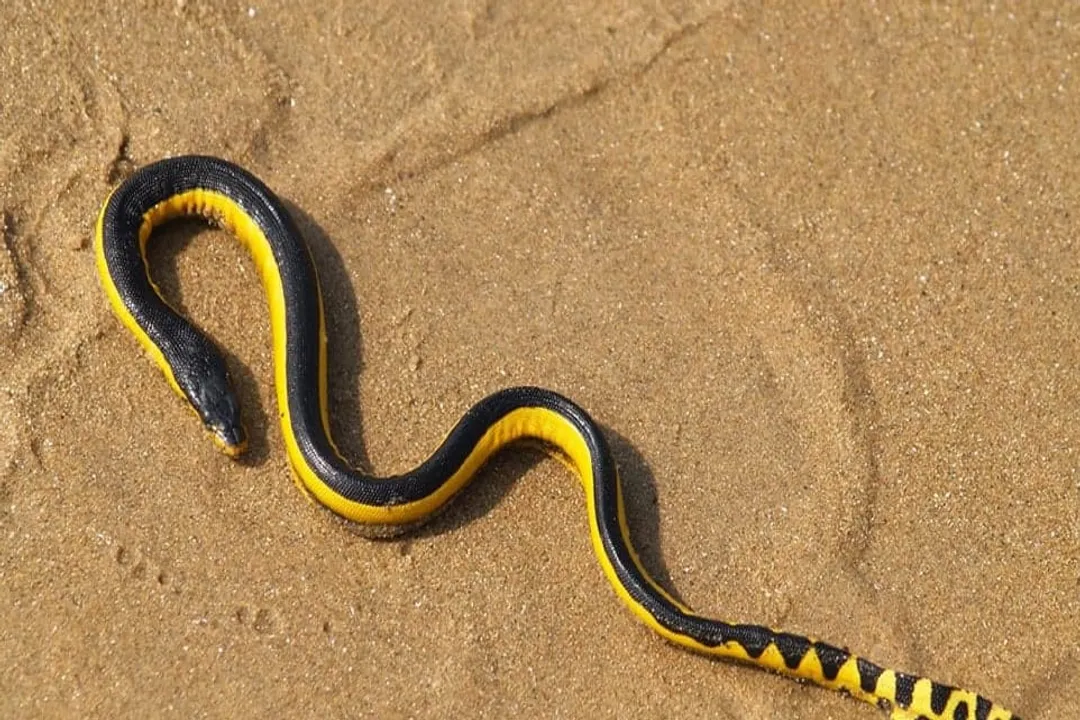
The scientific classification of the Yellow-Bellied Sea Snake, formally known today as Hydrophis platurus, provides a precise roadmap for understanding its place within the tree of life, though its exact taxonomic placement has seen some recent revisions that are important for consistent scientific reference. [1][2][4] This creature, famous for its vibrant two-toned coloration, anchors firmly in the Animal Kingdom, a placement shared with virtually all macroscopic life forms we recognize. [6] Tracing this lineage downward reveals its position among vertebrates, reptiles, and eventually, the venomous snakes that dominate its final placements. [1][3][4]
# Deepest Ranks
At the highest level, the Yellow-Bellied Sea Snake belongs to Kingdom Animalia, signifying it is a multicellular, heterotrophic organism—it must consume other organisms for energy. [6] Moving down, it falls into Phylum Chordata because, during at least some stage of its development, it possesses a notochord, a dorsal hollow nerve cord, pharyngeal slits, and a post-anal tail, characteristics shared with fish, birds, and mammals. [1][4]
Within the phylum, the snake is categorized under Class Reptilia, placing it among animals that typically possess scales, are cold-blooded (ectothermic), and usually lay shelled eggs, although marine snakes like this one give live birth. [3] This class encompasses turtles, crocodiles, lizards, and snakes. [4]
# Order Placement
The next defining step is Order Squamata, a vast grouping that includes all lizards and snakes, distinguished primarily by their highly kinetic skulls and, in the case of snakes, the lack of external ear openings and eyelids. [1][2] The snake is clearly identifiable here as a member of this dominant reptilian order. [4][6]
# Family Association
Its assignment to Family Elapidae is perhaps the most significant grouping from a hazard perspective. [3][4] Elapids are a family of highly specialized, fixed-fanged venomous snakes. [1] This places the Yellow-Bellied Sea Snake alongside terrestrial cobras, mambas, and kraits. [4] The venom apparatus found in Elapids, characterized by short, fixed front fangs, suggests a powerful neurotoxic venom profile, which is indeed characteristic of this species, even when considering its pelagic existence far from land-based counterparts. [5]
It is a fascinating point of study that a snake adapted for a life entirely at sea—never coming ashore to breed or digest—retains the defining characteristics of a family predominantly recognized for its terrestrial members. This classification suggests that the evolutionary split leading to sea snakes occurred after the core Elapid traits were established, meaning they inherited their venom machinery before specializing in oceanic life. [1][4]
# Genus and Species
The most specific parts of the classification have seen the most recent debate and resolution: the genus and species names. [1][7] The currently accepted binomial nomenclature identifies the snake as Hydrophis platurus. [2][3][7] The specific epithet, platurus, is linked to the authority Linnaeus, 1766. [6][7]
However, historical and sometimes current literature refers to it as Pelamis platura. [1][4] The shift from Pelamis to Hydrophis reflects modern phylogenetic research that seeks to group snakes based on evolutionary closeness rather than solely on superficial or habitat differences. [2][4] Hydrophis is a larger, more diverse genus of sea snakes, and placing H. platurus within it indicates a closer genetic relationship to other sea snakes in that group than previously assumed when it resided in its own monotypic genus, Pelamis. [7] This reclassification is not merely an academic shuffling; for ecological studies, ensuring that all related species are grouped correctly can reveal shared evolutionary pressures or dependencies, which is vital when mapping conservation needs across the Indo-Pacific. [1][2]
# Taxonomic Summary Table
To clearly organize the accepted taxonomy against its immediate predecessor, a look at the hierarchy is helpful. Note that the author citation links H. platurus back to Linnaeus's original 1766 description, even though the genus name has since been updated. [6][7]
| Taxonomic Rank | Current Designation | Previous Genus Designation |
|---|---|---|
| Kingdom | Animalia | Animalia |
| Phylum | Chordata | Chordata |
| Class | Reptilia | Reptilia |
| Order | Squamata | Squamata |
| Family | Elapidae | Elapidae |
| Genus | Hydrophis | Pelamis |
| Species | H. platurus | P. platura |
This table starkly illustrates the specific change: the genus name was the subject of the most significant taxonomic update for this species in recent memory. [1][4]
# Nomenclature Authority
Understanding the full classification requires acknowledging the original describer. The species was first formally named and described by the father of modern taxonomy, Carl Linnaeus, in his seminal work in 1766. [6][7] When a species name is presented with parentheses around the original genus name—as in Hydrophis ( Pelamis) platurus—it signals that the species was originally described under a different genus, in this case, Pelamis. [7] Although the modern consensus places it in Hydrophis, the platurus epithet, which references its flattened (platus) tail, remains valid under Linnaeus's original publication date. [6] This adherence to the original author and date is a cornerstone of binomial nomenclature, ensuring stability even when the generic grouping changes. [7]
# Synthesis of Placement
The entire classification system—from Animalia down to Hydrophis platurus—tells a story of extreme adaptation built upon an ancient foundation. The presence in Elapidae indicates the retention of advanced venom delivery, a specialized trait common among terrestrial snakes, which was co-opted for a completely marine existence. [5] The move into Hydrophis signals a modern effort to recognize its closer kinship with other sea snakes that have diversified across the Indian and Pacific oceans, potentially indicating that the Pelamis grouping was more isolated than scientists once thought. [2][4] For any researcher studying toxin composition or population genetics, correctly applying the Hydrophis designation is crucial for querying broader datasets concerning sea snake evolution and distribution across oceanic zones. [3][8] The fact that it is widely distributed across tropical and subtropical waters, from the Americas to Asia, further supports its placement within a highly adaptable, widespread genus like Hydrophis rather than a potentially more restricted one. [1][9]
Related Questions
#Citations
Pelamis platura (Yellowbelly Sea Snake ... - Animal Diversity Web
Yellow-bellied Sea Snake (Hydrophis platurus) - iNaturalist
Yellow-bellied Sea Snake | Mexican Marine Life.org
Yellow-bellied Sea Snake - The Australian Museum
Biological and medical aspects related to the yellow-bellied sea ...
Hydrophis platurus (Linnaeus, 1766) - WoRMS
Hydrophis platurus (LINNAEUS, 1766) - The Reptile Database
Galapagos Yellow Bellied Sea Snake Facts with Quasar Expeditions
Yellow-Bellied Sea Snake - Waikiki Aquarium