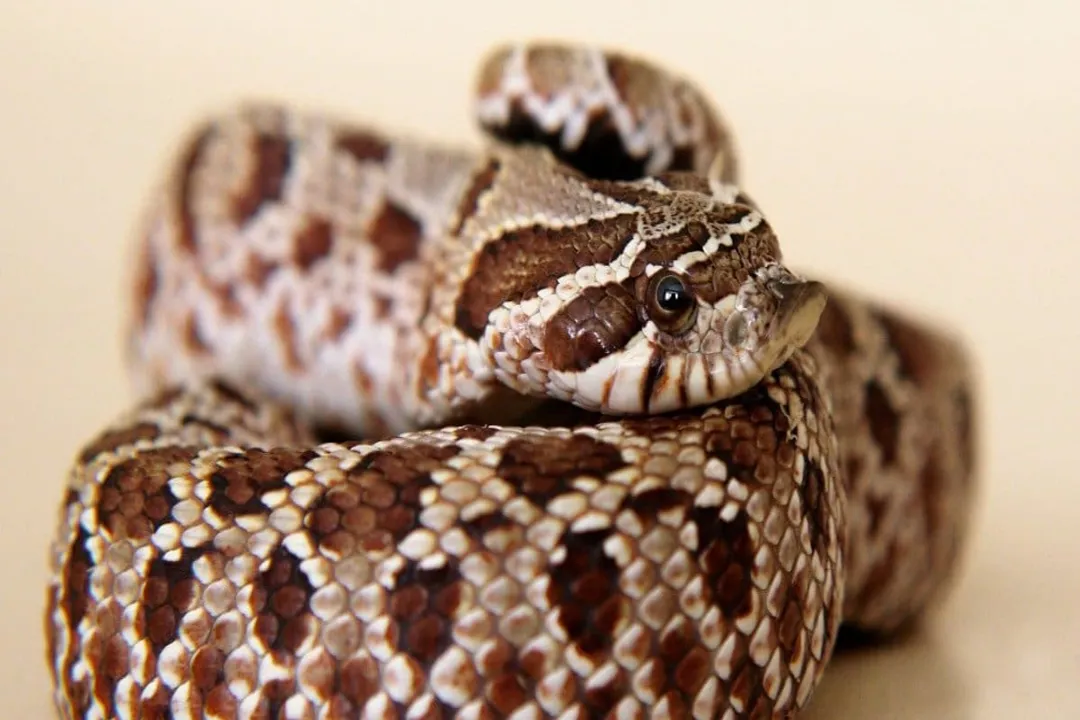
How does the Colubridae placement contrast H. nasicus with Vipers or Cobras regarding venom apparatus structure?
*H. nasicus* has rear fangs, unlike the fixed, hollow fangs of Vipers/Cobras
The placement of *H. nasicus* within the Colubridae family dictates a specific configuration of its dentition that is markedly different from the highly specialized venom delivery systems found in families like Viperidae (Vipers) or Elapidae (Cobras). Colubrids, including the Western Hognose, possess rear-fanged dentition. This means their fangs are situated toward the back of the mouth and are generally grooved rather than hollow. In contrast, Vipers and Cobras possess fixed fangs that are hollow, which are specifically designed for the rapid, efficient injection of potent venom into their prey or perceived threats. This structural difference strongly influences the snake's predatory strategy and its overall threat profile.