In Colorado, western hognose snakes are generally common in the eastern half provided the elevation remains below what threshold?
Answer
6,000 feet
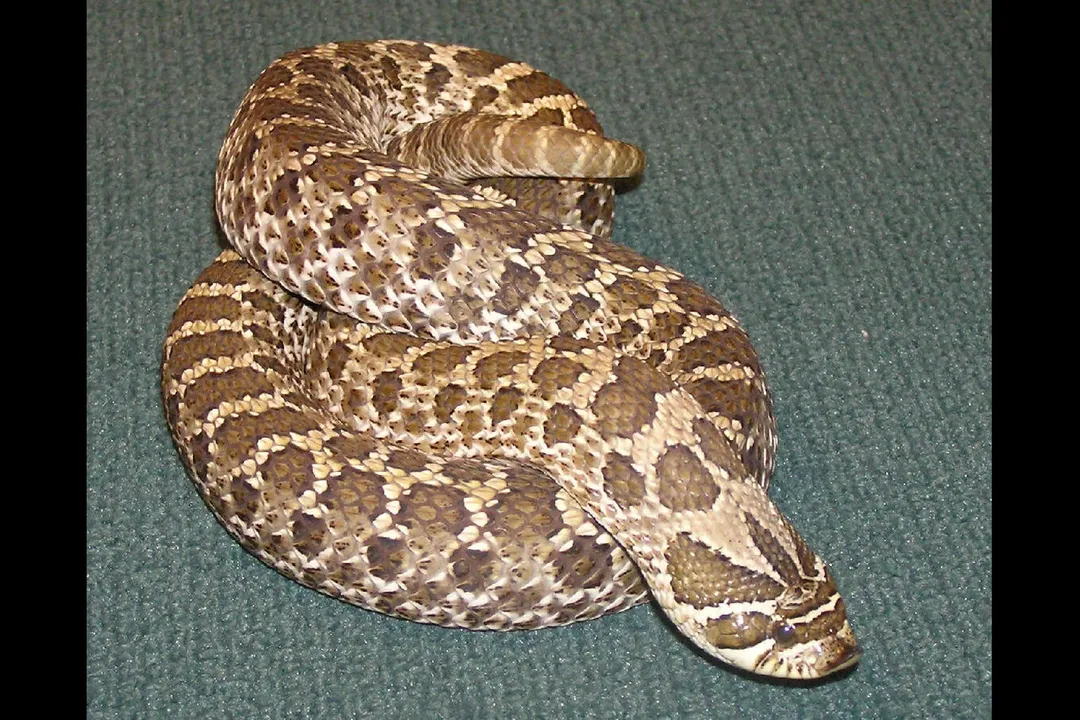
Regional observations in Colorado provide specific topographical limitations for the presence of the western hognose snake. While the species has been documented at elevations as high as 2,500 meters (approximately 8,200 feet) in certain documented areas, general presence in the eastern half of the state is typically restricted to areas below 6,000 feet. In these lower elevation areas, habitat preference centers around Sandhills, plains grasslands, and sandy floodplains, often near water sources like ditches or streams. This elevation correlation, combined with the necessity for loose soil, dictates local abundance patterns within the state.
Related Questions
What soil characteristic is cited as a greater determinant of Heterodon nasicus presence than climate classification?Which Canadian provinces contain the documented range of the Plains Hognose Snake (H. n. nasicus)?What preferred prey do western hognose snakes search for beneath the surface to sustain their lifestyle?In Colorado, western hognose snakes are generally common in the eastern half provided the elevation remains below what threshold?What taxonomic suggestion is sometimes made regarding Gloyd's Hog-nosed Snake (*H. n. gloydi*) within current herpetological discussions?What is the conservation classification assigned to *H. n. nasicus* populations in Montana due to habitat uncertainty?Which regions define the southernmost entry point into the United States for the Mexican Hognose Snake (*H. n. kennerlyi*)?What ecological situation causes western hognose snakes to sometimes become road casualties in cooler climates during morning activity?What critical factor prevents the establishment of stable local populations of *H. nasicus* even if ample toads are present in the area?In Kansas, where are western hognose snake populations observed to be most abundant?