What specialized organs do *Crotalus atrox* use, located between the nostrils and eyes, to detect warm-blooded prey?
Answer
Heat-sensing organs situated in the loreal pits
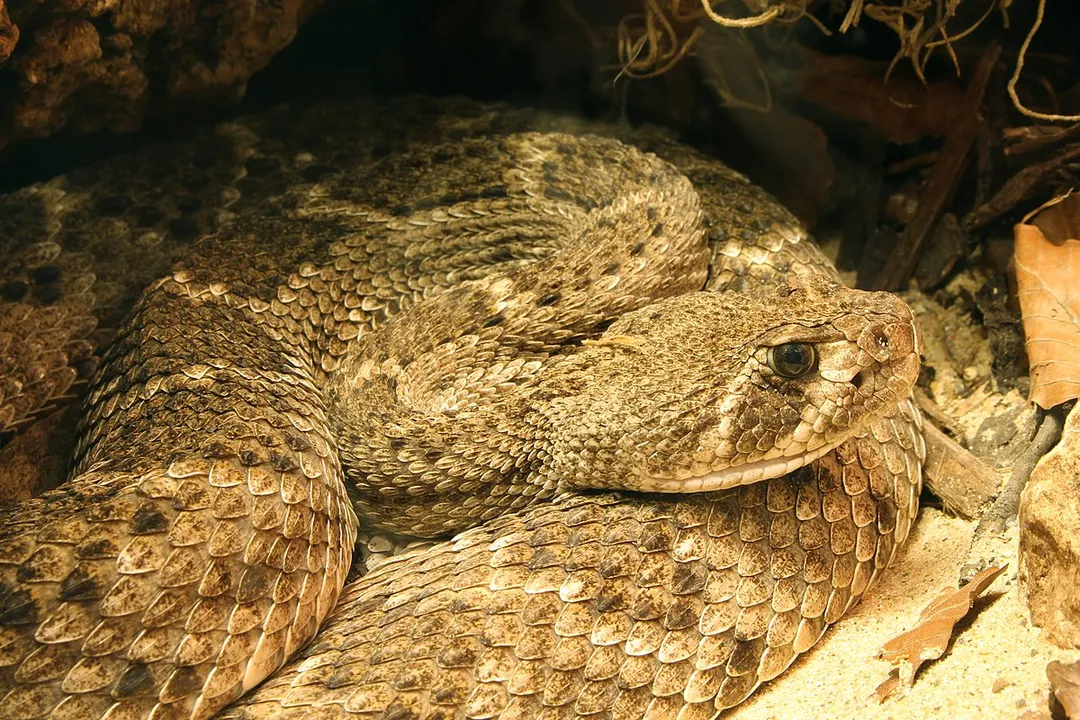
The hunting strategy employed by the Western Diamondback relies heavily on more than just smell and taste. While chemoreception is important, the text highlights a crucial sensory adaptation for locating warm-blooded animals, especially when hunting in darkness or poor visibility. These specialized tools are heat-sensing organs, which are physically located in the depressions on the face known as the loreal pits. These pits allow the snake to generate a thermal image of its surroundings, enabling precise detection of prey based on body heat, even when visual cues are completely absent.
#Videos
The Western Diamondback Rattlesnake: Everything You Need To ...
Related Questions
Which species of rattlesnake ranks as the largest in North America, surpassing the size of the *Crotalus atrox*?What characteristic tail pattern earns the *Crotalus atrox* the nickname "coon tail"?How does the activity cycle of the *Crotalus atrox* shift during the intense heat of the summer months?What specialized organs do *Crotalus atrox* use, located between the nostrils and eyes, to detect warm-blooded prey?What percentage of the *Crotalus atrox*'s intake by weight was shown to be small mammals in a comprehensive Texas study?What is the primary mechanism of tissue damage caused by the complex venom of the *Crotalus atrox*, driven largely by hemorrhagic toxins?What is the typical gestation period in months or days for the viviparous *C. atrox* female before giving birth in the late summer?What classification did the IUCN assign to the *Crotalus atrox* as of 2007, reflecting its population stability and distribution?How long can a *Crotalus atrox* survive without any caloric intake due to its slow metabolism?What defensive action does the *Crotalus atrox* frequently choose when confronted, contributing to its high incidence of human bites in the U.S.?