Western Rattlesnake (Northern Pacific Rattlesnake) Physical Characteristics
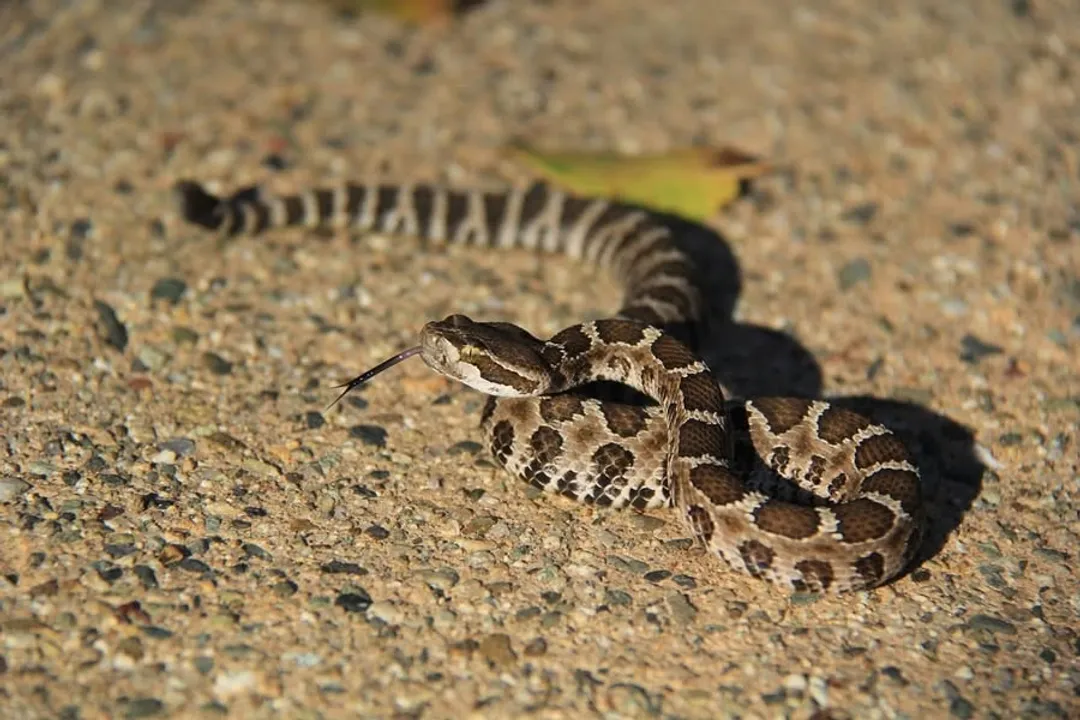
The Western Rattlesnake, scientifically cataloged as Crotalus oreganus, represents a group of venomous pit vipers widely distributed across western North America. Often referred to locally as the Northern Pacific Rattlesnake, this reptile’s physical attributes present a fascinating study in adaptation, marked by significant variation depending on its precise location and environment. Understanding these characteristics is crucial, as these snakes can blend remarkably well into their surroundings, making visual identification challenging for the untrained eye.
# Size and Stature
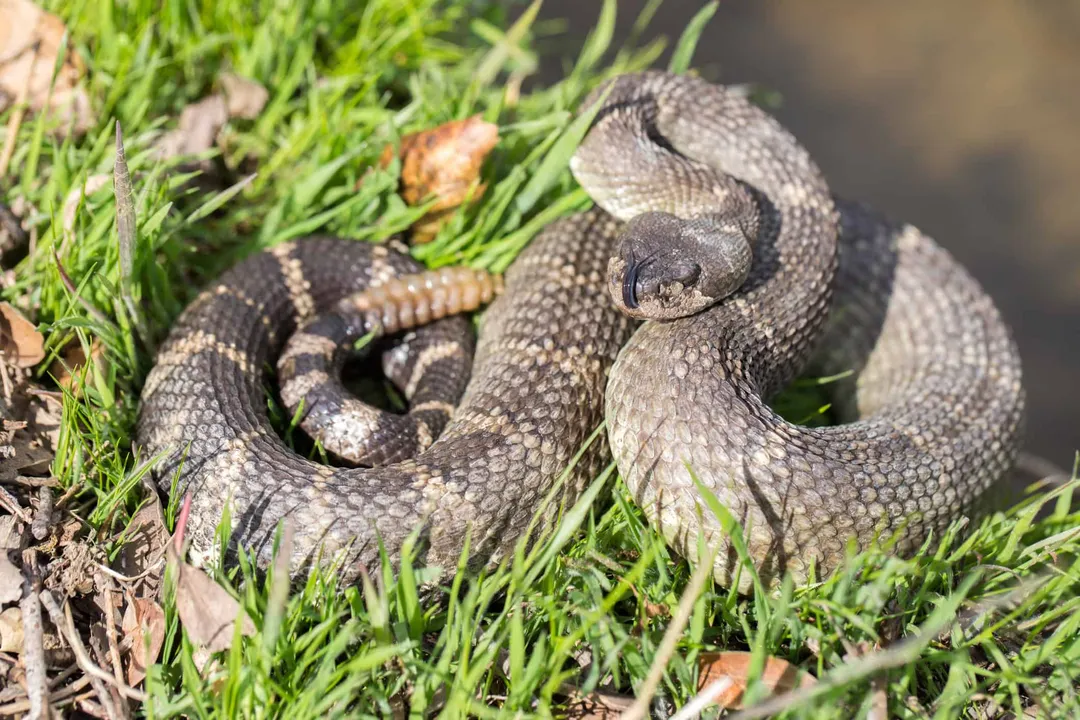
The overall size of Crotalus oreganus is quite variable, which is typical for species occupying wide geographical ranges. While they are not generally the largest rattlesnakes, mature adults commonly reach lengths between 2 and 3 feet. In many populations, a length exceeding 36 inches is considered quite large, though maximum recorded lengths have approached nearly 55 inches in some historical accounts.
The body build tends toward being heavy and stout, which contributes to their powerful appearance. Weight is also dependent on factors like age, sex, and recent feeding success, but generally, they possess a thick torso relative to their length. It is worth noting that males often attain greater overall length than females, though females might sometimes exhibit a bulkier girth. When observing a snake in the field, its apparent size can be deceiving; a well-fed, basking snake will appear much more substantial than one that has recently moved or is in a cooler state.
# Surface Coloration
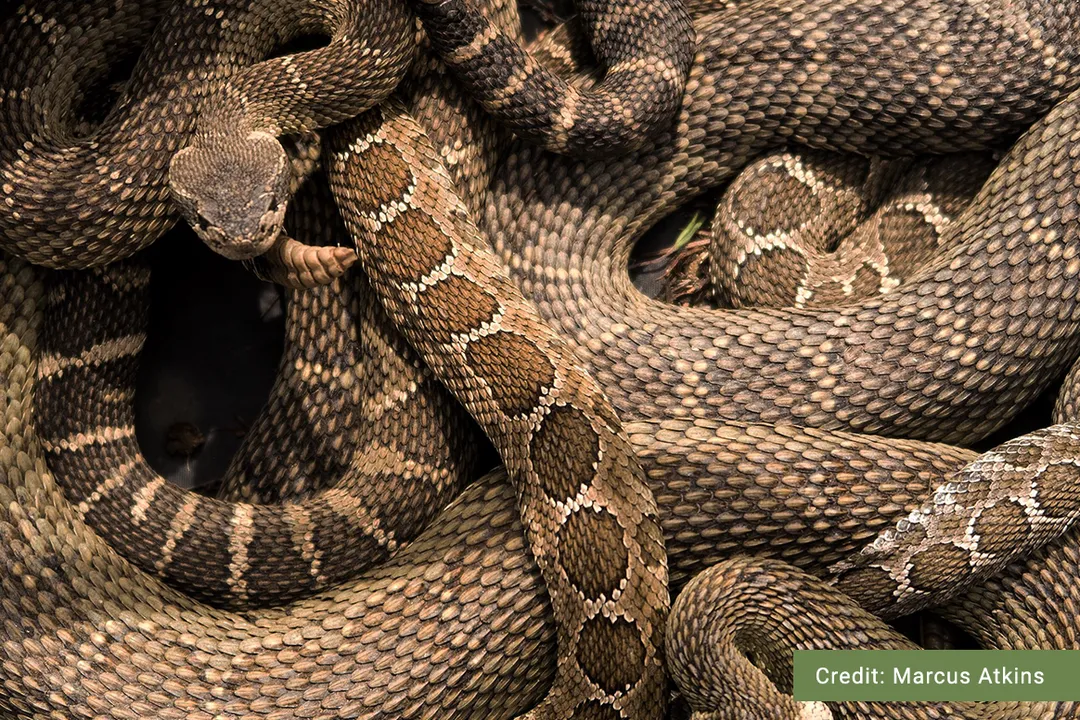
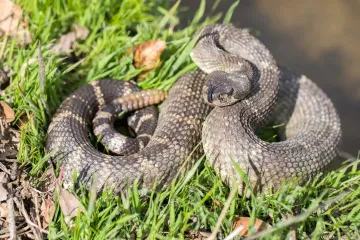
The external appearance of the Western Rattlesnake is highly diverse, making color a relatively unreliable primary identifier across its entire range. The base color can span a broad spectrum, including shades of gray, brown, tan, or even yellowish-green. This wide range allows individuals to match the substrate they inhabit, whether it be dry sagebrush, rocky outcrops, or damp forest floors.
Overlaying the base color is a distinct pattern, usually composed of darker, often brownish or reddish-brown, crossbands or blotches. These markings are often diamond-shaped or somewhat irregular, running across the dorsal surface. In some regions, these blotches may be quite pronounced, creating a high-contrast appearance. Conversely, some individuals exhibit patterns that are highly faded or nearly obscured, appearing almost uniformly brown or grayish, especially in older specimens or those from specific high-desert locales. For instance, snakes found in the arid interior often display earth tones that perfectly mimic dry soil and dead vegetation, whereas those in moister, greener environments might possess a slight greenish cast to their overall tone. A critical distinguishing feature, even when the pattern is faint, is the presence of a darker, often zig-zag or striped line running from the eye towards the jaw area.

# Distinct Head Features
The head of Crotalus oreganus is classically viperine: distinctly triangular or spade-shaped, clearly set off from the narrower neck region. This characteristic shape houses the venom glands, which are large and situated behind the eyes.
Like all pit vipers, they possess deep facial pits located between the eye and the nostril on each side of the head. These specialized organs are incredibly sensitive to infrared radiation, allowing the snake to effectively "see" the heat signature of warm-blooded prey, even in total darkness.
The eyes present another key feature. Western Rattlesnakes have vertical, elliptical pupils, similar to a cat's eye, which are typical of nocturnal or crepuscular hunters. Although a vertical pupil is a classic sign of a venomous snake in many regions, it is important to remember that not all dangerous snakes share this trait, nor do all snakes with vertical pupils pose a significant threat. In bright sunlight, the pupils constrict to narrow slits, but in dim light, they open widely to maximize light intake.
# Scalation and Texture
The skin texture is characterized by keeled dorsal scales, meaning each scale possesses a ridge running down its center. This scalation gives the snake a rather rough or matte appearance, as opposed to the smooth sheen seen on many non-venomous snakes. The scales on the belly, or ventral scales, are generally broader and lighter in color.
While detailed scale counts are typically the domain of herpetologists for exact species identification, the number of rows of scales around the midbody—often around 25 rows—is a consistent metric used in taxonomy. This keeled texture aids in camouflage by breaking up the snake’s outline against uneven ground. If you were to design a defensive strategy based purely on physical avoidance, recognizing the matte, keeled texture from a safe distance, rather than focusing solely on blotch color, might prove more reliable across diverse habitats.
# The Tail Rattle
The rattle is the most unmistakable physical characteristic of the rattlesnake genus Crotalus. For C. oreganus, the tail terminates in a series of interlocking keratinous segments. When the snake feels threatened, it vibrates the muscles controlling the tail rapidly, causing these segments to rub against one another and produce a distinct buzzing or rattling sound used as a warning signal.
A common misconception is that the rattle grows longer with every shed, which is not entirely accurate; rather, each time the snake sheds its skin, a new segment is added to the end of the rattle structure. However, segments can break off, meaning the segment count is not a reliable indicator of the snake's age. Furthermore, a snake that has recently shed its skin may temporarily lack a fully developed, prominent rattle, or may have only a small button remaining if the previous segment was lost. It is also important to recognize that a very young or newly born Western Rattlesnake begins life with only a single small segment, often called the "button".
# Comparative Physical Traits Summary
Because the Western Rattlesnake encompasses several subspecies and exhibits such high geographic variation, comparing physical traits across its range helps illustrate its adaptability.
| Feature | Inland/Arid Populations | Coastal/Moist Populations | Significance |
|---|---|---|---|
| Base Color | Light gray, tan, yellowish | Dark brown, olive-green | Camouflage against substrate |
| Blotches | Well-defined, contrasting | Faded, often merged | Pattern clarity varies with background matching |
| Head Size | Can appear slightly more slender | Often appears broader relative to body | May relate to prey type or habitat rock structure |
| Rattle Size | Variable, perhaps slightly smaller segments | Variable | Directly related to age and segment retention |
This high degree of morphological plasticity—the ability to exhibit different forms—means that a snake photographed in the dry eastern part of its range might look substantially different from one encountered near the Pacific coast, even though both belong to the same species complex. A defining trait that remains relatively consistent, which aids field identification when color fails, is the arrangement of scales on the head, particularly the presence of supraocular scales that overhang the eye slightly, giving it a characteristic "browed" look.
# Pit Organ Placement Distinction
A less obvious but vital physical characteristic distinguishing pit vipers like Crotalus oreganus from non-venomous mimics, such as gopher snakes (Pituophis species), lies in the heat-sensing pits. While both snakes may exhibit a somewhat triangular head shape, only the rattlesnake possesses the loreal pits—those deeply recessed holes situated between the eye and the nostril. Gopher snakes have a smooth facial profile in that area. If you are close enough to see the facial structure clearly, the presence or absence of these pits offers a definitive physical confirmation of the pit viper classification, far more reliable than the general head shape or pupil form alone. Relying on this anatomical feature, rather than vague color patterns, supports safer observation practices when identifying potentially dangerous snakes in the field.
# Tail Tip Comparison
When the rattle is absent or not being used, another physical aspect to consider is the very end of the tail, before the rattle structure begins. In many non-venomous snakes that are sometimes confused with rattlesnakes, the tail tapers down to a long, thin point. In the Western Rattlesnake, the tail segment immediately preceding the rattle—or the entire tail in juveniles that have not yet developed a rattle—is noticeably thicker and blunter than the tapering tail of many harmless colubrids. This bluntness is necessary to accommodate the growing rattle segments, providing a subtle structural clue even if the buzzing sound is missing or the snake is small. This is an observation one can make only if the snake is unfortunately captured or found deceased, which underscores the necessity of giving all rattlesnakes wide berth.
Related Questions
#Citations
Crotalus oreganus - Wikipedia
Northern Pacific Rattlesnake | Burke Museum
(species) crotalus oreganus - WY Field Guide
Western Rattlesnake (Northern Pacific Rattlesnake) - A-Z Animals
The Western Rattlesnake (Crotalus viridis) - University of Oregon
Northern Pacific Rattlesnake Facts and Safety in Northern California
Western Rattlesnake - B.C. Reptiles & Amphibians
Western Rattlesnakes Species and Range Map - Snake Fencing
Northern Pacific rattlesnake - Molly of Denali Wiki - Fandom