Western Diamondback Rattlesnake Physical Characteristics
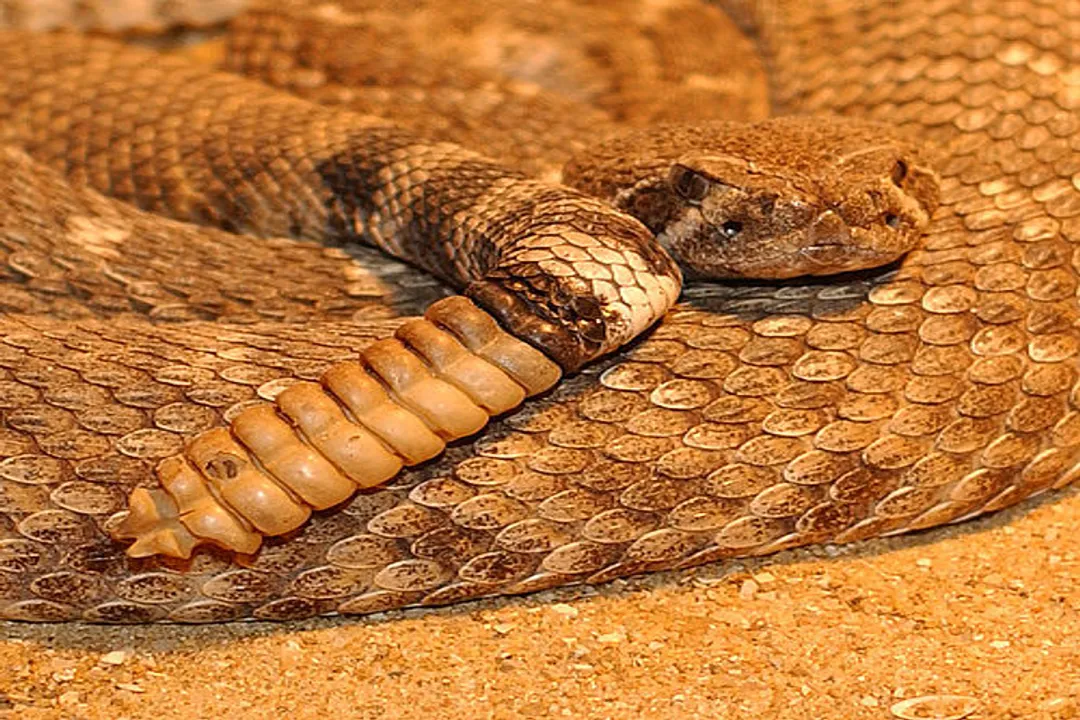
The Crotalus atrox, commonly known as the Western Diamondback Rattlesnake, is a reptile whose physical presence immediately commands attention across the arid and semiarid scrublands of North America. It is recognized as a large and formidable pit viper, second in size only to its eastern cousin among rattlesnakes.
# Size and Mass
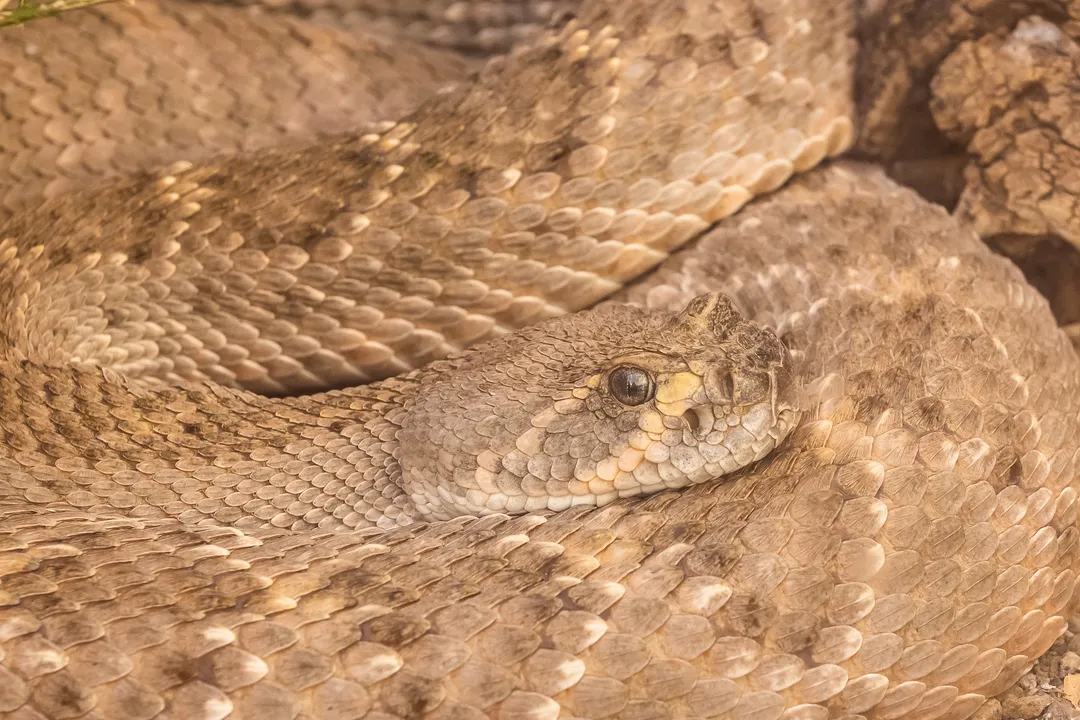
The sheer scale of this species is one of its defining physical traits. While large, it is important to distinguish between the average encounter and the rare maximum size. Most adults measure between 1.2 and 1.8 meters, translating to roughly 4 to 6 feet in length. However, authenticated records confirm that some individuals can grow to exceed 2.1 meters, or about 7 feet. This maximum reliable length, reaching over seven feet, is considerable; for context, this means the largest recorded specimens could easily surpass the height of many adults when stretched out, a stark contrast to the more commonly observed mid-range specimens.
Weight distribution follows suit. A typical adult generally tips the scales between 1.4 and 2.7 kilograms (3 to 6 pounds). The largest recorded specimens have weighed up to 6.7 kilograms, or about 15 pounds. A notable aspect of their physical development is sexual dimorphism in size, where males grow significantly larger than females, though this difference in stature only becomes apparent once they reach sexual maturity.
# Pattern Coloration
The visual signature of the Western Diamondback is its complex dorsal pattern, which provides essential camouflage across its varied landscape. The snake possesses a ground color that is highly variable, blending with the specific substrate of its locale. This base can range from dull gray or tan to reddish hues. More specific descriptions detail a khaki ground color, but it can also manifest as pinkish, fallow, brick red, yellowish blonde, or even white.
Overlaying this background is the characteristic pattern of dark, diamond-shaped blotches. These diamonds are typically bordered by paler scales, creating the distinct outline for which the snake is named. The clarity of these markings, however, is frequently blurred by an overlay of small, scattered specks. The degree to which these patterns are visible is fascinating; some forms inhabiting arid desert environments can be so pale that the diamond markings become largely obscured, leaving only the striking white borders of the diamond pattern apparent. Analyzing this variability suggests an evolutionary advantage, where the snake’s base hue shifts to match regional soils—be it the reddish earth of some Southwest locales or the lighter sands of others—while the high-contrast borders of the diamonds might aid in disruptive camouflage regardless of the specific ground color.
The initial dorsal markings may start as a pair of short, dark stripes running backward, which eventually merge to form the repeating diamond chain. These blotches, sometimes rectangular near the neck, transition into the definitive hexagonal or diamond shapes further down the body.
# Head Structure Features
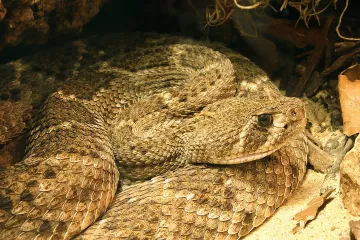
The head of Crotalus atrox is distinctively broad and triangular, set apart from its relatively narrow neck. As a member of the pit viper subfamily Crotalinae, it possesses specialized sensory equipment vital for nocturnal hunting. These are the loreal pits, deep indentations located on the upper jaw between the eye and the nostril. This pit organ functions as a heat-sensing mechanism, capable of detecting minute differences in temperature, often fractions of a degree apart, which allows the snake to locate warm-blooded prey in darkness.
The facial markings are also key identifiers. Two dark stripes run diagonally from each eye down toward the jaw. In more detail, there is a postocular stripe, usually gray or umber, extending diagonally from the lower edge of the eye. Beneath this, a paler stripe runs from the upper preocular scale down to the supralabial scales just behind and below the eye. Some sources note a pattern consisting of one dark stripe and two light stripes on the side of the head [2 - new source].
Further solidifying its identity as a venomous snake are its specialized fangs. These structures are long and tubular, designed for injecting venom stored in the venom glands, which constantly produce the liquid secretion.
# Tail and Rattle Anatomy
The tail structure is perhaps the most famous physical characteristic. It is short relative to the body length, and just before the terminal rattle, it displays a pattern of alternating black and white rings. This pattern can feature anywhere from two to eight bands, though four to six is the common count. This banding system is so noticeable that it has earned the snake the nickname "coontail," referencing the tail pattern of a raccoon. It should be noted, however, that other rattlesnake species share tail rings, requiring close inspection of the rest of the body pattern for definitive identification.
The rattle itself is composed of keratin, the same protein found in human hair and fingernails. A new segment is added to the structure every time the snake undergoes a complete skin shed. Since these segments can break off due to wear or impact, counting the segments to determine the snake's age is not a reliable method. The speed at which the snake can vibrate this structure is impressive; estimates place the frequency between 60 and 90 times per second when used as a warning sign. A fascinating physical capability noted is that the snake chooses when to employ this mechanism; they can remain silent and still, using camouflage as their primary defense. Furthermore, the rattle's vibration speed is tied to the snake's physical state: when the body temperature is cooler, the rattling sound becomes slower and more spaced out, whereas a warmer snake rattles faster and is generally more dangerous due to faster strike speed and higher venom reserves.
# Scalation and Movement Clues
While specific scale counts are not universally detailed across all sources, the structure of the skin coverings is evident in the pattern description—the diamond shapes are formed by the arrangement of scales. The snake is described as having a plump body. An interesting physical implication of their growth cycle relates to their skin: because the skin does not grow with the body, the snake must periodically shed its old skin, typically two to three times per year, to accommodate increases in size.
The snake's musculature and body design support specialized locomotion. While generally considered poor climbers, evidence suggests they can climb a tree for short distances, perhaps to pursue prey. They are also capable of swimming through water. When navigating narrow spaces, like tunnels, or when needing to move efficiently in tight spots, they employ a characteristic "concertina" movement, where the body is pulled into bends and then straightened out to propel forward. This physical positioning, contrasting with the defensive S-coil, highlights the functional diversity built into their serpentine form.
Related Questions
#Citations
Western diamondback rattlesnake - Wikipedia
Sonoran Desert Fact Sheet - Western Diamondback Rattlesnake
Western Diamondback Rattlesnake Facts for Kids - NatureMapping
Western Diamondback Rattlesnake | Oklahoma Department of ...
Crotalus atrox (Western Diamond-backed Rattlesnake)
[PDF] Western Diamondback Rattlesnake | DCA Educates
Western Diamondback Rattlesnake
Western diamondback rattlesnake | Description, Range, Diet, & Facts